Sonos Ace Ultra: 5 Big Upgrades With ChatGPT
The Sonos Ace Ultra is officially here, and Sonos is using its latest premium headphones to make a much bigger statement than simply launching another pair of wireless headphones.
Priced at $449, the Ace Ultra arrives alongside the $699 Beam Ultra soundbar and the company’s newly introduced Sonos 27 software platform. Preorders began September 1, 2026, while both new products are scheduled to become generally available on September 29. SSonos Newsroom+1
The new headphones bring improved active noise cancellation, a redesigned audio system, longer battery life and, most importantly, deeper integration with the Sonos ecosystem.
Sonos is also opening its platform to outside artificial intelligence assistants. That means ChatGPT can interact with compatible Sonos devices through the company’s new Sonos 27mcp system, giving users a new way to control music and connected audio equipment. TThe Verge+1
For Sonos, the Ace Ultra is therefore more than a successor to the original Ace. It represents part of a broader attempt to turn Sonos into an intelligent audio platform.
Sonos Ace Ultra Price and Release Date
The Sonos Ace Ultra costs $449 in the United States, putting it firmly in the premium wireless-headphone category.
Sonos opened preorders on September 1, with general availability scheduled for September 29, 2026. The Beam Ultra soundbar follows the same release schedule and costs $699. SSonos Newsroom+1
The pricing is particularly notable because Sonos is competing against established premium headphone brands while also attempting to justify its price through ecosystem features.
The company is not simply selling improved noise cancellation or a new driver. Instead, Sonos is positioning the Ace Ultra as a connected device that can become part of a larger Sonos home audio system.
That strategy could become the product’s biggest advantage.
1. Sonos Ace Ultra Gets Stronger Noise Cancellation
One of the most important improvements is active noise cancellation.
The Ace Ultra is designed to provide stronger ANC than the original Sonos Ace, while also offering an improved awareness mode for users who need to hear their surroundings. Reports indicate that Sonos has significantly improved the headphones’ ability to block unwanted external noise. SSoundGuys+1
That matters because ANC has become one of the most competitive areas in the premium headphone market.
Consumers can already choose from highly capable products from Sony, Bose and Apple. As a result, Sonos needs more than excellent sound quality to convince customers to spend $449.
The improved ANC gives the Ace Ultra a more competitive foundation.
For commuters, frequent travelers and people working in noisy environments, effective noise cancellation can make a substantial difference.
Sonos is also retaining an awareness mode, allowing users to hear their surroundings without completely removing the headphones.
2. A 35-Hour Battery Could Be a Major Advantage
Battery life is another significant upgrade.
The Sonos Ace Ultra offers up to 35 hours of battery life with active noise cancellation enabled, according to current reports about the new headphones. SSoundGuys+1
Long battery life is increasingly important for premium wireless headphones.
A 35-hour rating means users can potentially go several days between charges under normal listening conditions. Frequent travelers may also appreciate the additional flexibility during long flights or extended trips.
Sonos has therefore improved one of the basic characteristics that consumers expect from a premium $449 headset.
The battery upgrade is not as headline-grabbing as ChatGPT integration, but it could ultimately have a bigger effect on everyday satisfaction.
After all, AI features attract attention, while battery life affects every listening session.
3. Sonos Finally Connects the Ace More Closely to Its Ecosystem
The biggest change may be the way the Ace Ultra works with other Sonos products.
The original Sonos Ace introduced the company to the premium headphone market, but the Ace Ultra is designed to become a much more integrated component of the Sonos ecosystem.
The new headphones use Wi-Fi connectivity and can work more directly with Sonos devices, allowing the headphones to function as part of the broader multiroom audio experience. SSoundGuys+1
That is important because Sonos’ strongest competitive advantage has never simply been individual speaker specifications.
It has been the company’s ability to connect multiple audio products.
With the Ace Ultra, Sonos is trying to extend that philosophy from speakers and soundbars to headphones.
The result is a product that can potentially move between personal listening and home entertainment more naturally.
4. Sonos 27 Brings ChatGPT Into the Audio Experience
The most unusual feature of the new launch is not actually inside the headphones.
It is the new Sonos 27 software platform.
Sonos has redesigned its software and introduced its own AI assistant called Sonos 27voice. At the same time, the company is allowing third-party AI systems to connect with its devices through Sonos 27mcp. ChatGPT is among the AI assistants supported by the new platform. TThe Verge+1
This could change how people interact with their Sonos systems.
Instead of relying exclusively on conventional app controls or fixed voice commands, users can potentially communicate with their audio system in a more conversational way.
For example, AI could help users find music, control playback or interact with multiple devices without requiring them to remember specific commands.
The integration also demonstrates a larger shift in Sonos’ strategy.
The company increasingly wants its products to function as an audio operating system, rather than simply as standalone speakers and headphones. WWIRED
That makes Sonos 27 arguably just as important as the new hardware.
5. The Beam Ultra Completes Sonos’ New Hardware Push
The Ace Ultra did not launch alone.
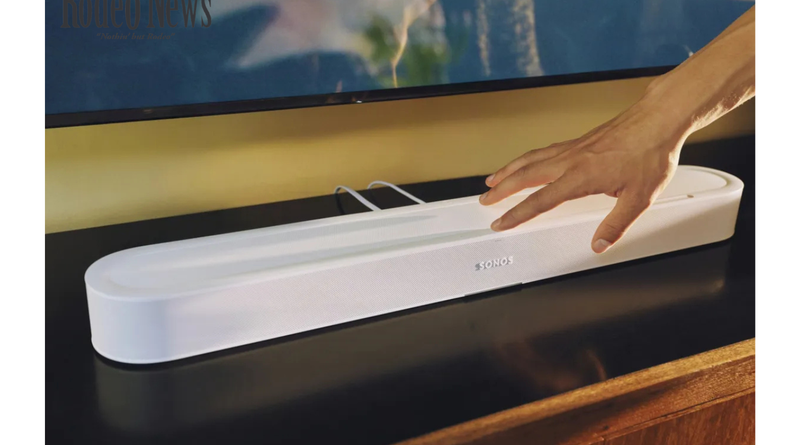
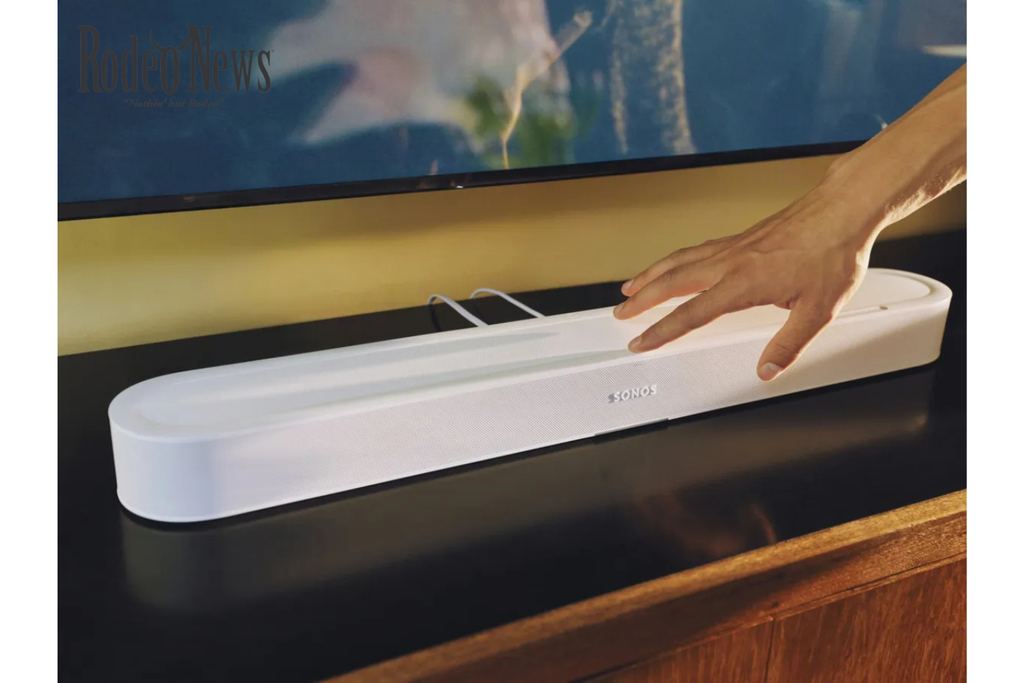
Sonos also introduced the Beam Ultra, a $699 soundbar positioned between the existing Beam and more expensive Arc Ultra.
The Beam Ultra features nine drivers, including two upward-firing drivers, and supports 7.1.2-channel Dolby Atmos audio. SSoundGuys+1
That is a substantial change from the traditional Beam formula.
The upward-firing drivers are designed to create a more immersive sound field by sending audio toward the ceiling, helping produce the overhead effects associated with Dolby Atmos.
Sonos is also emphasizing clearer dialogue.
The Beam Ultra includes AI-powered speech enhancement designed to distinguish voices from other sounds. The company has also added adjustable dialogue controls, giving users more flexibility when watching movies and television. FForbes
The positioning is strategic.
At $699, the Beam Ultra sits below the Arc Ultra while offering a more advanced surround configuration than the older Beam models.
Sonos Is Betting on AI After a Difficult Period
The launch comes at an important moment for Sonos.
The company experienced a major setback after its redesigned app generated widespread criticism in 2024. That experience damaged consumer trust and forced Sonos to rethink how it approaches software and product releases.
The new strategy appears to be different.
Rather than treating software as something that simply controls speakers, Sonos is turning software into a central part of the product experience.
Sonos 27 introduces redesigned navigation, new AI features and expanded ways for users to control their audio systems. TThe Verge+1
The company is also taking a broader approach to AI by allowing outside assistants such as ChatGPT to work with its ecosystem.
That could help Sonos avoid locking customers into a single AI system.
Why ChatGPT Integration Matters
ChatGPT integration could be particularly important because consumers are becoming increasingly comfortable using conversational AI.
Traditional voice assistants often depend on rigid commands.
Generative AI can potentially understand more natural requests.
For an audio company, that creates interesting possibilities.
A user might ask for music based on a mood, request a particular type of playlist or tell the system to adjust playback in several rooms.
The important distinction is that the AI is not necessarily the reason people buy the headphones.
Instead, AI can become the interface that makes a larger collection of Sonos products easier to use.
That is a much more ambitious strategy.
Sonos Ace Ultra vs. the Original Ace
The Ace Ultra is intended to address several areas where the first-generation Ace needed improvement.
The original Ace established Sonos in the premium headphone market, but the company now appears to be putting much greater emphasis on ecosystem integration.
The new model combines that ecosystem strategy with a new 40mm driver, improved ANC and up to 35 hours of battery life with ANC activated. SSoundGuys+1
The result is a more complete package.
The headphones still need to compete on fundamental factors such as sound quality, comfort, microphone performance and long-term reliability. However, Sonos is now offering something its competitors cannot easily reproduce: direct integration with an established multiroom audio ecosystem.
What Makes the Sonos Ace Ultra Different?
The premium headphone market is already crowded.
Sony, Bose and Apple all have strong products with mature noise cancellation and established software ecosystems.
Sonos is therefore taking a different route.
The Ace Ultra is designed to be a bridge between personal audio and home audio.
That distinction could become increasingly valuable.
A customer could use the headphones while traveling, then return home and use the same device as part of a Sonos entertainment system.
The Beam Ultra extends the same concept in the opposite direction.
Together, the products show that Sonos is trying to connect more types of audio hardware under one software platform.
When Can You Buy the Sonos Ace Ultra?
The Sonos Ace Ultra is available for preorder from September 1, 2026, with general availability beginning September 29.
The official U.S. price is $449. SSonos Newsroom
The Beam Ultra is also available for preorder at $699 and is scheduled to launch on the same September 29 date.
Sonos has not positioned either product as a budget option.
Instead, the company is targeting customers who are willing to pay a premium for better hardware and deeper ecosystem integration.
The Bigger Picture for Sonos
The Ace Ultra may ultimately be remembered less for its headphone specifications than for what it represents.
Sonos is attempting to evolve from a company known primarily for connected speakers into a broader audio technology platform.
The introduction of Sonos 27, Sonos 27voice and third-party AI integration is evidence of that shift.
The Ace Ultra and Beam Ultra provide the hardware foundation.
AI provides the interface.
And the Sonos ecosystem provides the connection between devices.
That combination could become a powerful differentiator if Sonos can deliver a reliable software experience.
The company’s challenge is convincing consumers that these features provide meaningful value rather than simply adding another layer of technology.
Final Verdict
The Sonos Ace Ultra is a significant upgrade for Sonos’ premium headphone strategy.
At $449, it offers stronger noise cancellation, a 35-hour battery rating with ANC, improved hardware and much deeper integration with the Sonos ecosystem. SSoundGuys+1
But the biggest story is arguably Sonos 27.
By combining its own AI assistant with support for outside systems such as ChatGPT, Sonos is attempting to make audio control more conversational and intelligent.
The accompanying $699 Beam Ultra reinforces that strategy by bringing advanced Dolby Atmos audio, AI-powered speech enhancement and broader ecosystem integration to the company’s soundbar lineup. SSoundGuys+1
The Sonos Ace Ultra will launch on September 29.
If Sonos delivers on its software promises, the new headphones could become more than a competitor to premium Sony, Bose and Apple models. They could become the personal-audio gateway into Sonos’ larger AI-powered home audio ecosystem.