Strait of Hormuz Pipelines: A Shocking Oil Challenge
The debate over Strait of Hormuz pipelines is becoming one of the most important questions in the global energy market as the United States and its Middle Eastern partners look for ways to reduce the region’s dependence on the strategic waterway.
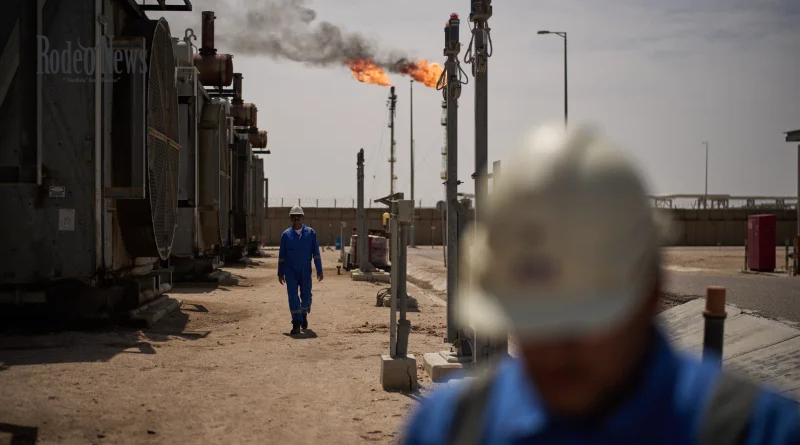
U.S. officials have argued that new pipelines could eventually allow a large share of oil normally shipped through the Strait of Hormuz to move through alternative routes. Treasury Secretary Scott Bessent has even suggested that the strait could become far less important within the next two years.
Energy experts, however, say that prediction is far too optimistic.
The problem is simple: building pipelines takes years, while the disruption to Gulf energy shipments is happening now.
The Strait of Hormuz remains one of the world’s most important energy chokepoints. Before the current conflict, roughly 20 million barrels of oil per day moved through the waterway. Recent disruptions have sharply reduced those flows, creating uncertainty for producers, traders and consumers around the world.
Strait of Hormuz Pipelines Face a Major Test
The push for Strait of Hormuz pipelines comes after months of disruption caused by the U.S.-Iran conflict.
The waterway sits between Iran and Oman and provides the primary maritime exit for oil and gas produced by several Gulf countries. Saudi Arabia, the United Arab Emirates, Kuwait, Qatar and Iraq all depend to varying degrees on infrastructure connected to the Gulf.
When shipping through Hormuz becomes restricted, producers cannot simply move all of their oil somewhere else.
That is because much of the region’s energy infrastructure was designed around the waterway.
Oil fields, storage terminals, refineries, tanker facilities and export ports are connected to a system that ultimately depends on maritime access through Hormuz. Building alternative routes therefore requires much more than laying a new pipeline.
It requires an entirely different export network.
The U.S. Energy Information Administration has described the Strait of Hormuz as one of the world’s most important oil chokepoints because few alternatives can replace its enormous capacity.
Why the Strait of Hormuz Still Matters
The scale of the problem becomes clearer when looking at recent energy data.
According to the U.S. Energy Information Administration’s August 2026 outlook, oil and petroleum liquids moving through the Strait of Hormuz averaged only about 4.9 million barrels per day in the second quarter of 2026, compared with more than 21 million barrels per day in the fourth quarter of 2025.
That represents a dramatic decline.
At the same time, global oil markets have adapted through alternative supply routes, inventory drawdowns and changes in production.
This adaptation has helped prevent an even larger global oil shock.
However, adaptation is not the same as replacing Hormuz.
The International Energy Agency has warned that even after major pipeline projects are completed, more than 10 million barrels per day could still need to pass through the Strait of Hormuz if Gulf production returns to prewar levels. NPR reported that figure while examining the limits of the proposed pipeline strategy.
In other words, pipelines could reduce the region’s vulnerability without eliminating it.
UAE Pipeline Expansion Could Help
One of the most significant projects involves the United Arab Emirates.
The country is expected to expand pipeline infrastructure connecting its oil-producing areas to the port of Fujairah, located outside the Strait of Hormuz.
The project is expected to cost around $3 billion and could become operational next year, according to NPR’s reporting.
Fujairah is strategically important because it sits on the Gulf of Oman, outside the narrowest part of the Strait of Hormuz.
That means oil reaching the port can be loaded onto tankers without requiring those tankers to travel through the strait.
The project could therefore provide the UAE with greater flexibility during future disruptions.
But there is a major limitation.
One pipeline, even a large one, cannot replace the enormous amount of oil that normally crosses Hormuz.
Instead, the UAE project should be viewed as an additional layer of protection.
Saudi Arabia Has More Options — But Still Faces Limits
Saudi Arabia has arguably more alternatives than some of its Gulf neighbors.
The kingdom already has pipeline infrastructure capable of moving crude from its eastern oil-producing region toward the Red Sea.
That allows some Saudi crude to avoid Hormuz and reach the global market through Red Sea ports.
EIA data show that Saudi Arabia has redirected significant volumes through alternative routes, including the East-West pipeline to Yanbu.
However, the Red Sea itself is not risk-free.
The Bab el-Mandeb strait connects the Red Sea with the Gulf of Aden and has faced security threats involving Yemen’s Iran-aligned Houthi movement.
That creates a second potential chokepoint.
As a result, moving oil away from Hormuz does not necessarily remove geopolitical risk. It can simply transfer some of that risk to another location.
Recent reporting indicates that Gulf states are now investing heavily in pipelines, ports and alternative transportation infrastructure because of this vulnerability.
Iraq Is Searching for New Oil Routes
Iraq faces an even more complicated infrastructure challenge.
The country has enormous oil reserves, particularly in its southern fields, but a significant portion of its export system depends on Gulf access.
Baghdad is therefore exploring alternative routes.
One proposal involves expanding the use of a pipeline running through northern Iraq and Turkey toward the Mediterranean port of Ceyhan.
Iraq is also considering other potential routes involving Syria and Jordan.
The objective is clear: create enough flexibility so that Iraqi oil exports do not depend entirely on a single maritime chokepoint.
But these projects face political, financial and security obstacles.
The proposed alternatives would also take considerable time to develop.
That is why analysts caution against expecting new infrastructure to solve the current crisis immediately.
LNG Creates an Even Bigger Problem
Oil can sometimes be redirected through pipelines.
Liquefied natural gas is a different story.
Qatar is one of the world’s largest LNG exporters, and much of its production must ultimately be shipped by sea.
There is no pipeline equivalent that can simply transport LNG around the Strait of Hormuz to international buyers.
That creates a serious vulnerability for Qatar and for countries that depend on its gas exports.
NPR quoted energy analyst David Goldwyn warning that Qatar’s position makes it particularly exposed because the country’s LNG exports remain closely tied to access through Hormuz.
This is one of the biggest weaknesses in the argument that pipelines can make Hormuz irrelevant.
Even if Gulf countries succeed in moving a much larger percentage of their crude oil through alternative pipelines, natural gas exports will continue to require maritime transportation.
Therefore, the strategic importance of Hormuz would remain.
Experts Reject the Idea That Hormuz Will Become “Irrelevant”
Robert McNally, a former senior energy official in the George W. Bush administration, told NPR that describing the Strait of Hormuz as irrelevant goes too far.
His argument is based on the scale and design of the global energy system.
Hormuz is not merely an oil route.
It is the central maritime connection between Gulf energy producers and global markets.
Even if new pipelines reduce the amount of crude passing through the strait, the remaining flows could still amount to more than 10 million barrels per day.
That would still make Hormuz an extraordinarily important global energy chokepoint.
The distinction matters.
A more diversified Gulf energy system could make the world less vulnerable to a complete closure.
But it would not make the waterway irrelevant.
Strait of Hormuz Pipelines Cannot Be Built Overnight
Another problem is construction time.
Pipeline projects require years of engineering, financing, land acquisition, environmental approvals, construction and testing.
New export terminals may also be necessary.
Storage facilities and pumping stations have to be expanded.
In some cases, new ports must be developed or existing ports upgraded.
The infrastructure must then be connected to oil fields and refineries.
That makes the timeline particularly important.
The current crisis is already affecting consumers.
EIA estimates have shown severe constraints on Hormuz transit and reduced Middle Eastern oil production as a result. The agency has said it expects oil production and trade patterns to take time to return toward pre-conflict levels.
Therefore, pipelines may be a solution for future crises rather than an immediate fix for the current one.
Oil Prices Could Remain Elevated
The most direct consequence for consumers is price volatility.
When millions of barrels of oil are removed from normal shipping routes, traders immediately begin reassessing supply risks.
That can raise crude prices even when the physical shortage is not yet severe.
Recent market data illustrate the effect.
Reuters reported on Aug. 28 that Brent crude was trading around $90 per barrel while West Texas Intermediate was above $83, although both benchmarks were on track for weekly declines.
The market has avoided an even larger spike partly because producers have found alternative routes and because demand has adjusted.
Still, uncertainty remains.
Energy analysts cited by NPR expect elevated oil, natural gas and food costs to continue while the conflict and shipping disruptions remain unresolved.
That could affect transportation, aviation, manufacturing and household expenses.
Jet fuel prices are particularly sensitive to crude oil costs.
Higher energy prices can also increase the cost of producing and transporting food.
The Crisis Is Bigger Than Oil
The importance of the Strait of Hormuz extends beyond petroleum.
The Gulf is a major source of LNG, fertilizers, petrochemicals, aluminum and other industrial commodities.
Disruptions can therefore spread across multiple industries.
The International Energy Agency has noted that the crisis has exposed vulnerabilities in supply chains involving fertilizer and other commodities important to global manufacturing.
This means the pipeline debate is ultimately about more than finding a replacement for an oil shipping route.
It is about redesigning a major part of the global energy system.
Tracking Oil Shipments Has Also Become Difficult
Another challenge is determining exactly how much oil is moving through Hormuz.
Tankers normally broadcast their location using automatic identification systems, commonly known as AIS.
During periods of heightened security risk, however, some ships switch off their transponders.
Satellite tracking can help fill the gap, but access to high-resolution satellite imagery has also become more restricted in some conflict areas.
That makes independent verification more difficult.
NPR reported that tanker-tracking companies have faced significant challenges in determining the precise level of shipping activity through the strait.
As a result, conflicting claims about how open the waterway really is can be difficult to resolve.
That uncertainty itself creates market risk.
Pipelines Can Reduce Risk — But Not Eliminate It
The strongest argument in favor of Strait of Hormuz pipelines is diversification.
A country that has several ways to export oil is less vulnerable than a country dependent on one route.
Alternative pipelines can provide additional capacity when Hormuz is disrupted.
They can also give governments greater flexibility during geopolitical crises.
However, pipelines have vulnerabilities of their own.
They can be attacked.
Ports can be targeted.
Storage facilities can be damaged.
Pipelines can suffer technical failures or become politically complicated when they cross multiple countries.
The experience of the current conflict has demonstrated that alternative infrastructure can also become part of a wider security competition.
That is why analysts say pipelines should be treated as a backup system, not a complete replacement for Hormuz.
What Happens Next?
The future of the Strait of Hormuz will depend on two developments: infrastructure and diplomacy.
Gulf countries are clearly moving toward greater diversification.
Billions of dollars are being directed toward pipelines, ports and alternative export routes. Reuters reported Aug. 28 that the Iran war has accelerated infrastructure investment across the Gulf as governments attempt to reduce their dependence on the strategic waterway.
But infrastructure cannot solve the geopolitical problem by itself.
A durable agreement between the United States and Iran could eventually restore more predictable maritime traffic.
Without such an agreement, the region could remain trapped in a cycle of disruption, rerouting and rising infrastructure costs.
For consumers, that means uncertainty could continue even after new pipelines come online.
Strait of Hormuz Pipelines Offer a Partial Solution
The debate over Strait of Hormuz pipelines ultimately comes down to one important distinction: reducing dependence is not the same as eliminating dependence.
New pipelines will make Gulf oil exports more resilient.
The UAE’s Fujairah expansion, Saudi Arabia’s existing alternative routes and Iraq’s proposed export projects could all reduce the amount of oil forced through Hormuz.
But the scale of the global energy system means the strait is unlikely to become irrelevant anytime soon.
More than 10 million barrels per day could still need to pass through Hormuz even after major alternative pipeline projects are completed, according to the assessment cited by NPR.
And LNG presents an additional challenge because it cannot simply be redirected through oil pipelines.
The lesson from the current crisis is therefore not that pipelines will replace Hormuz.
It is that Gulf producers need more options.
For global consumers, those options could eventually reduce the impact of another major disruption. But until the infrastructure is completed — and until the underlying conflict is resolved — the Strait of Hormuz will remain one of the world’s most consequential energy chokepoints.