NPR News Quiz: 10 Shocking Stories to Test You
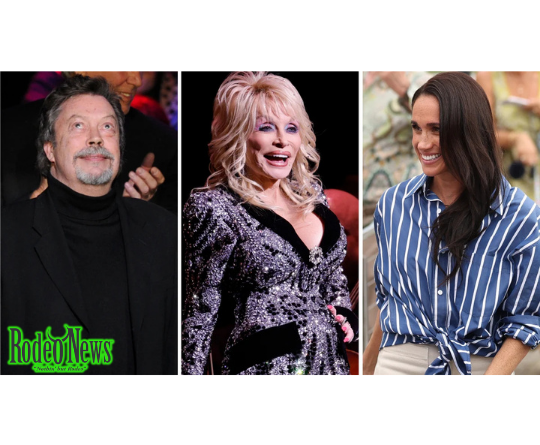
The NPR news quiz returns this week with a wide-ranging test of current events, culture, politics and the stories that dominated headlines around the world. The latest edition puts an unusual spotlight on Dolly Parton and Tim Curry, while also touching on tariffs, Meta, Canada, the Great Lakes and other major developments from the past week.

Published by NPR on Aug. 28, the quiz arrives after an especially eventful stretch of news. Among the biggest cultural stories was the death of Dolly Parton at age 80. Tim Curry also died at 80, adding another major loss to an already emotional week for fans of music, television and film.
The quiz’s mix of subjects makes it more than a simple entertainment test. It is designed to challenge readers who have followed the week’s biggest stories while offering an accessible way to revisit some of the most important headlines.
NPR news quiz puts Dolly Parton in the spotlight
Dolly Parton’s death is one of the central stories featured in this week’s NPR news quiz.
Parton died at 80 after a brief battle with cancer, according to a statement from her publicist. Her death prompted tributes from across the entertainment industry and beyond.
Few entertainers had the same combination of musical success, business ability and philanthropy.
Parton wrote hundreds of songs and became known for enduring hits including “Jolene,” “Coat of Many Colors” and “I Will Always Love You.” Her music eventually reached audiences far beyond country music, while her acting career made her a familiar face in Hollywood.
Her influence also extended into education and philanthropy.
Through the Dollywood Foundation’s Imagination Library, children receive books from birth through age 5. The program became one of the most visible parts of Parton’s charitable legacy.
That combination of music, entertainment and philanthropy makes Parton particularly well suited to a news quiz. Even readers who do not regularly follow country music are likely to recognize some part of her career.
Tim Curry is another major name in the quiz
The week’s other major entertainment loss was Tim Curry.
Curry, who also died at age 80, became an iconic figure through a career spanning film, television, theater and voice acting. His work reached several generations of audiences, making him another recognizable subject for the latest quiz.
The pairing of Parton and Curry gives the quiz a particularly nostalgic element.
Parton represented one of the most influential careers in American music, while Curry became associated with some of the most distinctive performances in popular entertainment.
Their deaths also demonstrated how quickly a week in the news can change.
The quiz is therefore not only testing whether readers remember individual facts. It is asking whether they were paying attention to the broader cultural conversation surrounding the week’s major events.
Tariffs bring economics into the NPR news quiz
Entertainment is only one part of the latest NPR news quiz.
Tariffs and international trade also feature prominently in the week’s news cycle.
Canada announced retaliatory tariffs against U.S. products after the Trump administration imposed its own trade measures. NPR reported that Canada’s countertariffs were expected to target a range of American exports, including steel, dairy products, appliances, agricultural equipment, pulp and paper, and electronics.
The dispute has become an important economic story because the United States and Canada maintain one of the world’s largest trading relationships.
The impact of tariffs is not always immediately visible to consumers. Import taxes can be absorbed by businesses, passed through supply chains or eventually reflected in retail prices.
That makes tariff questions particularly relevant to a current-events quiz.
Readers may know that tariffs exist but still struggle to remember which country imposed them, which products are affected or when the measures take effect.
The tariff story has another surprising twist
Another NPR report published the same day examined an unusual consequence of the tariff dispute: what happens when tariff money is refunded.
The U.S. government is returning more than $160 billion collected under tariffs that were later determined to be illegal. However, the refunds generally go to the businesses and importers that originally paid the tariffs rather than directly to consumers who may have faced higher prices.
That creates an important economic distinction.
A consumer who paid a higher price because of a tariff does not automatically receive a proportional refund.
Importers are the parties that directly paid the tariff to the government. Companies may then have passed some or all of those costs along to customers.
As a result, determining exactly how much any individual consumer paid because of a particular tariff can be extremely difficult.
This broader tariff debate gives the current NPR news quiz a useful connection to everyday economic issues.
Meta adds a technology angle
Meta is another major subject included in the week’s quiz.
The company remains one of the world’s most influential technology and social media businesses, making its developments relevant far beyond Silicon Valley.
Meta’s platforms reach billions of people globally, and its business decisions can affect advertising, artificial intelligence, online communities and digital regulation.
Including Meta alongside political and cultural stories reflects how modern news has become increasingly interconnected.
Technology companies are no longer confined to the technology section of a newspaper. Their decisions can influence elections, advertising markets, consumer behavior and international policy.
For quiz takers, that means keeping up with current events requires more than following one category of news.
Mark Carney and Canada are part of the challenge
Canada’s Prime Minister Mark Carney is also among the political figures connected to this week’s news cycle.
The tariff confrontation between Washington and Ottawa has placed Carney in the international spotlight as Canada responds to U.S. trade policies.
The dispute has become politically significant inside Canada as well as economically important.
Reuters reported that Canada imposed retaliatory tariffs worth billions of dollars on U.S. goods as tensions escalated.
For quiz readers, this is an example of why current-events questions can be difficult.
A single news story can involve multiple countries, political leaders, industries and economic policies. Remembering the basic headline may not be enough to answer a more specific question.
The Great Lakes provide another unexpected topic
The latest NPR news quiz also moves into geography and politics with a reference to the Great Lakes.
The Great Lakes are among North America’s most important freshwater resources and form a major part of the U.S.-Canada border.
Lake Ontario, Lake Erie, Lake Huron, Lake Michigan and Lake Superior make up the world’s largest group of freshwater lakes by total area.
The lakes are important for transportation, tourism, drinking water and regional economies.
Their inclusion in a weekly news quiz demonstrates how current events can turn familiar geography into a test of attention.
A reader may know the Great Lakes well but still need to remember why they appeared in the news during this particular week.
Why the NPR news quiz works
The appeal of the NPR news quiz comes from its variety.
Instead of focusing entirely on politics, the quiz jumps between entertainment, international affairs, economics, technology and culture.
That makes the experience both challenging and accessible.
A reader who knows a lot about Dolly Parton might struggle with tariffs. Someone who follows technology closely might know the Meta story but have trouble remembering details about Canadian politics.
The format also encourages readers to revisit stories they may have encountered only briefly.
That is particularly useful in a news environment where headlines arrive continuously and major stories compete for attention.
This week’s quiz reflects an unusually busy news cycle
The timing of the quiz is significant.
The week has included the deaths of two major cultural figures, escalating U.S.-Canada trade tensions, technology developments and a wide range of political stories.
Dolly Parton’s death alone generated a huge response because of the breadth of her influence. She was not simply a country singer. She was an actor, songwriter, entrepreneur and philanthropist whose career crossed multiple generations.
Tim Curry’s death similarly prompted renewed attention to a career that crossed theater, movies and television.
At the same time, tariff developments involving Canada have continued to demonstrate how quickly international economic disputes can become domestic political issues.
Those stories make a natural foundation for a weekly quiz.
How to get better at current-events quizzes
Readers who want to perform better on the NPR news quiz do not necessarily need to spend hours reading every article published during the week.
A better strategy is to pay attention to major developments across several categories.
Start with politics and international affairs.
Then check major business and technology stories. Entertainment and culture are equally important because major celebrity deaths, awards and cultural events frequently become quiz subjects.
Finally, pay attention to unusual stories.
A strange or unexpected headline is often easier to remember than a routine political development.
Another useful strategy is to connect facts together.
Instead of remembering that Canada imposed tariffs as an isolated fact, remember the broader chain: U.S. trade policy, Canada’s response, Mark Carney and the potential economic consequences.
Connected information is generally easier to recall than disconnected facts.
The bigger lesson from this week’s quiz
The latest NPR news quiz is ultimately a snapshot of a fast-moving week.
Dolly Parton’s death reminds readers about the lasting influence of cultural icons. Tim Curry’s death highlights the careers of performers whose work crossed generations. The tariff stories show how international trade policies can affect businesses and consumers, while Meta represents the continuing influence of technology companies on modern life.
That combination is what makes the quiz interesting.
It is not simply a test of trivia. It is a test of whether readers can identify the people, places and developments that shaped the news cycle.
For anyone who followed the headlines this week, the quiz offers a chance to see how much they remember.
And for anyone who missed some of the stories, it provides a useful reason to catch up.
With Dolly Parton and Tim Curry dominating the cultural headlines, Canada and the United States facing renewed tariff tensions, and technology companies such as Meta continuing to influence the news, this week’s quiz has plenty of memorable material.
The real challenge is simple: How much of this week’s news can you actually remember?