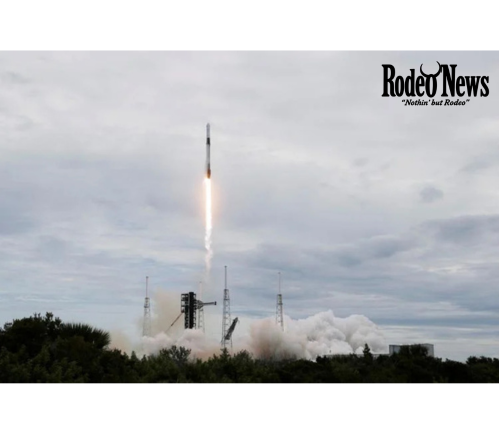
SpaceX Rocket Launch Could Light Up South Carolina’s Sky
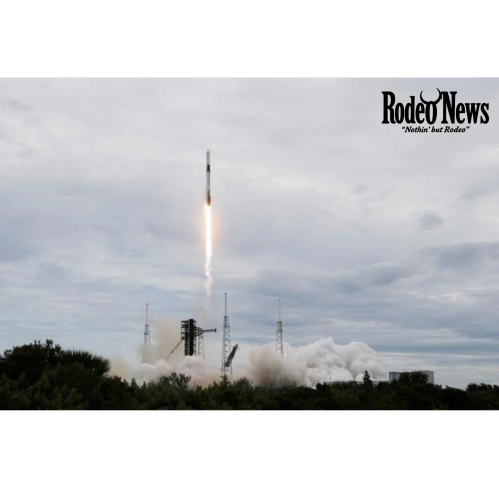
A SpaceX rocket launch scheduled for Tuesday, October 13, could give residents across parts of South Carolina an opportunity to witness a spectacular early-morning display. The planned Falcon 9 mission is expected to depart from Florida’s Space Coast, and favorable weather conditions could make the rocket and its bright exhaust plume visible from areas far beyond the launch site.
The launch is part of NASA’s Commercial Resupply Services program, which uses commercial spacecraft to transport supplies, equipment, and scientific research to the International Space Station. Although the spacecraft’s destination is in orbit, the launch itself may be visible to people hundreds of miles away under the right conditions.
According to local reporting from South Carolina, the rocket is scheduled to launch at approximately 6:33 a.m. Eastern Daylight Time. Viewers hoping to catch the event should be ready a few minutes beforehand because launch schedules can change and visibility depends on the rocket’s trajectory, cloud cover, and local conditions.
For skywatchers, the event offers an opportunity to see a modern spaceflight operation without traveling to Florida. However, a successful launch does not guarantee that every location in South Carolina will have a clear view.
1. SpaceX Rocket Launch Time: When to Look Up
The most important detail for viewers is timing.
The Falcon 9 launch is currently scheduled for approximately 6:33 a.m. EDT on Tuesday, October 13, 2026. People hoping to see it from South Carolina should prepare before the scheduled departure rather than waiting until the exact launch time.
Rocket launches are carefully coordinated operations. Weather, technical checks, range safety requirements, and other operational considerations can lead to delays or schedule changes.
For that reason, the advertised launch time should be treated as a target rather than an absolute guarantee.
Recommended viewing schedule
- Before 6:25 a.m.: Find a suitable viewing location and check the latest launch updates.
- Around 6:30 a.m.: Begin watching the sky.
- Around 6:33 a.m.: The planned launch time, if the schedule remains unchanged.
- After liftoff: Continue watching as the rocket climbs and its exhaust plume develops.
The actual time at which the rocket becomes visible will depend on the observer’s location and the flight path.
Viewers should check official mission updates before heading outside. A launch delay of even several minutes can affect viewing plans, particularly for people who have only a short window before work or school.
2. Where to Watch the SpaceX Rocket Launch in South Carolina
Visibility will depend on several factors, including distance from the launch site, the rocket’s direction of travel, the observer’s line of sight, and local weather.
South Carolina is within a region where certain launches from Florida can be seen. However, not every rocket follows a trajectory that makes it visible from every part of the state.
Coastal areas may have favorable viewing conditions for some launches, while inland observers could face different sightlines. Buildings, trees, hills, and other obstructions can also interfere with the view.
Choose a location with an open horizon
The best practical approach is to find a safe place with a clear view of the relevant part of the sky.
A location away from tall buildings and dense tree cover may provide a better view than a narrow street or an enclosed courtyard. People near the coast may have more open sightlines, although local weather remains an important factor.
Do not assume that a rocket will appear directly overhead. Depending on its trajectory, it may look like a bright moving point near the horizon or leave a visible trail as it climbs.
Important: The launch is not guaranteed to be visible from every South Carolina community. Local reports and official mission updates should guide expectations.
3. Why the Rocket Could Create a Glowing “Jellyfish Cloud”
One of the most striking features of certain rocket launches is a luminous exhaust plume that resembles a jellyfish floating through the sky.
This effect can occur when a rocket launches near dawn or dusk. The ground may be relatively dark while the rocket climbs high enough for its exhaust plume to remain illuminated by sunlight.
As the exhaust expands and interacts with the surrounding atmosphere, it can form a broad, glowing shape. From a distance, the plume may appear much larger than the rocket itself.
The visual effect can be especially dramatic during twilight because the contrast between the darker sky near the observer and the sunlit plume makes the exhaust easier to see.
However, the appearance varies from launch to launch. Atmospheric conditions, rocket altitude, sunlight, exhaust composition, and the viewing angle all influence what observers see.
A jellyfish-like plume is therefore a possibility rather than a guaranteed feature of the October 13 mission.
Why does the plume appear so large?
Rocket exhaust expands as it enters the thinner atmosphere at higher altitudes. Water vapor and other exhaust products can interact with the surrounding environment, creating a plume that spreads over a large area.
When sunlight illuminates that plume, it can appear bright against the darker sky.
The effect does not mean the rocket is malfunctioning. In many cases, the unusual appearance is simply a result of atmospheric conditions and the geometry of the sunlight.
4. What Is the NASA CRS-35 Mission?
The planned flight is associated with NASA’s Commercial Resupply Services program.
Through this program, NASA works with commercial space companies to deliver cargo to the International Space Station. These missions help maintain the station’s operations and provide equipment and research materials for astronauts.
Cargo flights are an essential part of the broader space program. Astronauts need regular deliveries of food, clothing, replacement parts, scientific instruments, and other supplies.
Research conducted aboard the station also depends on a steady flow of equipment and experimental materials. Experiments in microgravity can help scientists investigate biological processes, physical phenomena, and technologies that may have applications on Earth and in future space missions.
Commercial cargo services allow NASA to use privately operated spacecraft alongside its own exploration and research programs.
Why resupply missions matter
The International Space Station is a continuously operating research facility. Its crew members depend on regular logistics support, and many experiments require specialized equipment that cannot be produced aboard the station.
Resupply missions help sustain this work.
They also demonstrate how commercial launch providers have become an important part of modern spaceflight. By contracting companies to carry cargo, NASA can focus resources on research, exploration, and other long-term objectives.
For observers in South Carolina, the mission’s scientific purpose adds context to the visual spectacle of the launch.
5. What to Check Before Watching the SpaceX Rocket Launch
Anyone planning to watch should prepare for the possibility of changing conditions.
The following checklist can help improve the chances of seeing the event.
Check the weather forecast
Cloud cover is one of the biggest obstacles to launch viewing.
Even if the launch proceeds on time, thick clouds can hide the rocket or its plume. Clear skies generally offer better conditions, but local forecasts can differ considerably from one community to another.
Check the forecast for your specific location rather than relying only on a statewide weather report.
Confirm the launch schedule
Launch times can change because of weather, technical issues, or other operational requirements.
Check the latest updates from SpaceX and NASA before setting an alarm or traveling to a viewing location.
If the launch is delayed, official updates should provide the most reliable guidance on the revised schedule.
Arrive early
Finding a viewing location in advance can prevent a last-minute scramble.
If you plan to watch from a public area, check parking rules, opening hours, and any local restrictions. Do not stop on highways, block traffic, or enter restricted property to obtain a better view.
Protect your eyes
Watching a distant rocket launch does not normally require specialized equipment. Binoculars may help in some circumstances, but they are not essential.
Never look directly at the Sun through binoculars, a telescope, or another optical device without a properly designed solar filter.
For an ordinary rocket launch, simply looking toward the appropriate part of the sky with the naked eye is often the most practical option.
Have a backup plan
If clouds or a delay prevent local viewing, consider watching an official livestream.
A livestream can provide close-up views of liftoff, stage separation, and other mission milestones that may be impossible to see clearly from the ground.
Why SpaceX Launches Attract Attention Beyond Florida
SpaceX launches have become familiar events along Florida’s Space Coast, but their effects can extend well beyond the immediate launch area.
A rocket can travel hundreds of miles while remaining visible under favorable conditions. During twilight, an illuminated exhaust plume may be visible even when the rocket itself is difficult to distinguish.
These displays often generate interest among amateur astronomers, photographers, families, and people who simply enjoy observing unusual events in the sky.
The launches also reflect broader changes in the space industry.
Commercial launch providers now support a range of activities, including satellite deployment, scientific research, cargo transportation, and human spaceflight. Reusable rocket technology has also become an important part of efforts to reduce the cost of launching payloads.
SpaceX’s Falcon 9 is designed to recover and reuse its first-stage booster in many missions. Reuse can reduce the need to build an entirely new first stage for every flight, although individual mission profiles and recovery conditions vary.
For the public, a visible launch provides a brief opportunity to witness these technological developments firsthand.
What Could Prevent South Carolina Residents From Seeing It?
Several factors may affect visibility, even if the rocket launches successfully.
Cloud cover: Thick clouds can obscure the rocket and its exhaust plume.
Launch trajectory: The direction of flight determines which areas have a clear view.
Distance: The rocket may be visible from some locations but too low on the horizon or too distant to distinguish clearly from others.
Daylight conditions: The contrast between the sky and the exhaust plume can influence how noticeable the rocket appears.
Launch delays: A change in launch time can affect both viewing plans and atmospheric lighting conditions.
Because these factors vary, no single viewing forecast can guarantee that everyone in South Carolina will see the launch.
The best approach is to check local conditions, confirm the schedule, and keep expectations flexible.
Conclusion: A Potential Early-Morning Spaceflight Spectacle
The planned SpaceX rocket launch on October 13 could offer skywatchers in parts of South Carolina an opportunity to see a Falcon 9 climb into the morning sky.
The mission is connected to NASA’s commercial cargo program, which supports research and operations aboard the International Space Station. If the schedule holds and conditions cooperate, observers may see the rocket’s bright exhaust plume, potentially creating a dramatic jellyfish-like appearance.
For the best chance of viewing the event, check the latest launch updates, find a location with an unobstructed horizon, and begin watching before the scheduled liftoff.
Remember that visibility is not guaranteed. Weather, the rocket’s trajectory, and any schedule changes will determine what observers can see from their location.
Even if the rocket remains hidden by clouds or distance, an official livestream can provide an alternative way to follow the mission.
For South Carolina residents, the key is simple: check the latest updates, prepare early, and look skyward if conditions are favorable.