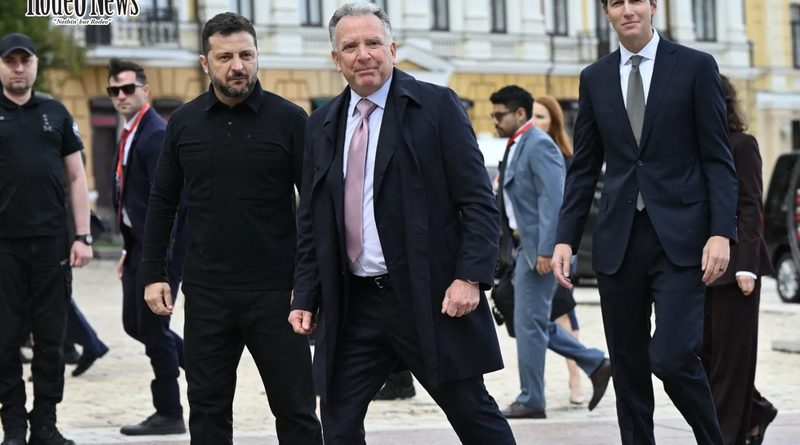
Witkoff, Kushner in Kyiv: 5 Key Peace Talks Updates
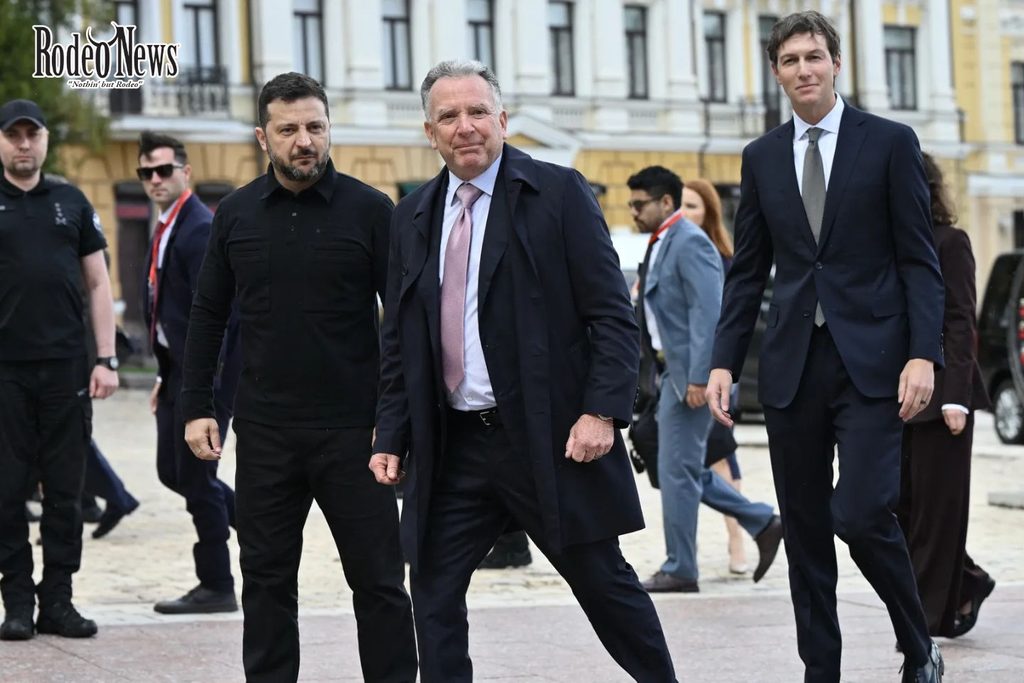
The arrival of Witkoff and Kushner in Kyiv has opened a new diplomatic chapter in the Trump administration’s effort to end Russia’s war in Ukraine. The two U.S. envoys traveled to the Ukrainian capital on Sunday, September 6, after holding a lengthy meeting with Russian President Vladimir Putin in Moscow the previous day.
Their Kyiv visit was the first by Steve Witkoff and Jared Kushner since President Donald Trump returned to the White House. It also represented the highest-level U.S. visit to Ukraine since the beginning of Trump’s second term.
The timing is significant.
The war has continued for more than four years, while previous U.S.-backed negotiations have produced limited results. At the same time, Russia and Ukraine have intensified long-range attacks, raising concerns about another difficult winter for Ukraine.
Against that backdrop, Washington is trying to revive negotiations before the conflict enters another dangerous phase.
Witkoff and Kushner Kyiv Visit Follows Putin Meeting
The Witkoff and Kushner Kyiv visit came only hours after their meeting with Putin in Moscow.
The American envoys spent about three hours with the Russian president on Saturday. Although the meeting did not immediately produce a peace agreement, officials from Washington and Moscow described the discussions in positive terms.
A White House official said the talks covered plans for the next stage of negotiations, with further steps expected to be announced in the coming weeks.
Russian officials similarly expressed optimism about the meeting.
The sequence was deliberate. Witkoff and Kushner went to Moscow first, then traveled toward Ukraine to hear directly from President Volodymyr Zelensky and his negotiating team.
That gave the U.S. delegation an opportunity to compare the positions of both governments within a very short period.
The envoys left Moscow Saturday night, flew to Poland and then continued to Kyiv by land. The journey was necessary because of security concerns surrounding travel into Ukraine.
For Washington, the objective is clear: determine whether the positions of Moscow and Kyiv can be brought closer together.
Zelensky Signals Ukraine Is Ready for Talks
Before the Americans arrived, Zelensky said Ukraine was prepared for substantive discussions.
The Ukrainian president has repeatedly maintained that Kyiv is willing to negotiate, but any settlement must provide credible security guarantees and protect Ukraine from another Russian attack.
That remains one of the biggest challenges facing the diplomatic process.
Zelensky’s government has little incentive to accept an agreement that simply pauses the fighting without addressing what happens afterward. Ukrainian officials are particularly concerned about rebuilding the country’s defenses, protecting its energy infrastructure and preventing Russia from using a future pause to prepare for another offensive.
The Kyiv meeting therefore focused on more than simply whether a ceasefire could be reached.
According to reporting on the talks, Ukraine discussed preparations for continuing the war through the winter, while the American envoys emphasized their desire to achieve a breakthrough before the cold season intensifies.
That difference in emphasis is revealing.
Washington wants a diplomatic breakthrough.
Kyiv, meanwhile, is preparing for the possibility that the war will continue.
Both positions can exist at the same time, but reconciling them will be difficult.
Witkoff and Kushner Push a Refreshed Peace Proposal
One of the most important developments from the Witkoff and Kushner Kyiv meetings is the possibility of a revised peace proposal.
A source involved in Sunday’s talks said the discussions went well and that the two U.S. envoys want to work with the parties on a “refreshed” peace proposal.
The details of that proposal have not been publicly disclosed.
That leaves several major questions unanswered.
Would the plan involve an immediate ceasefire?
Would it include security guarantees for Ukraine?
How would territorial disputes be addressed?
Would Russia be expected to withdraw from occupied Ukrainian territory?
And, critically, what would prevent another war after a settlement?
These issues have repeatedly complicated negotiations.
Previous diplomatic efforts have struggled because Moscow and Kyiv remain far apart on territory, security arrangements and the long-term political structure of the region.
The lack of publicly available details means it would be premature to describe the new initiative as a breakthrough.
For now, it is better understood as an attempt to restart a process that has largely stalled.
The Ukraine Peace Talks Face a Major Winter Test
The approaching winter adds urgency to the negotiations.
Ukraine’s energy infrastructure has been repeatedly targeted during the war, and officials in Kyiv expect Russia to continue attempting to weaken the country’s electricity and heating systems.
The threat is especially serious because winter conditions can magnify the consequences of attacks on energy facilities.
For Ukrainian civilians, prolonged power outages are not simply an inconvenience. They can affect heating, water supplies, transportation, communications and essential services.
That is why Ukrainian officials have emphasized air defense and energy security alongside diplomatic efforts.
Recent reporting indicates that Ukraine’s negotiating position includes a strong focus on security guarantees, economic support and preparations for the winter.
The situation creates an unusual diplomatic calculation.
The United States wants the conflict resolved before another winter campaign becomes entrenched.
Ukraine wants to remain capable of defending itself if negotiations fail.
Russia, meanwhile, continues to pursue its own military and political objectives.
Any agreement must therefore satisfy three very different strategic calculations.
No Major Breakthrough Has Been Announced
Despite the positive language surrounding the meetings, there is an important reason for caution.
No peace agreement was announced.
No comprehensive ceasefire was finalized.
And there was no immediate indication that Moscow had abandoned its core demands.
The Moscow meeting between Putin, Witkoff and Kushner was described as constructive, but the public information released afterward did not point to a definitive settlement. Reuters similarly reported that the meeting did not appear to produce a breakthrough.
The Kyiv meetings were more encouraging from the American perspective.
After meeting twice with Zelensky and his advisers, Witkoff and Kushner said they were encouraged by the substantive discussions and wanted to make further progress. European national security advisers from Britain, France and Germany also joined a subsequent meeting.
That broader participation could prove important.
Ukraine’s European partners have a major stake in the outcome of any settlement. They are also likely to play an important role in security guarantees, reconstruction and long-term support for Kyiv.
A peace process involving only Washington, Moscow and Kyiv could therefore face serious questions about implementation.
Europe Is Becoming More Important to the Process
The participation of British, French and German officials in the Kyiv discussions highlights the increasingly important role of Europe.
European governments have spent years supporting Ukraine militarily, financially and politically.
They also face the consequences of any eventual settlement.
A deal that ends active fighting but leaves Ukraine vulnerable to another invasion would create major security concerns across Europe.
That is why European involvement could become crucial if the Trump administration succeeds in restarting formal negotiations.
The inclusion of European national security advisers in the third Kyiv meeting suggests Washington is not necessarily pursuing the next stage of diplomacy in isolation.
It also gives Ukraine additional partners as it evaluates any future proposal.
For Zelensky, the challenge will be balancing the need for American diplomatic support with the need to maintain European backing.
Why the First Kyiv Visit Matters
The symbolism of the Witkoff and Kushner Kyiv trip should not be underestimated.
Witkoff and Kushner have spent months engaging with Russian and Ukrainian representatives, but their work has included considerably more contact with Moscow.
Traveling to Kyiv changes that perception.
It demonstrates that the Trump administration is willing to hear Ukraine’s position directly rather than relying exclusively on indirect communication.
It also places the U.S. envoys physically in the environment where the war’s consequences are most visible.
Axios described the trip as the highest-level U.S. visit to Ukraine since Trump began his second term.
That makes the visit significant even without an immediate agreement.
Diplomacy often advances through a series of incremental steps rather than one dramatic announcement.
The Kyiv meeting could become one of those steps.
Security Guarantees Remain a Difficult Question
Perhaps the most complicated issue in any Ukraine peace agreement will be security.
Kyiv wants assurances that Russia cannot simply regroup and launch another attack after a ceasefire.
That means Ukraine is likely to demand some combination of military support, international guarantees, weapons deliveries, air defense assistance and economic commitments.
Russia is unlikely to accept arrangements that it believes would effectively transform Ukraine into a heavily armed Western military outpost.
That leaves negotiators facing a fundamental contradiction.
Ukraine wants enough protection to make peace sustainable.
Russia wants restrictions that prevent Ukraine from becoming a greater military threat.
The United States must find a framework that both sides can at least continue discussing.
This is one reason the concept of a “refreshed” proposal is important.
Rather than simply reviving an older framework, Washington appears to be looking for adjustments that could address changes on the battlefield and the diplomatic landscape.
What Comes Next for the Ukraine Peace Talks?
The next few weeks could determine whether the latest diplomatic push becomes a genuine negotiation or another short-lived effort.
Axios reported that the White House expects plans for next steps to be announced in the coming weeks.
Several developments will be worth watching.
First, Washington will need to clarify what is actually contained in its revised proposal.
Second, Moscow’s response will show whether Russia is prepared to make meaningful concessions.
Third, Ukraine will assess whether the proposal provides sufficient security and economic guarantees.
Finally, European governments will need to determine what role they are willing to play in implementing and guaranteeing any settlement.
The process could therefore move quickly if all sides see advantages in continuing.
But it could also stall again if territorial and security questions remain unresolved.
Witkoff and Kushner Kyiv Talks Offer Hope, but No Guarantee
The Witkoff and Kushner Kyiv meetings represent one of the most serious attempts in months to restart the diplomatic process surrounding the Russia-Ukraine war.
The sequence of events is notable.
The U.S. envoys met Putin in Moscow.
They then traveled to Kyiv.
They held multiple discussions with Zelensky.
European officials joined the later talks.
And Washington says the next stage of the process could be announced within weeks.
Those are meaningful developments.
However, diplomacy should not be confused with a peace agreement.
The war remains active. Russia and Ukraine continue to disagree over fundamental issues, and there is no publicly announced settlement that resolves the territorial or security disputes.
For now, the biggest achievement may simply be that negotiations are moving again.
The coming weeks will show whether that movement can be transformed into something more substantial.
If the Trump administration succeeds in producing a proposal acceptable to both Kyiv and Moscow, the September diplomatic push could become a turning point in the war.
If not, Ukraine will likely enter another winter preparing for continued fighting.
For Witkoff and Kushner in Kyiv, the mission is therefore about much more than one meeting with Zelensky. It is an attempt to determine whether the diplomatic door that has been largely closed can finally be opened wide enough for a serious peace process