Halal Barbecue in Texas Is Changing a Classic Tradition
Halal barbecue in Texas is becoming one of the most interesting developments in the state’s food culture. Muslim pitmasters are taking the techniques and traditions associated with Texas barbecue and combining them with flavors rooted in Pakistani, Iraqi, Laotian and other culinary backgrounds.
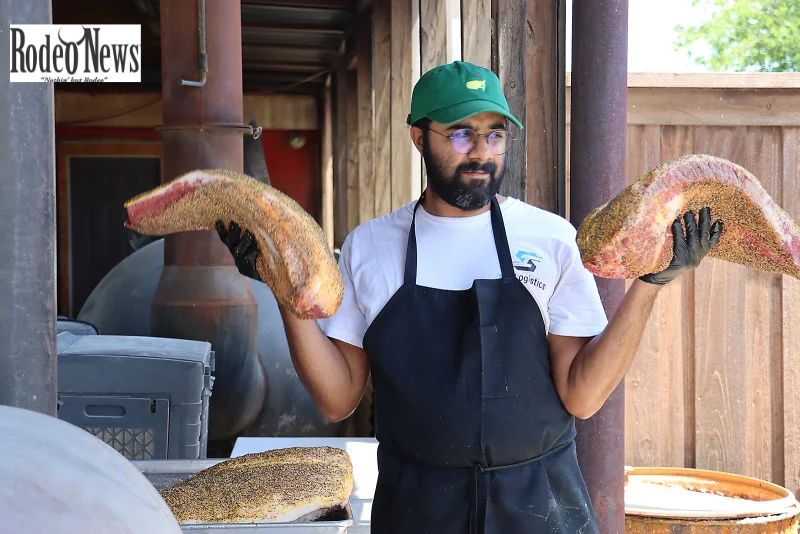
The result is not simply barbecue adapted for Muslim diners. It is a growing food movement that is attracting people from across religious and cultural communities.
A recent NPR report by Ulaa Kuziez, produced in collaboration with Religion News Service, highlighted the growing popularity of halal barbecue across Texas. At least a dozen barbecue restaurants around the state now serve halal meats, according to the report. KKALW+1
The trend is particularly visible in North Texas, where restaurants such as Goldee’s Barbecue and Kafi BBQ are drawing both Muslim and non-Muslim customers.
What Is Halal Barbecue in Texas?
Halal barbecue in Texas refers to smoked meat prepared using halal ingredients and meat that has been sourced and processed according to Islamic dietary requirements.
For Muslim customers, that distinction matters. Traditional Texas barbecue often includes pork ribs, pork sausage and other ingredients that Muslims who follow halal dietary rules cannot consume.
Historically, that meant Muslim barbecue fans had fewer choices.
That landscape is changing.
Modern halal barbecue restaurants are proving that removing pork does not mean removing the character of Texas barbecue. Brisket, beef ribs, turkey, lamb and beef sausage can all be smoked using the same patience and attention to technique that define the state’s barbecue culture.
More importantly, Muslim pitmasters are adding their own culinary identities.
Instead of copying traditional barbecue menus exactly, they are experimenting with spices, sauces and cooking techniques connected to their families and communities.
Goldee’s Brings Halal Brisket to a Famous Texas BBQ Joint
Goldee’s has become one of the most visible examples of the halal barbecue movement.
The Fort Worth restaurant opened in 2020 and gained national attention after being named Texas Monthly’s No. 1 barbecue restaurant in 2021. It later received a Bib Gourmand distinction from the Michelin Guide. KKALW
Today, the restaurant serves familiar Texas barbecue alongside halal brisket, turkey and lamb.
The NPR report described a busy summer Saturday when nearly 100 people were already waiting outside by 9 a.m. Some customers had arrived hours earlier, demonstrating the demand for the restaurant’s barbecue.
For Muslim diners, the availability of halal meat at a highly regarded Texas barbecue destination represents a significant change.
Instead of searching specifically for a Muslim restaurant, they can now participate in the broader barbecue culture.
And non-Muslim customers are eating the same food.
That crossover may be one of the most important aspects of the trend.
Pakistani Flavors Meet Texas Barbecue
Pitmaster and Goldee’s co-owner Zain Shafi has helped introduce Pakistani influences to the restaurant’s menu.
Before joining Goldee’s, Shafi operated Sabar Barbecue, a food truck that combined Pakistani flavors with smoked meat. His earlier barbecue included brisket seasoned with spices such as bay leaf and coriander. KKALW
At Goldee’s, those influences have continued through items such as tandoori smoked turkey.
The approach demonstrates how halal barbecue in Texas can evolve without abandoning the fundamentals of the state’s barbecue tradition.
The brisket is still smoked. The meat still requires careful temperature control and time. But the seasoning and accompanying flavors can tell another story.
That combination is increasingly becoming a defining feature of the new generation of Texas pitmasters.
Kafi BBQ Adds Iraqi Flavor to Texas BBQ
Another major example is Kafi BBQ in Irving.
The restaurant was founded by Salahodeen Abdul-Kafi, a former Silicon Valley technology worker who moved to Texas partly because he wanted to be closer to a Muslim community.
What began as backyard barbecue for friends eventually developed into a restaurant.
Kafi BBQ opened in 2024 after Abdul-Kafi spent months refining recipes and developing relationships with producers. The restaurant’s menu is entirely halal. KKALW+1
Its barbecue combines Texas smoking techniques with flavors inspired by Abdul-Kafi’s Iraqi heritage.
The menu has included 13-spice Wagyu brisket, pomegranate-glazed beef belly burnt ends and Iraqi-inspired spicy beef sausage. RRNS+1
That is a very different approach from simply replacing pork with beef.
Abdul-Kafi has openly challenged the idea that traditional Texas barbecue must include pork. His stated goal is to make some of the best barbecue in Texas, while demonstrating that pork is not essential to achieving that goal. KKALW
The restaurant has attracted diners who are interested in the food regardless of whether they specifically require halal meat.
That broad appeal could help halal barbecue move further into the mainstream.
Why Halal BBQ Is Finding a Wider Audience
For years, halal food in the United States was often associated with specialty restaurants or neighborhoods with large Muslim populations.
That is changing.
Food writer Farhan Mustafa, who has written about American halal barbecue, described halal food as increasingly part of the American culinary mainstream. NPR’s reporting notes that the U.S. halal food industry has grown into a multibillion-dollar market. KKALW
Texas offers an especially interesting environment for this development because barbecue itself is deeply connected to local identity.
Barbecue is more than something people eat in Texas. It is a cultural tradition, a competitive industry and a source of regional pride.
When Muslim pitmasters enter that world, they are not necessarily creating a separate culinary category.
They are participating in Texas food culture.
That distinction matters.
A Muslim family ordering halal brisket is participating in the same barbecue tradition as another Texas family. The difference is that the meat meets their dietary requirements.
Meanwhile, non-Muslim diners may discover new flavors and cooking techniques.
The result is cultural exchange through food.
Muslim Pitmasters Are Putting Their Heritage on the Menu
The story goes beyond religion.
Many of these restaurants reflect the personal backgrounds of their owners and chefs.
At Goldee’s, Shafi’s Pakistani heritage has influenced some of the menu. Chef and part-owner Nupohn Inthanousay has also incorporated his Laotian heritage, including a smoked Lao sausage served with sticky rice and a spicy dipping sauce. MMySA
Kafi BBQ similarly draws on Iraqi culinary traditions.
This illustrates a broader transformation in American barbecue.
Texas barbecue has never been completely static. Different immigrant communities and regional cultures have influenced American food for generations.
The new halal barbecue movement simply adds another chapter.
Instead of treating cultural influences as separate cuisines, these pitmasters are combining them.
A brisket can remain unmistakably Texan while carrying flavors from South Asia or the Middle East.
Halal Barbecue Is Also About Representation
There is another reason the movement has gained attention.
Texas has one of the country’s largest Muslim populations, and Muslim communities in the state have faced increasing political controversy.
The NPR report noted that political rhetoric directed at Muslims in Texas has become increasingly hostile. It also reported that some Republican lawmakers have discussed restrictions or a possible ban related to halal food. RRNS
Against that backdrop, successful Muslim-owned barbecue restaurants carry cultural significance beyond the dining room.
For their owners and customers, these restaurants can demonstrate that Muslim Americans are not separate from Texas culture.
They are helping shape it.
Abdul-Kafi has described his restaurant as an example of Muslim participation in one of the state’s most recognizable traditions.
That message appears to resonate with customers.
At Kafi BBQ, diners have included people who do not specifically seek halal food. Some customers have said they were attracted primarily by the quality and uniqueness of the barbecue. KKALW+1
That is important because it changes the conversation.
Instead of asking whether halal barbecue belongs in Texas, customers are increasingly asking whether the barbecue tastes good.
And that is a much simpler question to answer.
The New Texas BBQ Is More Diverse
Traditional Texas barbecue is strongly associated with salt-and-pepper brisket, pork ribs and smoked sausage.
The emerging halal scene is expanding that definition.
Beef remains central, but pitmasters are experimenting with lamb, turkey, Wagyu beef and creative beef sausages. They are also introducing spice blends, glazes and side dishes inspired by their family backgrounds.
The movement therefore represents both continuity and change.
The smoking process remains deeply Texan.
The flavors can travel much further.
That combination may explain why halal barbecue in Texas has been able to appeal beyond Muslim communities.
Customers are not necessarily being asked to choose between Texas barbecue and another culinary tradition.
They are getting both.
From a Food Truck to a Growing Restaurant Movement
Kafi BBQ’s story also reflects another important part of the trend: entrepreneurship.
Abdul-Kafi began by smoking brisket for friends. Demand eventually pushed the side project toward a commercial restaurant. Other halal barbecue operators have followed similar paths, turning home cooking, catering and food trucks into businesses.
NPR reported that at least a dozen Texas barbecue establishments now serve halal meat. Among those mentioned are Yearby’s Barbecue & Waterice, operated by Black Muslim couple CJ and Sabrina Henley, and Levant Mediterranean BBQ, which has locations in Houston and Frisco. KKALW
This suggests that halal barbecue is no longer limited to one or two experimental restaurants.
It is becoming a recognizable part of the Texas food landscape.
What Comes Next for Halal Barbecue in Texas?
The biggest question is whether the movement will continue growing.
The signs are encouraging.
Muslim consumers have demonstrated that they are willing to travel and wait for high-quality halal barbecue. At the same time, non-Muslim customers are discovering the restaurants because of their food rather than their dietary identity.
That creates a much larger potential market.
The next phase could involve more restaurants experimenting with halal brisket, beef sausage, lamb and regional fusion dishes.
It could also lead established barbecue restaurants to consider adding halal options.
However, halal barbecue is unlikely to become successful simply because it is a trend.
Texas barbecue customers are famously demanding.
The meat has to be good.
The brisket has to be tender. The bark has to be developed. The smoke has to be balanced. The sausage has to stand on its own.
For Muslim pitmasters, that means competing on the same culinary standards as everyone else.
And that may ultimately be the strongest sign of integration.
Food Can Build Bridges Across Communities
The growth of halal barbecue in Texas demonstrates how food can cross boundaries that politics often reinforces.
A plate of brisket does not require a customer to share the chef’s religion or background.
It only needs to taste good.
That simplicity has helped halal barbecue reach customers who might never have specifically sought out Muslim-owned businesses.
At Kafi BBQ, diners have described the restaurant as unusual because of its combination of halal meat, Texas barbecue and Iraqi flavors. At the same time, Muslim customers have found something equally important: a place where their religious identity and their Texas identity can exist together. RRNS
That combination may be the real story.
Halal barbecue is not replacing Texas barbecue.
It is expanding what Texas barbecue can mean.
From Fort Worth to Irving and beyond, Muslim pitmasters are showing that tradition can evolve without losing its identity.
And as more diners line up for halal brisket, Wagyu beef and globally inspired smoked meats, the future of Texas barbecue may look considerably more diverse than its past.
Related Reading
For the original reporting and additional context, see NPR’s report on halal barbecue in Texas and the Religion News Service report on the Texas halal barbecue movement.
Image

Image ALT Text: Halal barbecue in Texas featuring a Muslim pitmaster preparing smoked brisket
Suggested Image Caption: Muslim pitmasters are bringing halal meat and family culinary traditions to Texas barbecue.
Image Credit: Religion News Service / Fiona André, as published with the NPR/RNS report. KKALW
WordPress SEO Notes
- Focus keyword: halal barbecue in Texas
- Keyword placement: SEO title, meta description, slug, opening paragraph, H2 headings and body
- Title length: under 60 characters
- Meta description: under 160 characters
- Slug: short and keyword-focused
- Article length: 1,200+ words
- External sources: NPR and Religion News Service included
- Internal links: I have not invented these because your target website/domain was not provided. Once you provide the domain, relevant internal-link placements can be added without fabricating URLs.
- Originality: This is a newly written article based on the supplied reporting, not a reproduction of the NPR article.