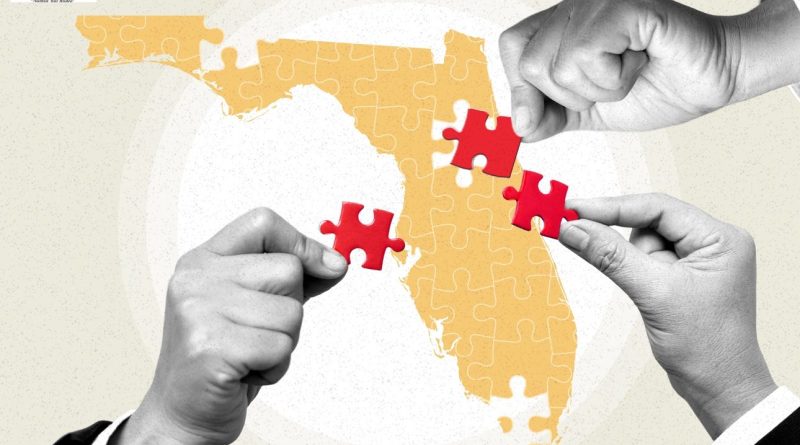
Florida Redistricting Shock: 5 Key GOP Power Moves
The battle over Florida redistricting is rapidly emerging as one of the most consequential political fights ahead of the 2026 U.S. midterm elections. With Governor Ron DeSantis and Republican lawmakers pushing to redraw congressional maps, the move could reshape the balance of power in Washington—and trigger a nationwide political chain reaction.
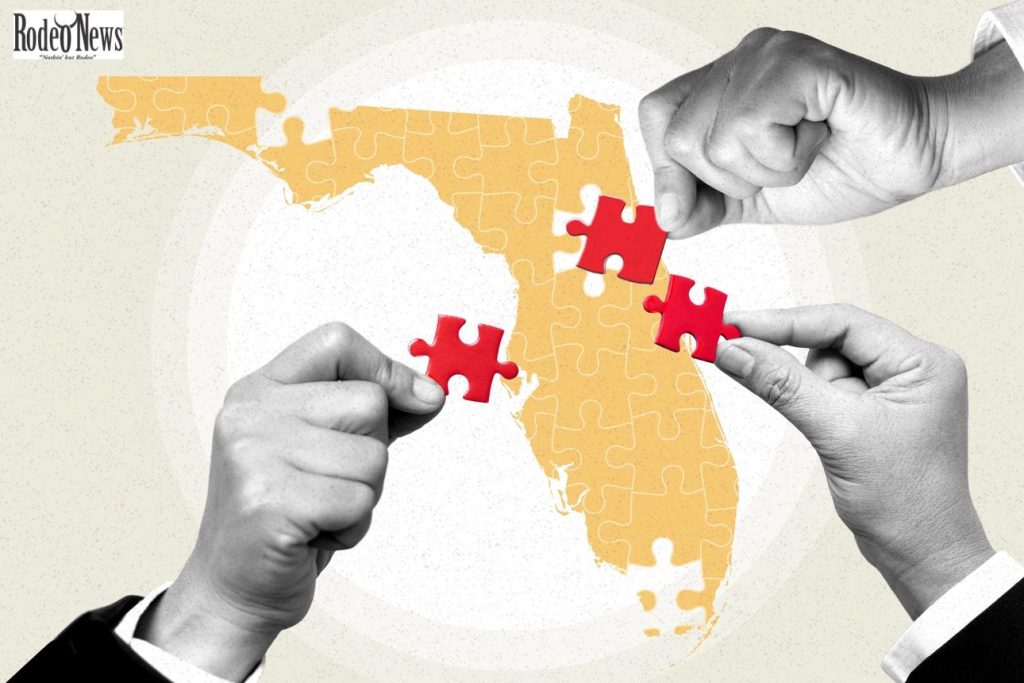
The effort is part of a broader strategy supported by Donald Trump and national Republicans to secure more House seats through mid-decade redistricting—an aggressive tactic that breaks from traditional once-per-decade map drawing.
Below are five key power moves defining the Florida redistricting showdown.
1. Special Session Signals Urgency
Governor Ron DeSantis has called for a special legislative session dedicated to Florida redistricting, highlighting the urgency Republicans place on revisiting congressional maps before the 2026 elections.
This is not a routine adjustment. Historically, redistricting happens after the U.S. census every ten years. However, this mid-cycle push reflects growing political pressure after recent Democratic gains in other states.
The goal is clear: maximize Republican representation in Florida, where the GOP already holds 20 out of 28 congressional seats.
Meanwhile, the move also aligns with a broader national trend of both parties aggressively redrawing maps to gain an edge in a tightly contested House of Representatives.
2. Trump’s National Strategy Drives the Push
The Florida effort is closely tied to a wider campaign backed by Donald Trump, who has encouraged Republican-controlled states to redraw maps ahead of schedule.
The strategy aims to protect a fragile GOP majority in Congress. Rather than waiting for the next census cycle, Republicans are attempting to proactively secure additional seats.
However, the approach has triggered a political arms race. Democrats have responded with their own redistricting efforts in states like Virginia and California, intensifying partisan tensions nationwide.
Critics argue this escalating cycle of redistricting risks undermining public trust in democratic institutions.
3. Legal Risks Could Derail the Plan
Despite Republican control in Florida, the redistricting effort faces significant legal obstacles.
Florida’s constitution includes the “Fair Districts” amendments, which prohibit maps drawn to favor a political party. Any attempt to aggressively reshape districts could lead to court challenges.
Legal experts warn that new maps may be struck down if they are deemed unconstitutional. Previous redistricting battles in the state have already resulted in lawsuits and judicial intervention.
Additionally, ongoing court fights in other states show how unpredictable these efforts can be. In some cases, judges have overturned maps entirely, reshaping election outcomes.
This creates a high-stakes gamble for Republicans: potential gains in Congress versus the risk of legal defeat.
4. Potential Gains: Up to Five New GOP Seats
If successful, Florida redistricting could deliver a significant boost to Republicans—possibly adding between three and five new congressional seats.
Such gains could be decisive in maintaining control of the House, where margins are currently razor-thin.
Political analysts note that even a small shift in seats could determine which party controls key legislative agendas, including federal spending, foreign policy, and oversight investigations.
However, not all Republicans are fully convinced. Some party members worry that aggressive redistricting could backfire, energizing Democratic voters or triggering countermeasures in blue states.
5. A National Political Domino Effect
The Florida redistricting fight is not happening in isolation—it is part of a nationwide political domino effect.
Recent developments in Virginia, where voters approved a map favoring Democrats, have intensified pressure on Republicans to respond.
At the same time, Democratic leaders such as Hakeem Jeffries have warned that any aggressive GOP redistricting in Florida will be met with strong resistance.
This back-and-forth escalation is transforming redistricting into a central battleground for control of Congress.
Some analysts warn that the strategy may ultimately produce limited gains while increasing political polarization.
The Bigger Picture: Risks and Consequences
While the potential rewards of Florida redistricting are significant, the risks are equally substantial.
Political Risks
Aggressive redistricting could alienate moderate voters or provoke backlash in competitive districts. It may also encourage Democrats to pursue similar tactics in states they control.
Legal Risks
Court challenges could delay or overturn new maps, creating uncertainty ahead of elections.
Institutional Risks
Frequent redistricting may erode public confidence in fair representation and democratic processes.
Some Republican lawmakers have already expressed concerns that the strategy could backfire politically and strategically.
Why Florida Matters Most
Florida holds a unique position in the national political landscape.
- It is one of the largest states in terms of electoral influence
- It has a strong Republican majority
- It offers multiple opportunities to redraw competitive districts
Because of these factors, changes in Florida’s congressional map could have an outsized impact on the national balance of power.
In essence, Florida redistricting is not just a state issue—it is a national turning point.
What Happens Next?
The coming months will be critical.
Lawmakers are expected to draft and debate new congressional maps during the special session. These proposals will likely face immediate scrutiny from legal experts, advocacy groups, and political opponents.
If passed, the maps could quickly become the subject of lawsuits, potentially reaching higher courts.
Meanwhile, both Republicans and Democrats are preparing for a prolonged political and legal battle that could shape the outcome of the 2026 midterm elections.
Conclusion
The fight over Florida redistricting represents a high-stakes political gamble with national implications.
Driven by Republican leaders like Ron DeSantis and backed by Donald Trump, the push to redraw congressional maps could reshape the U.S. House of Representatives.
However, with legal challenges looming and political risks mounting, the outcome remains uncertain.
What is clear is this: Florida has become ground zero in a broader battle over political power in America—one that could define the future of U.S. elections for years to come.