Trump Says Board of Peace Secures $7 Billion for Gaza Relief as Ceasefire Talks Enter Critical Phase
WASHINGTON — President Donald Trump announced Thursday that member states of his newly formed Board of Peace have pledged more than $7 billion toward a Gaza relief package, marking the first major financial commitment tied to a US-brokered plan aimed at ending the war between Israel and Hamas and rebuilding the devastated enclave.
The announcement came during the inaugural meeting of the organization in Washington, an initiative that has drawn skepticism from several of America’s traditional Western allies. While the administration portrays the board as a vehicle for reconstruction and regional stabilization, critics fear it may sideline the United Nations and reshape the diplomatic architecture of the Israeli-Palestinian conflict.
Standing before representatives of participating nations, Trump said the contributions signal a shift toward what he described as “a new chapter” for Gaza.
“Every dollar spent is an investment in stability,” he said, adding that the territory was “no longer a hotbed of radicalism and terror.”
Gulf and Central Asian States Lead Funding Push
According to Trump, countries including Kazakhstan, Azerbaijan, the United Arab Emirates, Morocco, Bahrain, Qatar, Saudi Arabia, Uzbekistan, and Kuwait have collectively pledged more than $7 billion toward the package. The UN, he added, would contribute an additional $2 billion in humanitarian assistance, while FIFA would raise $75 million for soccer-related projects in Gaza.
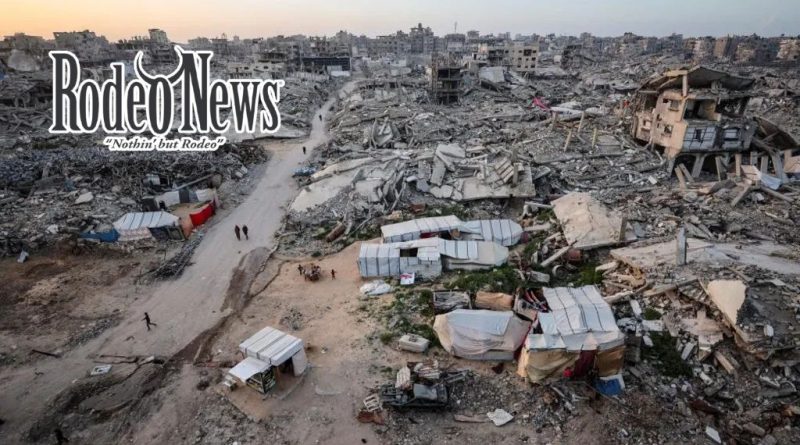
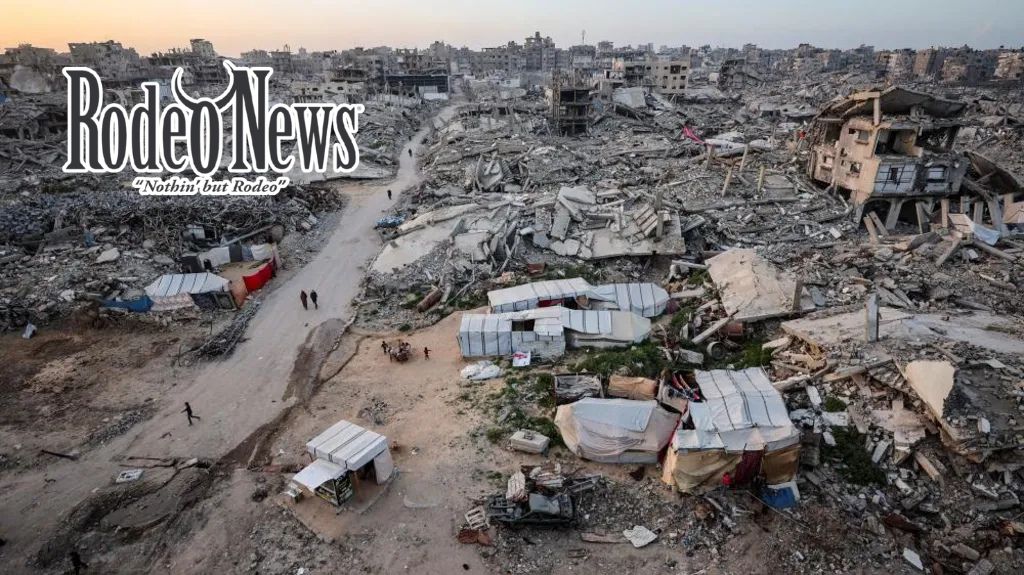
The financial pledges come as Gaza remains in ruins following more than a year of war. The United Nations has estimated reconstruction costs at roughly $70 billion, reflecting widespread destruction of homes, hospitals, roads and public utilities.
Yet major US allies — including the United Kingdom, Canada, France and Germany — have declined to join the Board of Peace. Diplomats from several European capitals have privately expressed concern that the body could serve as an alternative to established UN-led frameworks.
Seeking to ease those fears, Trump said Washington would work “very closely” with the United Nations and pledged to “bring them back” into the process.
Disarmament at the Heart of Phase Two
The second phase of the US-backed ceasefire plan hinges on one central condition: the disarmament of Hamas.
Trump struck an optimistic tone, saying it “looks like” the Palestinian militant group would agree to lay down its weapons. But on the ground in Gaza, there are few visible signs of such a shift. Residents report that Hamas continues to assert authority across the Strip, maintaining internal security control even as ceasefire negotiations proceed.
Israeli Prime Minister Benjamin Netanyahu reinforced his government’s position during remarks delivered the same day.
“We have agreed with our ally the US that there will be no reconstruction of Gaza before the demilitarisation of Gaza,” Netanyahu said, underscoring Israel’s insistence that security precede rebuilding.
Hamas, for its part, has publicly tied any surrender of weapons to a full Israeli military withdrawal from Gaza — a condition that remains deeply contentious.
Building Security From Scratch
Central to the Board of Peace’s proposal is the creation of a new transitional Palestinian police force, tasked with gradually assuming security responsibilities in Gaza.
Nickolay Mladenov, the Bulgarian diplomat appointed as the board’s high representative for Gaza, said recruitment had already begun, with 2,000 applicants registering within hours.
However, both Washington and Jerusalem have ruled out incorporating members of Hamas-controlled security forces without strict vetting. Nor do they favor simply transferring the Palestinian Authority’s West Bank security personnel into Gaza wholesale. That effectively means constructing a new force from the ground up — a process analysts describe as logistically and politically daunting.
Under the US framework, the new Palestinian police would operate alongside an International Stabilisation Force, working in coordination with Israel and Egypt to secure border areas and oversee the permanent disarmament of non-state armed groups.
Mladenov cautioned that there is currently little evidence such a force could immediately supervise Hamas’s disarmament, highlighting the gap between diplomatic ambition and realities on the ground.
War’s Toll and Political Stakes
The conflict was triggered by the Hamas-led attack on southern Israel on October 7, 2023, in which approximately 1,200 people were killed and 251 taken hostage. Israel’s subsequent military campaign in Gaza has killed more than 72,000 people, according to Gaza’s Hamas-run health ministry.
Beyond the human toll, the war has shattered Gaza’s economy and displaced much of its population. Entire neighborhoods have been flattened, leaving reconstruction not only a financial challenge but also a governance dilemma.
Without a broadly supported Palestinian security authority capable of exercising a monopoly on force, Trump’s reconstruction vision faces formidable obstacles. International donors have historically been reluctant to commit large-scale funds absent credible governance and security guarantees.
A New Diplomatic Architecture?
The Washington meeting reflected Trump’s distinctive approach to Middle East diplomacy — blending political negotiation with investment-driven development. Supporters argue that leveraging wealthy regional partners and infrastructure funding represents pragmatic “new thinking” after decades of stalled peace efforts.
Skeptics counter that bypassing traditional multilateral structures could deepen fragmentation, particularly if key European powers remain outside the initiative.
Israel, meanwhile, has reportedly voiced concern over the prominent involvement of Turkey and Qatar — countries Jerusalem views warily — within the broader diplomatic framework surrounding Gaza’s future.
Mladenov warned that without swift progress, Gaza risks remaining divided: partly under ongoing Israeli military control, partly under Hamas authority, and politically severed from the West Bank. Such a scenario, he suggested, would make the prospect of a viable Palestinian state increasingly remote while failing to provide lasting security for Israel.
For now, the pledged $7 billion offers a headline figure and a measure of momentum. Whether it translates into durable peace — and whether Hamas ultimately disarms — remains the unanswered question at the heart of Trump’s latest Middle East gamble.