Haiti Gang Raid Leaves 47 Dead as 50 Are Kidnapped
A devastating Haiti gang raid in the hillside community of Kenscoff has left at least 47 people dead and more than 50 others kidnapped, according to the United Nations. Another 22 people were injured in the attack, which has renewed concerns over Haiti’s worsening security crisis and the ability of authorities to protect civilians.
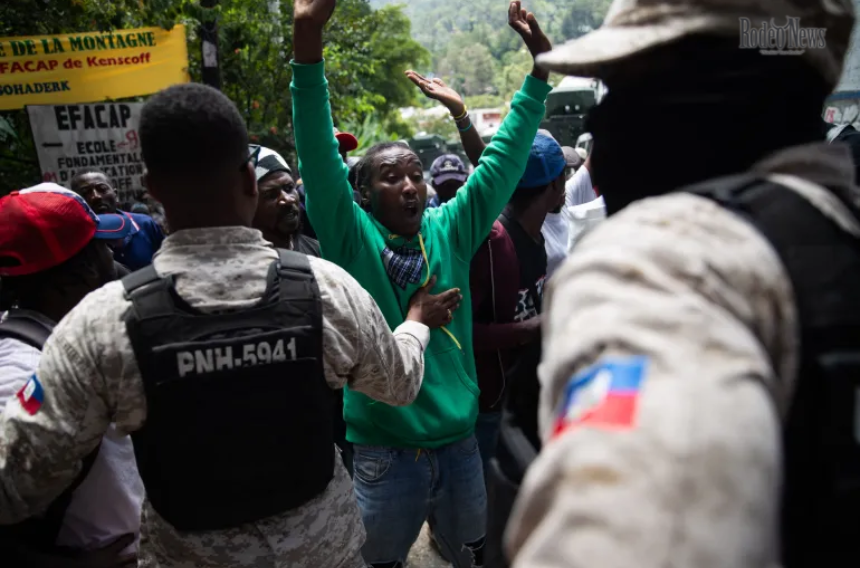
The assault took place on the evening of August 23 in Kenscoff, a strategically important community overlooking routes into Port-au-Prince. The United Nations said casualty figures could still change as authorities continue assessing the aftermath.
The attack has become one of the largest mass kidnapping incidents reported in Haiti in recent years. It has also created a major political and security challenge for the Haitian government as the country prepares for elections later this year.
Haiti Gang Raid Leaves Kenscoff Reeling
Kenscoff sits in the hills above Haiti’s capital and has faced repeated attacks by armed groups since early 2025. Thousands of residents have previously been forced to leave their homes as gangs expanded their operations in the area.
According to Reuters, Kenscoff experienced nearly a dozen attacks since last year, including killings, kidnappings, sexual violence and arson. Earlier attacks in the first months of 2025 reportedly killed more than 260 people and destroyed or burned about 200 homes. Around 3,000 residents were forced to flee during that period.
The latest Haiti gang raid was particularly devastating because armed men reportedly entered residential areas, attacked civilians and set homes on fire.
Kenscoff Mayor Jean Massillon said the attackers “sowed chaos” across the community. He also said gang members targeted a church and residential properties, including the home of prominent Haitian public health expert Jean William Pape.
The Associated Press reported that 25 homes were set on fire during the attack. At least five of those killed were children, according to the United Nations Integrated Office in Haiti.
More Than 50 People Kidnapped
The death toll is only part of the tragedy.
The United Nations said more than 50 people were kidnapped during the attack, making the incident one of Haiti’s largest mass kidnappings in recent years. Families have been left waiting for information about relatives who were taken by armed groups.
One resident, Marc Paul, told The Associated Press that his brother, stepmother, stepfather and two cousins were among those kidnapped. His 16-year-old niece was also captured and sexually assaulted but managed to escape and reunite with her family.
The accounts from survivors underline the scale of the violence.
Paul described fleeing the area while encountering bodies in the streets. The attack left him worried that his kidnapped relatives could be killed.
The situation became even more dangerous after a gang member posted a video threatening to kill hostages if Haitian security forces injured members of the armed group.
The man identified himself as Izo 2, a reference to Johnson André, one of Haiti’s most powerful gang leaders. The threat was directed at Vladimir Paraison, director of the Haitian National Police.
That threat has created a difficult dilemma for authorities. Any attempt to rescue the hostages could put their lives at greater risk, while failing to act could allow gangs to maintain control over the community.
Gang Threat Raises Pressure on Haiti Government
The Haiti gang raid has generated renewed criticism of the country’s security forces.
Residents accused police of failing to protect them, particularly because some of the killings reportedly occurred close to a police station.
That criticism has fueled calls for the local police chief to resign.
Haiti’s government, however, has rejected the idea that Kenscoff will be abandoned. The prime minister’s office promised that state authority would be restored and that additional security measures would be taken.
Haiti’s National Police also ordered an investigation into the attack. According to AP, police chief Vladimir Paraison said the investigation would examine whether the incident resulted from negligence or possible complicity. Specialized units were also ordered into the area.
The response will be closely watched because the attack occurred in a strategically important location.
Kenscoff overlooks routes leading toward Pétion-Ville, an affluent area that contains embassies, hotels and important government facilities. It also sits near a major road connecting Port-au-Prince with southern parts of Haiti.
Control of the area therefore has importance beyond the immediate community.
Why Kenscoff Matters to Haiti’s Gangs
The geography of Kenscoff helps explain why armed groups continue trying to expand their presence there.
The community provides access to routes around Port-au-Prince and toward southern Haiti. Controlling these routes can give gangs greater mobility while putting pressure on government forces.
Researchers cited by AP said gangs may be seeking to surround and exert influence over Pétion-Ville while also taking advantage of areas where police resources are limited.
The attack may also have been designed to stretch already limited security resources.
Romain Le Cour, head of the Haiti Observatory at the Global Initiative Against Transnational Organized Crime, said the gangs could be attempting to force Haitian police and the international security mission to divert personnel away from other parts of the country.
This strategy would create a difficult situation for security forces.
If additional troops are sent to Kenscoff, other communities could receive less protection. If authorities do not respond strongly, gangs may interpret that as evidence that the state is unable to challenge their control.
Haiti Gang Violence Continues to Spread
The latest attack is part of a much wider crisis.
Armed groups have established significant control over parts of Port-au-Prince and other areas of Haiti. According to AP, armed groups control an estimated 70 percent of the capital and large areas elsewhere in the country.
The humanitarian consequences have been severe.
United Nations figures cited by AP show that more than 3,050 people were killed between January and June 2026. Gang violence has also displaced approximately 1.5 million people across Haiti.
Sexual violence has become another major feature of the crisis.
The United Nations reported nearly 800 rapes between April and June alone, with 87 percent of reported cases involving collective sexual violence. The actual number may be higher because many victims do not report attacks.
Kidnappings are also increasing.
At least 81 kidnappings were reported during the same three-month period, although the United Nations warned that the figure represents only a fraction of the true total. Many families reportedly negotiate directly with kidnappers instead of contacting police because they fear retaliation or believe direct negotiations could secure a faster release.
The reported number of kidnappings between April and June was more than 40 percent higher than during the previous quarter.
International Security Efforts Face a Major Test
Haiti’s National Police have struggled to confront heavily armed criminal organizations, leading to international efforts to strengthen security.
A U.N.-backed Gang Suppression Force has been established to assist Haitian authorities in confronting gangs. The force is expected to reach a capacity of more than 5,500 personnel this autumn.
However, the effectiveness of the international effort remains a major concern.
The Haiti gang raid demonstrates how quickly armed groups can exploit gaps in security coverage.
The attack also raises questions about whether international forces will have enough personnel and resources to protect communities outside the most heavily secured areas of Port-au-Prince.
Reuters reported that the U.N.-backed force is expected to expand significantly, but it was not immediately clear whether its personnel were supporting security operations in Kenscoff at the time of the attack.
For residents, the issue is immediate.
They want protection before an attack begins, rather than a security response after homes have been destroyed and civilians have been killed or kidnapped.
Haiti’s Upcoming Election Faces Fresh Uncertainty
The violence comes at a particularly sensitive moment for Haiti.
The country is preparing for general elections scheduled for December 13, 2026. The vote would be the first general election in more than a decade, making security a critical issue for the country’s political future.
Repeated political crises and gang expansion have made elections extremely difficult to organize.
The latest violence could increase concerns about whether voters will be able to safely reach polling locations and whether candidates can campaign in areas affected by armed groups.
The ability of the government to secure major population centers will therefore be central to the credibility of the electoral process.
The Kenscoff attack also sends a worrying signal.
If gangs can launch a large-scale operation in a community near the capital, kill dozens of people and abduct more than 50 residents, questions will inevitably arise about the state’s ability to provide security during an election period.
Residents Demand More Than Promises
For people living in Kenscoff, government promises have done little to ease fear.
The community has already experienced repeated attacks, displacement and destruction.
Residents say they need sustained security rather than temporary deployments after violence occurs.
The anger is especially intense because some residents believe authorities had enough warning that the area was vulnerable.
The Haitian National Police has said it will investigate the circumstances surrounding the attack and determine whether negligence or other failures played a role.
That investigation could become an important test of public confidence.
If authorities can establish how the attackers entered the community, why they were able to operate for so long and whether police resources were properly deployed, officials may be able to identify weaknesses that need immediate correction.
But accountability alone will not solve the broader problem.
Haiti’s gangs remain heavily armed, organized and capable of exploiting areas where government institutions are weak.
What Happens Next in Haiti?
The immediate priority is the safety of the kidnapped residents.
More than 50 people remain at the center of the crisis, and the gang threat to execute hostages has raised fears that any security operation could have deadly consequences.
At the same time, authorities face pressure to prevent gangs from consolidating control over Kenscoff and nearby strategic routes.
The government has promised additional security forces, while police have opened an investigation into the attack. International partners will also face pressure to demonstrate that the expanding security mission can protect vulnerable communities.
The broader crisis will not be resolved through one operation.
Haiti needs functioning security institutions, stronger policing, protection for civilians, humanitarian assistance and a credible political process. Without those elements working together, gangs are likely to continue exploiting instability.
The Haiti gang raid in Kenscoff has therefore become more than another deadly incident in a country accustomed to violence.
It is a stark demonstration of the continuing power of armed groups, the vulnerability of civilians and the enormous challenge facing Haiti’s government and international partners.
For the families of those killed and kidnapped, however, the crisis is not measured in statistics.
It is measured in missing relatives, destroyed homes and communities struggling to survive.
As Haiti moves toward its planned December election, the question is increasingly urgent: can the state restore enough security for ordinary citizens to live, vote and remain in their communities without fear?
The answer could determine not only the future of Kenscoff, but the direction of Haiti’s political and humanitarian crisis.