
Pope Leo XIV Liturgy Reform: 3 Revealing Questions
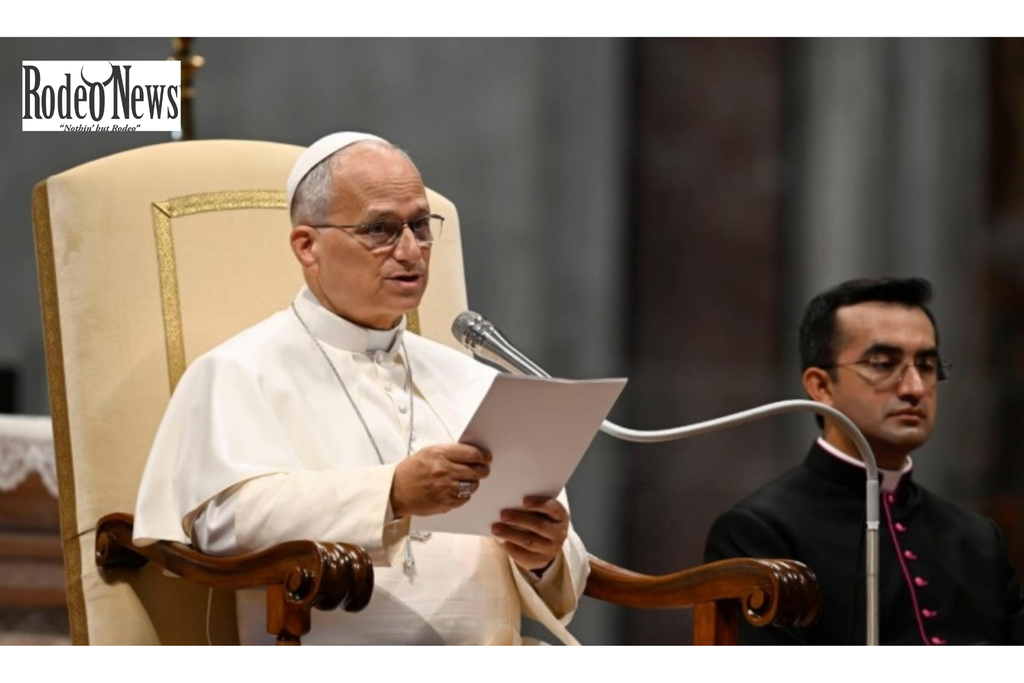
The Pope Leo XIV liturgy reform debate has entered a new phase after the pontiff used his August 26 general audience to argue that the liturgical reform promoted by the Second Vatican Council is firmly rooted in the Church’s living tradition. His remarks came during his latest catechesis on Sacrosanctum Concilium, the council’s Constitution on the Sacred Liturgy.
The statement might appear straightforward. Yet it immediately drew scrutiny from liturgical scholars who argue that the relationship between the council’s intentions and the reforms that followed remains a complicated historical and theological question.
The controversy is not simply about Latin, vernacular worship, music or the traditional Mass. At its heart is a deeper question: How should Catholics understand the relationship between liturgical development, the authority of the Church and the traditions handed down through generations?
The issue has become increasingly important as Catholic communities continue to debate the legacy of the Second Vatican Council and the place of different forms of the Roman liturgy.
Pope Leo XIV Liturgy Reform Debate Begins With Vatican II
Pope Leo XIV devoted his August 26 audience to the motivations behind the liturgical reform associated with the Second Vatican Council.
The Vatican’s official transcript identifies the address as the eighth and final catechesis in Leo’s series on Sacrosanctum Concilium. The pope examined several developments that preceded and influenced the council, including the Liturgical Movement and reforms introduced under earlier popes.
Leo pointed to concerns about participation by the faithful. He cited earlier statements emphasizing that Catholics should not remain merely spectators during the liturgy.
The pope also discussed the council’s understanding of liturgical restoration. Sacrosanctum Concilium says the Church sought a careful “general restoration” of the liturgy so that its texts and rites could express sacred realities more clearly and enable the faithful to participate fully and actively.
That historical background is important.
The council did not emerge in isolation. Liturgical changes had already been taking place for decades. Pope Pius XII had reformed the Holy Week ceremonies, while Pope John XXIII approved changes to the rubrics of the Roman Missal and Breviary before the council formally opened. Leo highlighted these developments in his catechesis.
However, the question becomes more complicated when considering how far the post-conciliar reform went.
The Word “Thus” Has Become the Center of the Dispute
One of the most significant criticisms comes from liturgical scholar Dom Alcuin Reid, whose analysis was published by Catholic journalist Diane Montagna.
Reid focuses heavily on one word in Pope Leo’s conclusion: “thus.”
The pope states that the liturgical reform promoted by Vatican II is “thus firmly rooted in the living tradition of the Church.”
For Reid, the wording is consequential because it appears to connect the historical arguments presented in the catechesis directly to a conclusion about the legitimacy and continuity of the subsequent reform.
In his analysis, Reid argues that the critical issue is whether the reform that followed the council actually complied with the council’s own instructions concerning organic development.
That question centers partly on Article 23 of Sacrosanctum Concilium. The council instructed that there should be no innovations unless the good of the Church genuinely and certainly required them, and that new forms should in some way grow organically from forms already existing.
The full text of the Second Vatican Council’s documents is available through the Holy See’s official archive.
Reid’s criticism is therefore not simply that Pope Leo supports liturgical reform. Instead, he questions whether the pope’s catechesis sufficiently demonstrates the historical connection between the council’s principles and the reforms subsequently implemented.
That distinction matters.
A Catholic can accept the authority of Vatican II while still asking whether every practical decision made in the decades afterward accurately reflected the council’s intentions.
What Did Vatican II Actually Ask For?
Understanding the Pope Leo XIV liturgy reform controversy requires returning to Sacrosanctum Concilium itself.
The document called for reform, but it also emphasized continuity.
Article 21 speaks about the restoration of the liturgy while distinguishing between immutable elements instituted by God and other elements that can be changed over time when they no longer correspond appropriately to the nature of the liturgy.
The same article says that texts and rites should express sacred realities more clearly and that the faithful should be enabled to participate fully, actively and appropriately.
This created a framework for legitimate development.
But it also established limits.
The debate that followed the council has partly concerned where those limits should be placed. Supporters of the post-conciliar reform generally emphasize the council’s call for renewal and greater participation. Critics argue that some reforms went beyond what the council actually requested.
That disagreement has continued for decades.
It is also why discussions about the Roman liturgy can quickly become emotionally charged. For many Catholics, the question is connected not merely to aesthetic preferences but to their understanding of tradition, authority and continuity.
Active Participation Does Not Simply Mean Activity
Another major issue raised in the discussion concerns the famous call for the “full, conscious, and active participation” of the faithful.
Pope Leo connected participation with the council’s desire that Catholics should not be “strangers or silent spectators” during the celebration of the Eucharist. He explained that understanding the rites and prayers should lead the faithful into a deeper relationship with God.
This is a central theme of Sacrosanctum Concilium.
Yet Reid argues that participation should not be understood primarily in terms of visible or external activity.
The deeper question is what Catholics are actually participating in.
The council describes the liturgy as the action of Christ and His Church. It also famously calls the liturgy the “summit” toward which the Church’s activity is directed and the “font” from which her power flows.
That theological framework means that participation cannot be reduced to speaking, singing, reading or performing particular roles.
External participation can be valuable. But it is intended to correspond to an interior participation in the sacred action itself.
This distinction is important because otherwise “active participation” can become confused with constant activity.
Silence, listening, prayer and contemplation can also constitute genuine participation.
Why Traditional Catholic Worship Remains Part of the Debate
The Pope Leo XIV liturgy reform controversy also touches on the future of older forms of Catholic worship.
Reid argues that elements such as Latin, Gregorian chant, incense and traditional liturgical orientation should not automatically be treated as disposable simply because they are not essential to sacramental validity.
His broader point is that Catholic liturgical tradition contains layers of meaning that developed over centuries.
The argument does not mean that every historical practice is permanently unchangeable. Catholic liturgy has always developed.
Instead, the disagreement concerns the nature of that development.
Was the post-conciliar reform an organic renewal of the Roman liturgical tradition, or did portions of the reform represent a substantially different approach?
That remains one of the most contested questions in modern Catholic liturgical scholarship.
Pope Leo’s catechesis clearly emphasizes continuity. He notes that liturgical development has occurred throughout history and that earlier popes themselves made significant changes.
At the same time, the controversy demonstrates that historical development does not automatically settle the question of whether a particular reform was appropriately organic.
Pope Leo XIV Also Condemns Liturgical Abuses
One point that should not be overlooked is that Pope Leo XIV did not present the post-conciliar period as flawless.
Near the conclusion of his catechesis, the pope acknowledged that abuses occurred in some parts of the Church after the council and said that such abuses can still occur when principles of the reform are misunderstood or taken to extremes.
This provides an important qualification.
Leo is not arguing that every implementation of liturgical reform has been successful.
Instead, he presents the reform itself as fundamentally connected to the Church’s living tradition while distinguishing that principle from abuses that may have occurred in practice.
The distinction could become increasingly significant during his pontificate.
A pope can defend the fundamental legitimacy of the post-conciliar reform while simultaneously insisting on greater reverence, fidelity to liturgical norms and rejection of abuses.
That appears to be part of the balance Leo sought in his address.
The Broader Catholic Debate Is Unlikely to End
The response to Pope Leo’s catechesis demonstrates why the liturgy remains one of the most sensitive issues in contemporary Catholicism.
For some Catholics, the council’s liturgical reform represents an important recovery of biblical richness, congregational participation and the communal character of worship.
For others, the decades following Vatican II produced changes that were much more extensive than the council itself required. They argue that the older liturgical tradition deserves a greater place in Catholic life.
Both sides frequently appeal to tradition.
That is what makes the dispute particularly complex.
The question is not simply whether tradition matters. Almost everyone involved agrees that it does.
The disagreement concerns what authentic liturgical continuity looks like.
The Holy See’s official archive provides access to the full text of Sacrosanctum Concilium, allowing readers to examine the council’s language directly rather than relying solely on later interpretations.
A Call for Less Polarization
Reid’s analysis ultimately takes a more conciliatory direction than the sharp criticism of the papal catechesis might initially suggest.
He argues that Pope Leo should encourage inclusivity and mutual respect rather than allowing his statements to become weapons in the continuing liturgical conflict.
That may be one of the most important points emerging from the controversy.
The Catholic Church contains Catholics attached to different liturgical traditions. Some worship primarily according to the post-conciliar Roman Missal. Others have a strong attachment to older forms of the Roman rite. Still others are interested in recovering traditional elements within celebrations of the current Missal.
The challenge for Church leadership is to address legitimate differences without allowing liturgical preference to become a source of permanent division.
Pope Leo himself concluded his catechesis by emphasizing the responsibility of bishops, priests and the faithful to safeguard a liturgy that respects the norms of the Church and manifests the unity of the Catholic Church.
What Comes Next for the Liturgy?
The Pope Leo XIV liturgy reform debate is unlikely to disappear following one general audience.
If anything, the pope’s remarks have brought the underlying question into sharper focus.
The central issue is no longer simply whether Vatican II called for liturgical reform. It clearly did.
The harder question is how the Church should evaluate the reforms that followed.
That requires careful historical research, serious theological discussion and close attention to the actual texts of the council.
It also requires resisting the temptation to reduce the discussion to two opposing camps.
For Pope Leo XIV, the immediate challenge may be finding a way to affirm the legitimacy of the Church’s post-conciliar liturgical life while also addressing the concerns of Catholics who believe that aspects of the reform departed from the deeper patterns of Catholic tradition.
His August 26 catechesis gives a clear indication of his starting point: the reform is to be understood within the living tradition of the Church, while abuses and distortions are to be rejected.
Whether that approach can bridge the divisions that have characterized the liturgy wars for generations remains an open question.
For now, the debate has moved forward.
And perhaps the most revealing development is that the argument is no longer confined to historians and liturgical scholars. With Pope Leo XIV now directly addressing the theological foundations of the reform, the future of Catholic worship has once again become a matter of prominent public discussion.
Recommended primary sources:
Pope Leo XIV’s August 26, 2026 catechesis
Second Vatican Council documents, including Sacrosanctum Concilium
Source analysis:
Diane Montagna’s original report and Dom Alcuin Reid’s commentary
Image ALT Text
Pope Leo XIV liturgy reform during the August 26, 2026 general audience at St. Peter’s Basilica