Dolly Parton Dead at 80 After Brief Cancer Battle
Dolly Parton, the legendary country singer, songwriter, actress and philanthropist, has died at 80 after a brief battle with cancer. Her representatives confirmed that she died Tuesday, Aug. 25, 2026, at the Vanderbilt-Ingram Cancer Center in Nashville, surrounded by loved ones. Her team did not disclose the specific type of cancer.
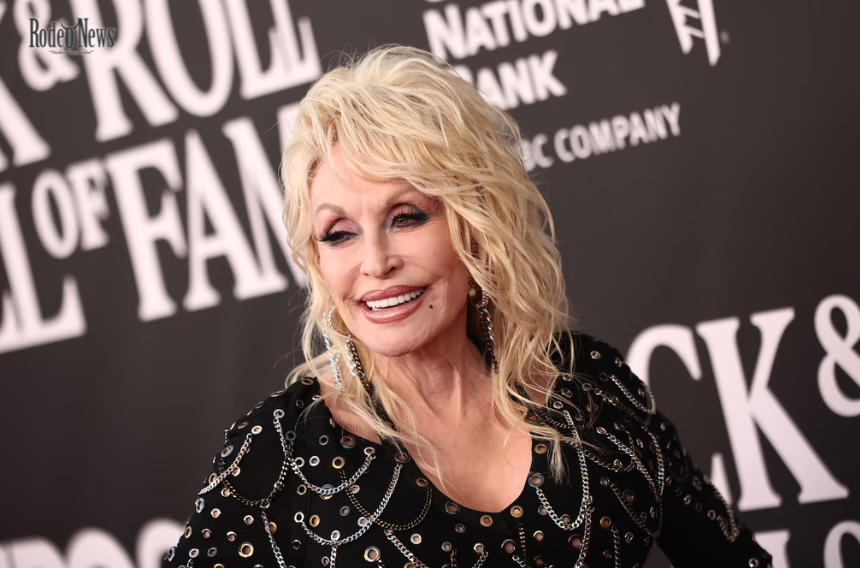
The death of Parton marks the end of one of the most remarkable careers in American entertainment. For roughly seven decades, she built a rare legacy that stretched far beyond country music. She became a global recording star, successful songwriter, film actress, television personality, businesswoman and one of the most recognizable philanthropists in the United States.
Parton’s music made her famous. Her generosity made her beloved.
Songs such as “Jolene,” “9 to 5” and “I Will Always Love You” became cultural landmarks, while her work through the Dollywood Foundation and Imagination Library touched millions of children and families.
Her death has prompted an immediate worldwide outpouring of tributes, with artists, entertainers, fans and public figures remembering an artist whose influence reached far beyond Nashville.
Dolly Parton Death Confirmed in Nashville
Parton’s representatives said she died at Vanderbilt-Ingram Cancer Center in Nashville following what they described as a brief battle with cancer.
The announcement came after months in which Parton had dealt with personal and health challenges. Her husband of nearly six decades, Carl Dean, died in March 2025. Parton had continued working and communicating with fans despite the loss.
Her nephew, Bryan Seaver, announced her death in a video shared through Parton’s official Instagram account, fulfilling an arrangement that had been planned in advance. Her family and representatives emphasized that she was surrounded by loved ones when she died.
The announcement immediately changed the tone across the entertainment industry.
Country radio stations, performers and longtime fans began remembering the singer’s extraordinary catalog. Tributes also emphasized her kindness and generosity, qualities that became nearly as important to her public identity as her music.
Dolly Parton’s Remarkable Seven-Decade Career
Parton’s professional career began when she was still young, eventually leading her from the Appalachian region of Tennessee to the biggest stages in the world.
She emerged as a songwriter before becoming an international recording star. Her ability to tell stories through simple but emotionally powerful lyrics helped distinguish her from many of her contemporaries.
Parton wrote about love, poverty, family, work, ambition and heartbreak. Her songs frequently drew on experiences and characters that felt ordinary, yet she transformed them into stories that could connect with millions of listeners.
That storytelling ability became the foundation of her career.
Over the decades, she recorded an enormous catalog and became one of the most commercially successful female country performers in history. Her music also crossed into pop, rock, gospel and bluegrass, allowing her audience to grow well beyond traditional country music.
By the time of her death, Parton had become much more than a country star.
She was an American cultural institution.
Dolly Parton and the Songs That Defined Her
Few artists can claim to have written songs that became famous through multiple generations and different performers.
Parton could.
One of her most enduring compositions was “I Will Always Love You.” She originally wrote and recorded the song herself before Whitney Houston’s enormously successful 1992 version introduced it to an even larger international audience.
Parton also created “Jolene,” one of the most recognizable songs in country music.
The song’s simple premise — a woman pleading with another woman not to take her partner — became a remarkably powerful piece of storytelling. Its emotional directness allowed countless singers to reinterpret it over the decades.
Then came “9 to 5,” which became both a hit song and the centerpiece of the 1980 film of the same name.
Parton’s songwriting demonstrated something important about her artistic identity: she could create music that was deeply rooted in country traditions while remaining accessible to a mainstream audience.
Her songs were often direct.
Her melodies were memorable.
And her stories were easy to understand without being simplistic.
Dolly Parton’s Hollywood Career
Parton’s achievements were not limited to music.
She became a successful actress, appearing in films that introduced her personality to audiences who might not have followed country music.
Her starring role in 9 to 5 alongside Jane Fonda and Lily Tomlin helped establish her as a major Hollywood personality. The film’s success also strengthened the connection between Parton’s music and her acting career.
She later appeared in films including The Best Little Whorehouse in Texas, Steel Magnolias and Straight Talk.
Her performance in Steel Magnolias was particularly important because it demonstrated that she could take on more emotionally demanding material while maintaining the warmth and humor associated with her public persona.
Parton also appeared in television projects and entertainment specials throughout her career.
Her presence on screen was distinctive.
She knew how to play with the image audiences expected from her while also showing that the woman behind the rhinestones was a sophisticated performer and businesswoman.
Dolly Parton Built an Entertainment Empire
Parton’s success eventually expanded into business.
One of the most important pieces of her legacy is Dollywood, the Tennessee theme park that became a major tourist destination and economic force in the region.
The park connected Parton’s celebrity to her Appalachian roots.
Rather than distancing herself from where she came from, she repeatedly embraced it. Her childhood experiences in Tennessee influenced her music, public image, charitable work and business decisions.
That connection became a central part of her appeal.
Parton understood that her story was itself valuable.
She came from a large family and a poor rural background. Instead of treating that history as something to hide, she turned it into a source of inspiration.
Her career became a powerful example of how personal identity can become an artistic and business advantage.
Dolly Parton’s Philanthropy Became a Defining Legacy
Perhaps the most important part of Parton’s legacy outside entertainment is her philanthropy.
Through the Dollywood Foundation, she established the Imagination Library, a program designed to provide books to children.
The initiative grew dramatically over the years and eventually distributed hundreds of millions of books to children. Reports have described the program as one of the most extensive early-literacy initiatives associated with an individual entertainer.
Parton’s charitable work was notable because she often focused on practical projects.
Rather than simply making one-time donations, she built programs that could continue reaching families year after year.
The Imagination Library became a particularly strong example of that philosophy.
Parton’s philanthropy also extended to medical research and other causes. During the COVID-19 pandemic, she donated $1 million toward research at Vanderbilt University, funding that was associated with research that contributed to the development of the Moderna vaccine.
Her generosity became part of her public identity.
Fans did not simply admire Parton because she could sing or write songs. They admired the way she used her success to help other people.
Dolly Parton Remained Connected to Appalachia
Parton’s connection to Appalachia remained one of the most important elements of her identity.
She was born in Tennessee and frequently spoke about her upbringing in a large family with limited financial resources.
Those experiences informed songs about hardship and family.
They also influenced the way she approached business and philanthropy.
Dollywood became a physical representation of that connection. Instead of abandoning her roots after becoming wealthy and famous, Parton invested heavily in the region.
Her success therefore became closely associated with the communities that shaped her.
That relationship helped distinguish her from entertainers who moved away from their origins after finding international success.
Parton carried Tennessee with her.
Dolly Parton’s Final Years
Parton’s final years included both professional achievements and significant personal challenges.
She lost Carl Dean, her husband of almost 60 years, in 2025. Despite their famously private relationship, the marriage remained one of the most enduring aspects of Parton’s personal life.
Parton continued to work after Dean’s death and remained active in creative projects.
She also faced health problems during the final period of her life. However, the revelation that she had been battling cancer came only shortly before her death, making the announcement particularly shocking to fans.
The brief nature of the illness meant there was little public discussion about the disease before her death.
Her representatives have not identified the specific type of cancer.
That distinction is important because widespread speculation about a person’s medical condition can quickly become inaccurate. The confirmed information is that Parton had a brief battle with cancer and died at Vanderbilt-Ingram Cancer Center surrounded by loved ones.
Tributes Pour In for Dolly Parton
Tributes began appearing almost immediately after the news broke.
Artists from multiple generations remembered Parton’s talent, humor, generosity and influence. Beyoncé, Taylor Swift, Paul McCartney, Cyndi Lauper, Sheryl Crow, Jane Fonda and Oprah Winfrey were among the public figures associated with tributes reported after her death.
The response illustrated just how broad Parton’s influence had become.
Country musicians viewed her as one of their foundational figures.
Pop stars recognized her songwriting.
Hollywood remembered her performances.
Parents knew her through children’s literacy programs.
And communities in Tennessee knew her as someone who had invested directly in the region.
That combination is exceptionally rare.
Most entertainers become famous for one discipline.
Parton became influential across several.
Dolly Parton’s Legacy Will Outlive Her
The phrase “legend” is frequently used when celebrities die.
In Parton’s case, it is difficult to find a more accurate description.
Her music will continue to be recorded and performed.
Her films will continue to be watched.
Dollywood will continue attracting visitors.
And the Imagination Library will continue placing books in children’s hands.
That last legacy may ultimately prove to be one of the most meaningful.
Parton’s career was built around entertainment, but her impact increasingly became about what she could do with the resources that entertainment provided.
She turned fame into opportunity.
She turned success into philanthropy.
And she turned her Appalachian upbringing into an enduring source of pride.
Remembering Dolly Parton at 80
Dolly Parton is dead at 80 after a brief battle with cancer, bringing an extraordinary life and career to an end.
Yet the scale of her legacy makes it difficult to describe her death simply as the loss of a singer.
She was a songwriter whose compositions became standards.
She was an actress who crossed successfully into Hollywood.
She was a businesswoman who helped transform a regional attraction into a major entertainment destination.
She was a philanthropist whose literacy program reached children around the world.
And she was a cultural figure whose personality became instantly recognizable.
Her voice was distinctive.
Her appearance was unforgettable.
Her humor was self-aware.
But perhaps most importantly, her generosity became inseparable from her fame.
Parton understood that celebrity could be used for more than attention. It could be used to create institutions, support communities and give children opportunities.
That may be the most powerful reason her legacy will endure.
Generations will continue singing her songs. Audiences will continue watching her movies. Visitors will continue traveling to Dollywood.
And somewhere, a child will continue opening a book delivered through a program she created.
That is a legacy far larger than a recording career.
Dolly Parton’s life began in rural Tennessee and grew into one of the most remarkable American success stories of the modern era. She left behind music that became part of the global cultural vocabulary and charitable work that will continue after her death.
For millions of people, she was the voice behind a favorite song.
For others, she was a movie star, businesswoman or childhood inspiration.
For many more, she was simply Dolly.
And although she is gone, the songs, stories and opportunities she created will continue to speak for her.