Trump Escalates Trade Fight With 15% Global Tariffs After Supreme Court Setback
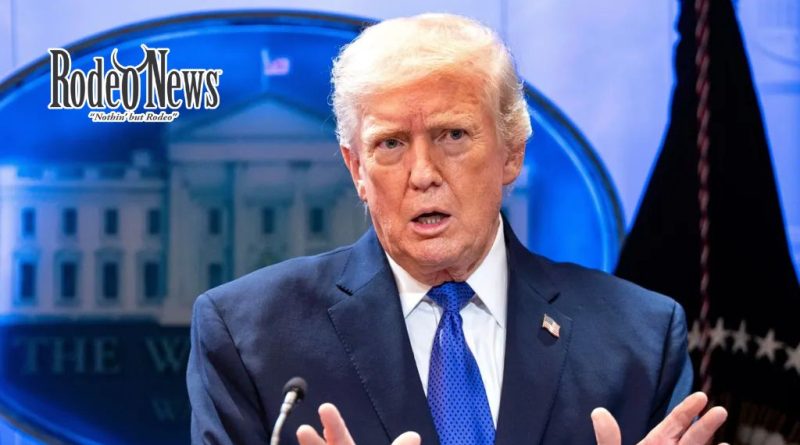
US President Donald Trump has announced plans to impose sweeping 15% tariffs on goods entering the United States, escalating his trade agenda just days after the Supreme Court struck down his previous import taxes.
The move marks a sharp turn in an already volatile debate over executive authority and trade policy, as the White House seeks to reassert its economic strategy under a different legal framework. Trump said the new tariffs would replace a 10% levy initially scheduled to take effect on 24 February, increasing the rate to what he described as the maximum permitted under an obscure trade provision that has never been used in this way.
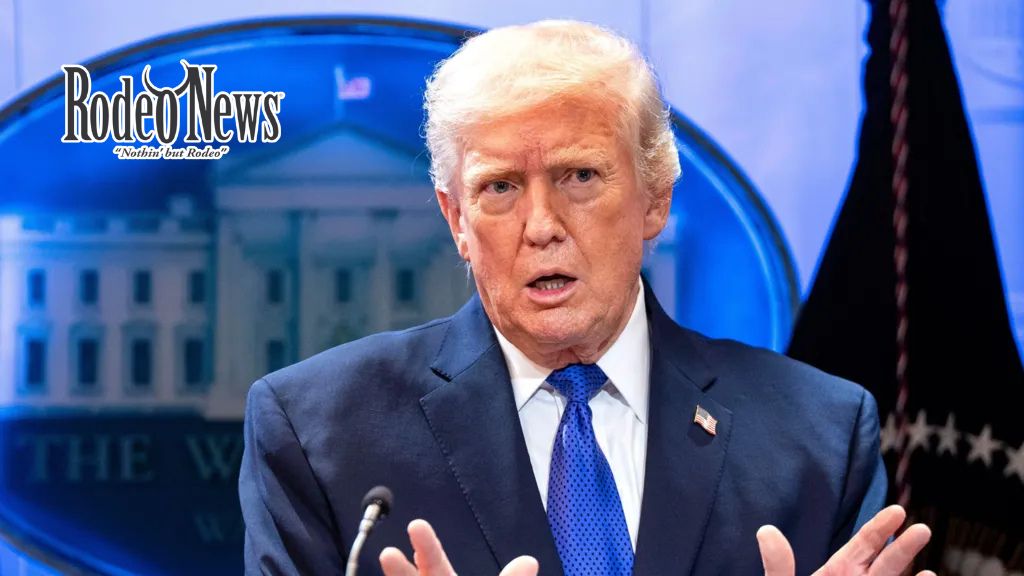
The decision follows a 6–3 ruling by the Supreme Court of the United States that invalidated Trump’s earlier global tariffs, finding that he exceeded his authority under the International Emergency Economic Powers Act (IEEPA). The president had relied on that 1977 law to justify sweeping import taxes last year, arguing that trade imbalances constituted a national emergency.
A Shift to Section 122
In response to the ruling, the administration is now turning to Section 122 of the Trade Act of 1974, a little-known provision that allows the president to impose temporary tariffs for up to 150 days without congressional approval. After that period, lawmakers must authorize any extension.
Under the revised plan, most goods entering the US would face a 15% tariff, though certain products—including critical minerals, select metals and pharmaceuticals—are expected to be exempt. Separate tariffs already in place on steel, aluminium, lumber and automobiles under other trade authorities will remain unaffected by the court’s decision.
It remains unclear whether the higher 15% rate will take effect on the same timeline as the previously announced 10% levy.
In a post on Truth Social, Trump described the court’s ruling as “ridiculous” and “anti-American,” accusing several justices of undermining US economic sovereignty. Shortly after the judgment was issued, he said he was “ashamed” of members of the court who opposed his tariff policy.
The Court’s Rebuke
The Supreme Court’s decision was notable not only for its legal reasoning but also for the alignment of the justices. Chief Justice John Roberts joined the court’s three liberal members, along with two conservative justices nominated by Trump himself, to form the majority. Three conservative justices dissented.
The ruling represents one of the most significant checks on Trump’s second-term economic agenda, which has centered on reshaping global trade flows and reducing the US trade deficit. According to the latest government figures, the US trade gap widened by 2.1% compared with 2024, reaching roughly $1.2 trillion.
The administration has already collected at least $130 billion in tariffs under IEEPA, funds that now face potential legal scrutiny.
Business Divisions Emerge
Reaction from the business community has been sharply divided.
Drew Greenblatt, owner of a steel fabrication company in Baltimore, said the court’s decision was a setback for US manufacturing workers who had hoped for renewed industrial growth under protectionist policies. He argued that tariffs created incentives for companies to relocate production to American soil.
Others welcomed the ruling. John Boyd, founder of the National Black Farmers Association, described it as a victory for agricultural producers who have struggled with retaliatory trade measures and rising input costs.
Trade analysts say the shift to Section 122 introduces fresh uncertainty. Allie Renison, a former UK government trade adviser, warned that the new approach could create a patchwork system of tariffs, making it harder for businesses to predict costs and manage supply chains.
“The uncertainty is the real poison here,” she said, noting that companies must now adjust to a temporary regime that could change again within months.
International Ripples
The new tariff rate has raised questions for US trading partners that had negotiated lower arrangements with Washington. Countries such as the United Kingdom and Australia had agreed to a 10% baseline tariff under earlier deals.
While sector-specific agreements covering steel, aluminium, pharmaceuticals and aerospace are expected to remain intact, officials in London said it would ultimately be up to Washington to determine how the new 15% rate applies.
European leaders signaled concern over the escalating rhetoric. French President Emmanuel Macron said his country would respond based on reciprocal principles rather than unilateral measures. German Chancellor Friedrich Merz warned that persistent tariff uncertainty was damaging both European and American economies, urging a coordinated EU response ahead of planned discussions in Washington.
The Refund Question
The Supreme Court’s ruling also opened the door for businesses and consumers to seek refunds for tariffs deemed unlawful under IEEPA. However, the justices did not specify how or whether reimbursements should be handled.
Trump has suggested that any refunds would face prolonged legal challenges. Industry groups are already preparing to press their claims in court.
The US Chamber of Commerce said swift refunds would support more than 200,000 small-business importers and provide a near-term economic boost. The National Retail Federation echoed that view, arguing that returned funds could be reinvested in operations and employment.
Democratic Senator Maria Cantwell has requested detailed information from Treasury Secretary Scott Bessent on how the administration intends to reimburse affected companies. Meanwhile, Republican Senator John Kennedy suggested that refund battles could become politically charged ahead of November’s midterm elections.
A Defining Trade Moment
Trump has long argued that tariffs are central to restoring US manufacturing strength and narrowing trade deficits. Critics counter that higher import costs ultimately burden American consumers and disrupt global supply chains.
By invoking Section 122, the president has bought time to keep his tariff strategy alive—at least for five months. But the legal and political fight appears far from over.
With global markets watching closely, businesses now face a renewed period of instability. Whether the 15% levy becomes a temporary measure or the foundation of a longer-term trade overhaul will depend not only on Congress but also on the next chapter in a battle that has moved from the White House to the nation’s highest court.