John Galliano Met Gala Exhibit Canceled: 5 Key Facts
The John Galliano Met Gala exhibit has been canceled after intense backlash over the fashion designer’s past antisemitic and racist remarks. The Metropolitan Museum of Art and Galliano announced Monday that the planned spring 2027 Costume Institute exhibition, “John Galliano: Horizons,” will not proceed as originally planned.
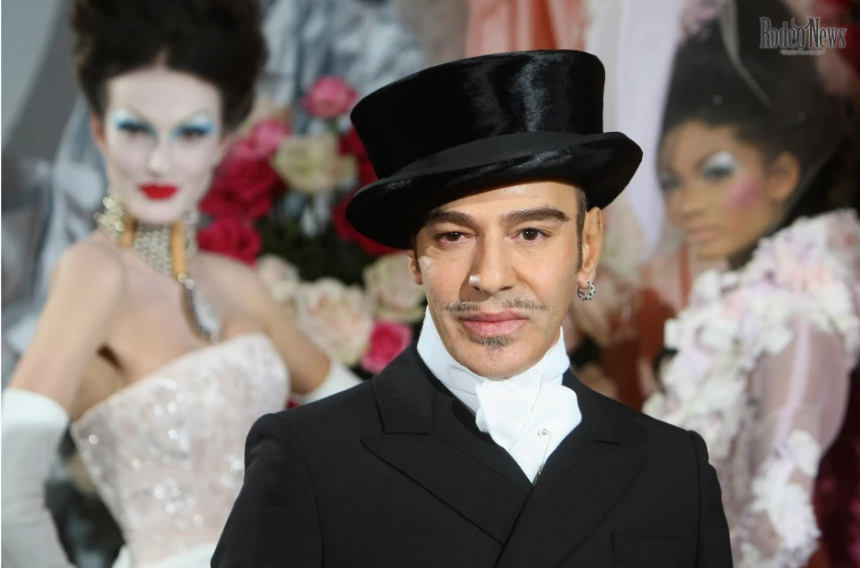
The decision ends a controversial chapter before the exhibition could even open. The show was initially announced in July as the Costume Institute’s major spring 2027 exhibition and was expected to form the centerpiece of the annual Met Gala. The cancellation follows criticism from Jewish community leaders, politicians and other figures who questioned whether Galliano’s work should receive such a prominent institutional celebration.
The Met said a replacement exhibition will be announced later. The museum and Galliano described the cancellation as a joint decision following discussions about the concerns surrounding the project.
John Galliano Met Gala Exhibit Is Canceled
The Metropolitan Museum of Art confirmed that “John Galliano: Horizons,” which had been scheduled to open in May 2027, would no longer take place.
Max Hollein, the Met’s director and CEO, said the museum and Galliano reached the decision after thoughtful discussions. The museum also acknowledged the pain and concern that the proposed exhibition had caused.
Galliano expressed gratitude toward the Met and its leadership while accepting responsibility for the harm caused by his past statements.
The cancellation is particularly significant because the exhibition was not intended to be a small presentation. It was planned as the first major museum exhibition examining the full breadth of Galliano’s career.
The original exhibition was scheduled to run from May 9, 2027, through January 9, 2028, at The Met Fifth Avenue. It was designed by the Costume Institute and organized by curator Andrew Bolton.
Why Was the John Galliano Met Gala Exhibit Controversial?
The central issue was Galliano’s history of offensive statements.
In 2010 and 2011, videos and reports involving antisemitic and racist comments made by Galliano generated widespread outrage. The controversy ultimately contributed to his dismissal from Christian Dior, where he had served as creative director.
Galliano was later convicted in France in connection with antisemitic behavior. He apologized for his conduct and subsequently embarked on a lengthy process of rehabilitation and professional recovery.
His career eventually returned to the fashion spotlight. Galliano later became known for his work at Maison Margiela, where his collections received significant critical acclaim.
That complicated history was at the heart of the debate surrounding the John Galliano Met Gala exhibit.
Supporters of the exhibition could argue that museums should examine difficult and complicated figures rather than simply erase them. Critics, however, questioned whether placing Galliano at the center of one of the fashion world’s most prestigious events went beyond historical examination and amounted to institutional celebration.
That distinction became increasingly important as opposition grew.
What Was “John Galliano: Horizons” Supposed to Show?
Before its cancellation, “John Galliano: Horizons” was presented as an ambitious examination of four decades of fashion.
The exhibition was expected to cover Galliano’s career from his early work at Central Saint Martins through his own label and his major appointments at Givenchy and Christian Dior, followed by his later work at Maison Margiela.
The Met described Galliano as one of the most inventive and influential designers of the past four decades.
The exhibition would have included garments, accessories, sketches, toiles, research books and archival material. It was designed to explore how Galliano transformed historical references, geography, art, storytelling and performance into elaborate fashion creations.
One planned section, “Atlas of Transformation,” was intended to focus on Galliano’s creative process.
Visitors would have been able to see how ideas developed from research and sketches into fittings and completed garments. The exhibition therefore promised to explore not only the finished pieces but also the craftsmanship and research behind them.
The concept reflected the Costume Institute’s broader role in treating fashion as an artistic and cultural discipline.
The Exhibition Was Meant to Be a Major Met Gala Event
The cancellation also changes the plans surrounding the 2027 Met Gala.
The Costume Institute exhibition traditionally serves as the cultural centerpiece of the Met Gala, with the celebrity event helping launch the museum’s spring fashion exhibition.
Because “John Galliano: Horizons” was intended to open alongside the 2027 gala, its cancellation means the Met must now determine a new exhibition and corresponding gala concept.
The museum said details about the replacement spring 2027 Costume Institute exhibition and the 2027 Met Gala will be announced at a later date.
That leaves fashion fans waiting for a new theme and direction.
The decision is also unusual because the Galliano exhibition had already been publicly announced. The Met had promoted the project as a landmark examination of the designer’s career before reversing course only weeks later.
Anna Wintour Supports the Decision
Anna Wintour, a major figure in the Met Gala and Costume Institute, supported the decision to cancel the exhibition.
Wintour described Galliano’s decision as courageous and said she believed the decision was the right one. The Met’s announcement also included statements from Galliano, Hollein and Andrew Bolton.
Bolton, the Costume Institute’s curator in charge, had originally organized the exhibition.
His statement reflected the tension at the center of the controversy. He emphasized the museum’s responsibility to examine difficult histories with rigor and care while also acknowledging the pain and concern caused by the planned exhibition.
That approach highlights a broader question facing museums today: How should cultural institutions present artists and designers whose creative achievements exist alongside serious personal misconduct?
Galliano Says He Remains Accountable
Galliano’s response to the cancellation emphasized regret and accountability.
The designer thanked the Met for its support and expressed appreciation for the institution’s leadership. At the same time, he acknowledged the continuing impact of his past behavior.
The response is significant because Galliano’s career has increasingly been discussed through the dual lens of extraordinary creative achievement and serious personal controversy.
His supporters have pointed to his apologies, rehabilitation and later work as evidence of personal growth. Critics, meanwhile, have argued that accountability does not necessarily require prominent institutions to give him a platform of the scale represented by a Met Gala exhibition.
The canceled exhibition brought those competing perspectives into direct conflict.
The Timing Added Another Layer to the Debate
The controversy was also intensified by the timing of the planned 2027 Met Gala.
Critics noted that the event was scheduled to coincide with Yom HaShoah, Holocaust Remembrance Day. That overlap became especially sensitive given Galliano’s history of antisemitic remarks.
For opponents of the exhibition, the combination of the subject matter, the gala’s enormous visibility and the date created an especially difficult situation.
The Met had said the exhibition would confront Galliano’s complicated history rather than ignore it. However, critics questioned whether that approach could adequately address the symbolic concerns surrounding the event.
The controversy ultimately became too significant for the original plan to continue.
What Happens to the 2027 Met Gala Now?
For now, the Met has not revealed the replacement exhibition.
The museum confirmed that a new spring Costume Institute exhibition will be announced later. That announcement will likely determine the theme and creative direction of the 2027 Met Gala.
The cancellation therefore does not mean the 2027 Met Gala itself has been canceled.
Instead, the event will proceed under a new concept that has yet to be announced.
The change gives the Costume Institute an opportunity to choose a subject that can generate excitement while avoiding the controversy that surrounded the Galliano project.
For fashion fans, the next announcement will be closely watched.
A Major Turning Point for Fashion Museums
The cancellation of the John Galliano Met Gala exhibit is bigger than one exhibition.
It illustrates the growing challenge museums face when deciding how to present influential artists and designers with complicated histories.
Galliano’s career is particularly difficult to separate into simple categories. His influence on modern fashion is substantial, and his work has inspired designers, artists and fashion historians for decades. At the same time, his past statements caused real harm and led to professional consequences.
A museum can theoretically acknowledge both realities.
But the scale of the Met Gala creates an additional challenge.
The gala is not simply an academic event. It is one of the world’s most visible fashion spectacles, attracting celebrities, designers, media organizations and global audiences.
A Costume Institute exhibition linked directly to the gala therefore carries enormous cultural weight.
The debate over Galliano demonstrates that institutional recognition can itself become part of the story.
What the Cancellation Means for John Galliano’s Legacy
Galliano’s legacy will continue to be debated.
His early work helped establish him as one of fashion’s most theatrical designers. His time at Dior produced collections that became influential examples of fashion as spectacle and historical storytelling. His later work at Maison Margiela demonstrated his ability to reinvent himself within a very different creative environment.
Yet his career cannot be discussed without addressing the 2010-2011 scandal.
The canceled exhibition would have attempted to examine the complete picture.
Instead, the cancellation itself has become another major chapter in the story of Galliano’s relationship with the fashion establishment.
It also raises a difficult question: Can artistic achievement ever be separated from the conduct of the artist?
There is no universally accepted answer.
Some museums choose to preserve and study controversial figures because their work remains historically important. Others decide that certain forms of institutional recognition can cause harm or send an unacceptable message.
The Met’s decision suggests that, in this case, the museum concluded that proceeding with the exhibition was not the right choice.
The Met Must Now Find a New Direction
The next major question is what replaces “John Galliano: Horizons.”
The Met has not yet announced the new exhibition, meaning the museum now has to develop a new plan for the spring 2027 season.
That process will involve the Costume Institute, museum leadership and the people responsible for the Met Gala.
The replacement will likely receive significant attention because it will inherit a spotlight that was originally intended for Galliano.
For the fashion industry, the new exhibition will also be a chance to shift the conversation away from controversy and back toward design, culture and creativity.
Still, the events surrounding Galliano are unlikely to disappear completely.
The episode has already become a significant case study in how museums balance artistic history, accountability and public trust.
What We Know About the John Galliano Met Gala Exhibit
The key facts are straightforward:
- The John Galliano Met Gala exhibit has been canceled.
- The planned exhibition was titled “John Galliano: Horizons.”
- It was originally scheduled for spring 2027.
- The project was canceled jointly by the Met and Galliano.
- The decision followed significant backlash concerning Galliano’s past antisemitic and racist remarks.
- Anna Wintour supports the cancellation.
- A replacement Costume Institute exhibition will be announced later.
- The 2027 Met Gala itself is expected to continue with a new theme.
The cancellation represents a dramatic reversal from July, when the Met presented the Galliano exhibition as a major examination of one of fashion’s most influential and controversial designers.
Final Thoughts
The John Galliano Met Gala exhibit was supposed to be one of the defining fashion exhibitions of 2027. Instead, it became a major debate over artistic legacy, accountability and the responsibilities of cultural institutions.
The Metropolitan Museum of Art’s decision reflects the intensity of that debate.
Galliano’s creative influence remains part of fashion history, but the museum ultimately decided that the planned exhibition should not proceed at this time. The next chapter will now be determined by the replacement exhibition and the new direction of the 2027 Met Gala.
For the fashion world, the controversy is unlikely to end the discussion about Galliano. Instead, it may become an important example of how the industry’s most powerful institutions respond when artistic achievement and personal conduct collide.
The Met’s next announcement will reveal whether it can turn a difficult cancellation into a fresh opportunity for the Costume Institute — and create a 2027 exhibition capable of capturing the world’s attention without overshadowing its cultural purpose.