
Mel Gibson Apology: 5 Key Facts After ASL Backlash
The Mel Gibson apology came after the actor faced intense online criticism over his behavior toward an American Sign Language interpreter during his appearance at FanExpo Canada in Toronto. Gibson was seen making hand gestures behind the interpreter as he walked onto the stage for a career-focused Q&A on August 29, 2026.
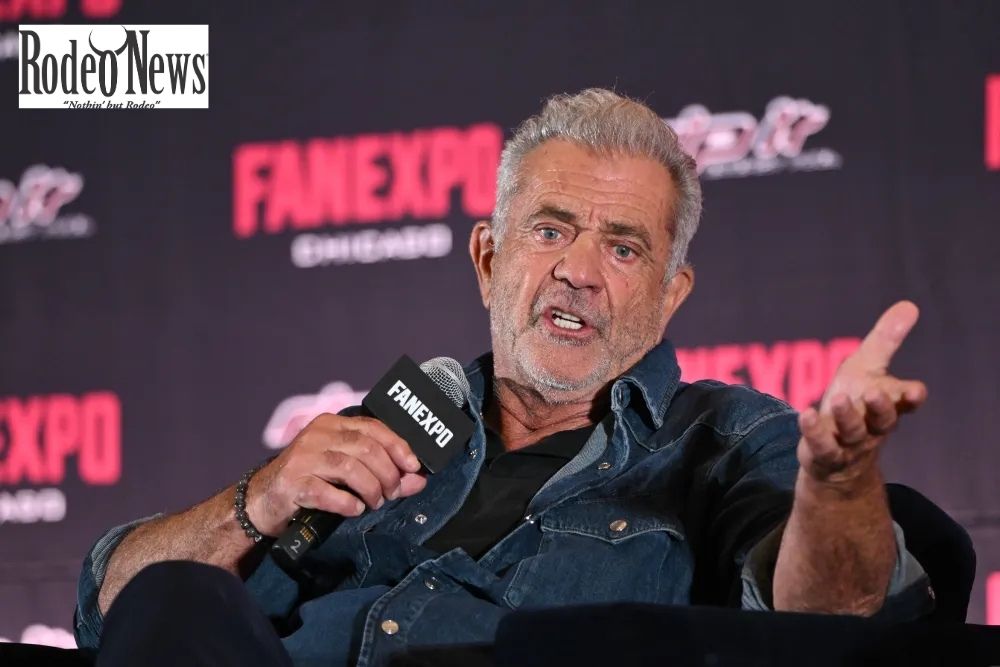
The brief moment quickly spread across social media, with viewers accusing the actor of mocking the interpreter and showing disrespect toward the Deaf community. Gibson later addressed the controversy, describing his actions as “spontaneous thoughtless idiocy” and saying there was no malicious intent behind them. VVariety Australia+1
The incident has since become another public controversy surrounding the veteran actor, whose career has repeatedly been accompanied by debates over his conduct away from the screen.
Here are five key facts about the controversy and the Mel Gibson apology.
1. Mel Gibson was appearing at FanExpo Canada
Gibson appeared at FanExpo Canada in Toronto on Saturday, August 29, as part of a retrospective Q&A discussing his long film career.
The event was promoted around Gibson’s work in major franchises and films including Mad Max, Lethal Weapon and Braveheart. The appearance gave fans an opportunity to hear the actor discuss his career and interact with him at the convention.
According to Variety, Gibson’s FanExpo appearance also included opportunities for fans to purchase autograph and photo experiences. FanExpo Canada describes itself as a major pop-culture convention covering comics, science fiction, horror, anime and gaming. VVariety Australia
The controversy, however, emerged almost immediately after Gibson walked onto the stage.
Video footage circulated online showing the actor passing behind an ASL interpreter who was already signing for attendees. Gibson briefly made a series of hand movements that appeared to imitate the interpreter’s gestures before continuing onto the stage.
The clip was short, but it quickly attracted widespread attention.
2. Why the ASL interpreter moment caused backlash
The central issue was not simply that Gibson moved his hands. Viewers interpreted the specific timing and positioning of the gestures as an imitation of the interpreter who was performing her professional duties.
Because the interpreter was working to make the event accessible, many people considered the gesture disrespectful.
The distinction is important. American Sign Language is not simply a collection of hand signals or a visual version of spoken English. The National Association of the Deaf explains that ASL is a complete language with its own linguistic structure and is central to Deaf culture in the United States. NNational Association of the Deaf+1
Professional interpreters also perform a specialized role. They are responsible for accurately conveying communication between languages, and qualified interpreting requires significant training and skill. NNational Association of the Deaf
That context helps explain why a gesture that might appear trivial to some viewers generated such a strong response from others.
The backlash extended beyond criticism of Gibson himself. Some online commenters questioned the environment surrounding the event and whether more attention should have been paid to the interpreter and Deaf attendees.
At the same time, not everyone interpreted the video in the same way. Some social media users argued that the clip did not establish malicious intent and viewed Gibson’s behavior as an immature or spontaneous joke rather than an intentional attack.
That difference in interpretation remains important.
The footage can show what Gibson did. It cannot, by itself, establish exactly what he intended to communicate.
3. Mel Gibson called the incident “thoughtless idiocy”
Gibson responded to the controversy on Monday, August 31.
In a statement reported by Variety, the actor acknowledged that his behavior was inappropriate. He described the incident as “spontaneous thoughtless idiocy” and said there was no malicious intent attached to it. He also apologized to people who were upset by what happened. VVariety Australia
That statement forms the heart of the Mel Gibson apology.
His explanation appears to frame the incident as a brief lapse in judgment rather than a deliberate attempt to insult the interpreter or the Deaf community.
The wording is notable because Gibson did not simply dismiss the criticism. He accepted that the behavior was thoughtless and apologized for its impact.
However, the response did not end the discussion.
For many critics, the question was not only whether Gibson intended to cause harm. It was whether a prominent actor should have recognized that imitating a sign-language interpreter during a public event could be perceived as disrespectful.
That distinction between intent and impact has become a recurring theme in the online reaction.
4. ASL is a language, not merely a set of gestures
The controversy also generated renewed attention around what ASL actually represents.
The National Association of the Deaf states that American Sign Language has its own grammar, syntax and linguistic structure. It is distinct from English and serves as a core part of Deaf culture and communication. NNational Association of the Deaf
That is why describing an interpreter simply as someone “making hand gestures” can miss the professional and cultural significance of the work.
Interpreters are there to provide communication access. At public events, they can help Deaf and hard-of-hearing attendees follow presentations, conversations and audience interactions.
The NAD’s guidance on accessible events emphasizes the importance of providing qualified interpreters, ensuring they remain visible and giving them an appropriate position onstage. NNational Association of the Deaf
In other words, the interpreter at FanExpo was not part of the entertainment.
She was performing an accessibility function.
That context is one reason the footage resonated so strongly with some viewers. The criticism was not necessarily limited to one person’s feelings about Gibson. For some members of the Deaf community and supporters of accessibility, the incident touched on a broader concern about whether sign language and interpreting are treated with the seriousness they deserve.
5. The controversy comes amid Gibson’s complicated public reputation
The Mel Gibson apology is also being discussed against the backdrop of the actor’s long and complicated public history.
Gibson has faced major controversies throughout his career, including widely reported remarks during his 2006 arrest and later scandals that affected his reputation in Hollywood.
Those incidents remain part of the public conversation surrounding him. As a result, a new controversy involving Gibson is unlikely to be viewed in isolation.
For some observers, the FanExpo incident reinforced an existing negative perception of the actor. For others, it was a separate lapse in judgment that should be evaluated on its own terms.
Either way, Gibson remains professionally active.
His appearance at FanExpo came as he continues work on major film projects, including his long-awaited follow-up to The Passion of the Christ. Variety reported that Gibson has been active on the convention circuit and recently wrapped production on the sequel project. VVariety Australia
The original 2004 film was a major commercial success, earning hundreds of millions of dollars worldwide. Its sequel is therefore one of Gibson’s most significant upcoming projects.
That makes his continued public appearances particularly relevant. Each appearance gives audiences another opportunity to assess not only his work but also his public conduct.
Why the apology may not end the controversy
An apology can acknowledge wrongdoing, but it does not necessarily eliminate criticism.
In Gibson’s case, the controversy is unlikely to disappear immediately because the incident was captured on video and widely distributed online.
The digital environment also changes the lifespan of celebrity controversies. A moment lasting only a few seconds at a convention can be viewed millions of times within hours.
The Mel Gibson apology therefore has two audiences.
The first is the people directly offended by the incident, including viewers who felt the interpreter and Deaf community were disrespected.
The second is the broader public, which is evaluating whether Gibson’s explanation adequately addresses what happened.
Some people may accept his statement that there was no malicious intent. Others may believe that intent does not change the fact that the gesture was inappropriate.
Both reactions can exist simultaneously.
Gibson’s wording also leaves open a broader question about accountability. Calling the incident “thoughtless” acknowledges poor judgment, but audiences may still want to see whether the apology is followed by greater awareness of the role interpreters play at public events.
What this means for FanExpo and accessibility
The controversy has also placed attention on the responsibilities of event organizers.
Major entertainment conventions attract large and diverse audiences. Providing interpreters is one part of making those events accessible.
The NAD recommends that event organizers work with Deaf and hard-of-hearing communities when planning communication access and ensure interpreters are appropriately positioned and visible during presentations. NNational Association of the Deaf
That means accessibility is more than simply placing an interpreter on a stage.
The surrounding environment also matters.
Interpreters need to be treated as professionals whose work allows attendees to participate fully. Speakers, performers and event staff therefore have a role in maintaining an environment where accessibility services are respected.
FanExpo has not, according to the Variety report, provided a public response to the controversy at the time of publication. Variety reported that it had reached out to FanExpo Canada for comment. VVariety Australia
Any future response from the event organizer could add another dimension to the story.
Mel Gibson’s next chapter
Despite the controversy, Gibson’s film career continues.
The actor remains involved in major projects and has been making appearances at fan conventions, where audiences can interact with him directly.
His upcoming work includes The Resurrection of the Christ, the planned follow-up to his 2004 biblical film. The project has kept Gibson in the entertainment spotlight while he continues to work both in front of and behind the camera. VVariety Australia+1
Whether the FanExpo controversy has a lasting effect on his professional activities remains unclear.
For now, the central development is straightforward: Gibson acknowledged the incident, described it as an unthinking mistake and apologized to people who were offended.
The larger conversation, however, is about more than one celebrity and one brief video.
It has highlighted the importance of understanding ASL as a legitimate language and recognizing the professional role of interpreters at public events. It has also demonstrated how quickly a few seconds of footage can become a major news story when a celebrity’s behavior is captured and shared online.
Final takeaway
The Mel Gibson apology follows a wave of criticism after the actor appeared to imitate an ASL interpreter during his FanExpo Canada appearance in Toronto.
Gibson says there was no malicious intent and characterizes his behavior as “spontaneous thoughtless idiocy.” VVariety Australia
The video itself has fueled different interpretations, but the reaction has been consistent in one important respect: the moment drew attention to the need to treat sign language and accessibility professionals with respect.
For Gibson, the incident is another chapter in a career that has repeatedly generated both admiration for his work and scrutiny of his behavior.
For audiences, it is also a reminder that public gestures can carry meaning far beyond the moment in which they occur—especially when they involve a language and community that have historically fought for recognition and accessibility.
Credible External Sources
- Variety — Mel Gibson apology report
- National Association of the Deaf — American Sign Language
- National Association of the Deaf — Interpreting American Sign Language
- National Association of the Deaf — Communication Access Guidelines
Internal Link Suggestions
Because TARGET WEBSITE / DOMAIN was not supplied, I have not invented internal URLs. For SEO, add 2–3 relevant links from your own site, such as:
- Mel Gibson’s upcoming movies and projects
- The latest Hollywood celebrity news
- Celebrity controversies and apologies
- FanExpo Canada 2026 news
Image ALT Text: Mel Gibson apology after ASL interpreter backlash at FanExpo CanadaV