Daisy Chain Fields: 5 Powerful Festival Moments
Daisy Chain Fields transformed a Southern California music festival into a major celebration of music, community and women’s well-being over the weekend, bringing thousands of young fans together at Great Park in Irvine.
Founded and headlined by Olivia Rodrigo, the inaugural festival featured a nearly all-women-led lineup and used its platform to support organizations working on women’s health, workplace protections and legal rights. The event also created a rare meeting point between younger stars and influential artists from previous generations.
The festival took place Saturday, Aug. 29, with performances spread across the Great Park site. AP News documented the event through a series of photographs showing performances, fans, artists and the intense heat that attendees experienced throughout the day.
Beyond the music, however, Daisy Chain Fields stood out because its central message was tied directly to philanthropy. The festival raised $10 million for nonprofit organizations before an additional $10 million matching contribution from philanthropist Melinda French Gates brought the total to $20 million.
Daisy Chain Fields Put Women at the Center
The concept behind Daisy Chain Fields was straightforward but ambitious: create a music festival where women in music could share the stage while directing attention and financial support toward issues affecting women and girls.
Rodrigo assembled a lineup that included Chappell Roan, Doechii, Mitski, Bikini Kill, Garbage, The Breeders, Santigold, Rachel Chinouriri, Die Spitz and others. Special guests included music legends Stevie Nicks and Sarah McLachlan.
The lineup also connected several generations of artists.
McLachlan, whose Lilith Fair helped establish the model for major women-centered music festivals in the 1990s, was an especially important presence. The festival’s concept has been widely described as drawing inspiration from that earlier movement.
That connection gave Daisy Chain Fields a sense of history while allowing Rodrigo to introduce the idea to a much younger audience.
1. Olivia Rodrigo Turned a Festival Dream Into Reality
For Rodrigo, the festival represented more than another headline performance.
The Grammy-winning singer had described the event as a long-held dream and positioned Daisy Chain Fields around the idea that music, creativity and community could contribute to meaningful social change. The official festival site describes the event as combining performances with creative spaces, nonprofit organizations and community-focused experiences.
The result was a festival that extended Rodrigo’s influence beyond her own music.
Her headline set became one of the night’s major moments, with the singer performing on the Dandelion Stage while special guests joined her. AP photographs captured Rodrigo performing, addressing the crowd and introducing McLachlan during the event.
For many of her young fans, the experience was therefore about seeing a favorite artist perform while also becoming part of a much larger cultural event.
2. Stevie Nicks Delivered a Generational Highlight
One of the most memorable moments came when Stevie Nicks appeared alongside Rodrigo.
The legendary singer joined Rodrigo during the headlining portion of the festival, creating a striking connection between two generations of performers. Their appearance together helped reinforce one of Daisy Chain Fields’ defining ideas: that women’s voices in music can build on one another rather than compete for attention.
Rodrigo also welcomed other major artists during her set.
Sarah McLachlan joined her for performances, while Alanis Morissette also appeared after Karen O was unable to participate because of a family emergency.
The unexpected collaborations gave the festival a sense of unpredictability that went beyond a standard festival schedule.
For fans, it meant that the headline performance became a showcase of musical history as much as a Rodrigo concert.
3. Chappell Roan and Doechii Energized the Crowd
The younger generation of artists also played a central role in Daisy Chain Fields.
Chappell Roan brought her distinctive pop performance style to the festival, while Doechii delivered a high-energy set that was captured in AP’s photo coverage. The lineup demonstrated how broad Rodrigo’s definition of women-led music could be, moving across pop, hip-hop, alternative rock and indie music.
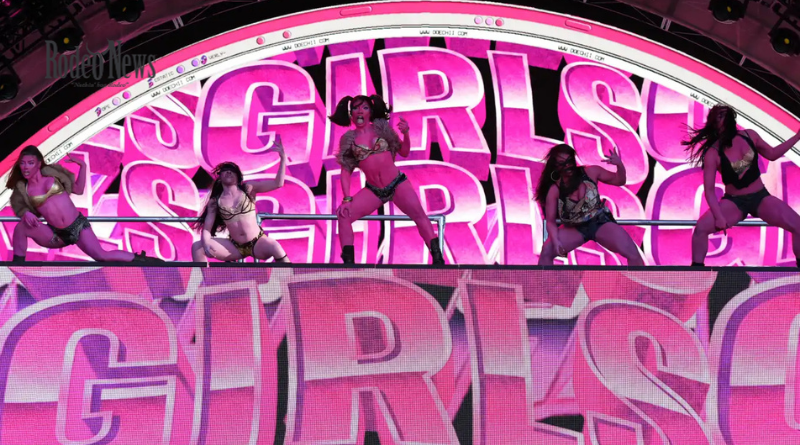
Doechii’s performance was among the images highlighted by AP, with the rapper shown performing alongside dancers at Great Park.
Meanwhile, Roan’s presence helped underline the festival’s connection to a younger generation of music fans. Her popularity has made her one of the most visible new voices in pop, making her appearance particularly significant for an event built around youth engagement.
The combination of established icons and contemporary stars gave Daisy Chain Fields an unusually wide musical range.
4. Bikini Kill and Garbage Brought Rock History to Irvine
The festival was not limited to contemporary pop.
Bikini Kill, one of the most influential bands associated with the riot grrrl movement, performed at Great Park. AP’s photographs showed members Kathleen Hanna, Tobi Vail and Kathi Wilcox onstage.
Garbage also appeared, with singer Shirley Manson interacting with a young fan during the band’s performance.
Those moments helped connect Daisy Chain Fields to earlier generations of women who challenged traditional expectations within the music industry.
The festival’s lineup therefore functioned almost like a musical timeline. Younger performers could share the same event with artists whose work had influenced the culture they inherited.
That intergenerational approach was one of the festival’s strongest features.
Rather than separating emerging performers from established names, Daisy Chain Fields placed them within the same conversation.
5. Young Fans Became Part of the Message
Perhaps the most important element of Daisy Chain Fields was the audience.
AP’s photo gallery shows young festivalgoers watching performances, dancing, jumping together for group photographs and enduring high temperatures at Great Park. The images provide a visual record of an audience that was not simply watching a concert but participating in a community built around a shared cause.
The event was held during extremely hot conditions, with temperatures reaching around 103 degrees Fahrenheit according to coverage from Vogue. Despite the heat, thousands of attendees remained engaged with the performances and festival activities.
The official event also included nonprofit activations, art installations, creative spaces and opportunities for attendees to learn more about issues affecting women and girls.
That combination was important.
For a younger audience, philanthropy can sometimes feel distant from everyday entertainment. Daisy Chain Fields attempted to remove that distance by placing advocacy organizations, music and cultural experiences in the same physical space.
A $20 Million Statement of Support
The financial impact of Daisy Chain Fields became one of the biggest stories surrounding the festival.
The event initially raised $10 million for 10 nonprofit partners working on issues affecting women and girls. Melinda French Gates then announced a matching $10 million contribution through Pivotal Ventures, bringing the total to $20 million.
The nonprofit beneficiaries include organizations such as Planned Parenthood, the National Women’s Law Center, the Center for Reproductive Rights, Black Mamas Matter Alliance and the Johns Hopkins Center for Indigenous Health.
The money is intended to support a broad range of causes rather than a single issue.
That breadth reflects the festival’s wider mission. Women’s well-being can involve health care, reproductive rights, workplace protections, maternal health, legal rights and access to support.
By connecting a major entertainment event with those organizations, Rodrigo created a mechanism for her audience to encounter those causes in a setting that already felt familiar and celebratory.
Daisy Chain Fields Revives the Spirit of Lilith Fair
The comparison with Lilith Fair is difficult to avoid.
McLachlan founded Lilith Fair in the late 1990s after frustrations over the limited opportunities available to women in the music business. The festival became a landmark event that demonstrated the commercial and cultural power of women-led touring lineups.
Daisy Chain Fields does not simply copy that model.
Instead, Rodrigo has adapted the concept for a new generation.
The event combines the large-scale festival experience familiar to Gen Z audiences with nonprofit education, social causes and a lineup that spans decades of music.
That makes the festival significant beyond its individual performances.
It suggests that music festivals can still function as spaces where cultural conversations happen, especially when artists deliberately connect entertainment with community engagement.
The Visual Story of Daisy Chain Fields
AP’s photography also reveals why Daisy Chain Fields became such a visually distinctive event.
Images show Rodrigo onstage, Doechii performing with dancers, Bikini Kill playing to the crowd and festivalgoers dancing beneath the California sun. Other photographs capture fans enduring the heat and gathering together for group photos.
The visual contrast is striking.
There were huge stages and famous performers, but there were also intimate moments between artists and fans.
Shirley Manson’s interaction with a young fan, for example, captured a different side of the festival than the large-scale performances. Such moments helped communicate the sense of connection the event was designed to create.
The photographs ultimately tell the story of a festival that was both ambitious and deeply personal.
Why Daisy Chain Fields Matters
The first Daisy Chain Fields festival arrived at a moment when young audiences increasingly expect artists to stand for something beyond their music.
Rodrigo’s event offered a direct example of how celebrity influence can be connected to nonprofit fundraising and public awareness.
The $20 million raised for organizations supporting women and girls gives the festival a measurable philanthropic impact. Meanwhile, the diverse lineup demonstrates that a women-centered event does not have to be limited to one musical genre or generation.
Most importantly, the festival placed young fans at the center of the experience.
Instead of treating them only as ticket buyers, the event invited them to engage with organizations, artists and ideas.
That could become the lasting legacy of Daisy Chain Fields.
What Comes Next for Daisy Chain Fields?
The inaugural festival has established a strong foundation for future editions.
The official event website presents Daisy Chain Fields as a festival built around leading women artists, creative experiences, nonprofit partners and community engagement.
If Rodrigo continues the event, its biggest challenge may be maintaining the balance between entertainment and activism.
The first edition demonstrated that audiences will show up for a powerful lineup. The next step will be proving that the festival can build an enduring community around its philanthropic mission.
For now, however, the debut has already made a significant impression.
Daisy Chain Fields brought Olivia Rodrigo together with Chappell Roan, Doechii, Bikini Kill, Garbage, Mitski, Sarah McLachlan, Stevie Nicks and other major artists. It attracted young fans, generated extensive visual coverage and directed $20 million toward organizations supporting women and girls.
That combination makes the festival more than another entry on the summer music calendar.
It is a statement about what a modern music festival can become when music, philanthropy and community are treated as parts of the same experience.
Final Takeaway
Daisy Chain Fields delivered a powerful debut by combining a major women-led music lineup with a clear philanthropic mission. Olivia Rodrigo used the festival to connect her generation of fans with artists from different eras while raising significant funds for organizations supporting women’s well-being.
From Stevie Nicks joining Rodrigo onstage to performances by Chappell Roan, Doechii, Bikini Kill and Garbage, the festival offered major musical moments. Yet its most important achievement may have happened beyond the stages: young fans were given a chance to connect entertainment with real-world causes.