Daisy Chain Fields: 5 Powerful Moments From Rodrigo
Daisy Chain Fields transformed a sweltering day in Southern California into a remarkable celebration of music, community and women’s causes. Curated and headlined by Olivia Rodrigo, the inaugural festival brought together major contemporary stars, influential rock veterans and emerging performers for a one-day event at Great Park in Irvine, California.
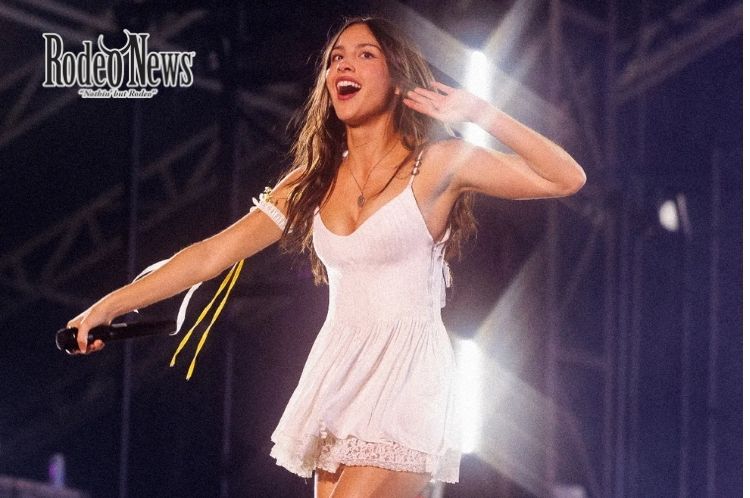
The festival was ambitious from the beginning. Rather than building an event around a single genre or generation, Rodrigo assembled a lineup that connected different eras of women’s music. Chappell Roan, Doechii and Mitski shared the bill with Bikini Kill, Garbage and The Breeders, while legendary performers including Stevie Nicks, Alanis Morissette and Sarah McLachlan appeared during the event.
The result was more than another large music festival.
It was an attempt to create a space where young fans could encounter artists from different generations while also learning about organizations working on issues affecting women and girls.
The event ultimately raised $20 million for nonprofit organizations after an initial $10 million raised through the festival was matched by philanthropist Melinda French Gates.
Daisy Chain Fields Turned Music Into a Mission
Rodrigo’s idea for Daisy Chain Fields was rooted in a desire to create a different kind of festival.
The singer has spoken about wanting to build a musical environment capable of inspiring young girls. The festival therefore placed charitable organizations and social advocacy alongside live performances rather than treating philanthropy as a separate side attraction.
Ten nonprofit partners were selected to benefit from the event. They included organizations working on women’s health, reproductive rights, workplace protections and other issues affecting women and families.
The festival also included a dedicated area where attendees could interact with participating nonprofits.
That helped connect the day’s entertainment to real-world causes.
Instead of simply asking fans to donate money, Daisy Chain Fields created opportunities for them to learn about organizations and become more directly involved.
That combination of entertainment and activism became one of the defining characteristics of the event.
1. Olivia Rodrigo Built an Intergenerational Lineup
One of the strongest features of Daisy Chain Fields was its unusual mixture of generations.
Rodrigo could have created a conventional pop festival centered around artists of a similar age. Instead, she placed young stars alongside performers whose careers stretch back decades.
Chappell Roan and Doechii represented the current generation of major pop and hip-hop performers. Mitski and other contemporary artists brought different approaches to songwriting and alternative music.
Meanwhile, Bikini Kill, Garbage and The Breeders connected the festival to the history of women-led rock and alternative music.
Stevie Nicks provided an even broader link to an earlier generation of performers.
That structure gave Daisy Chain Fields the feeling of a musical conversation rather than a conventional succession of sets.
Older artists could speak directly to younger audiences, while younger performers demonstrated how the traditions established by earlier generations continue to evolve.
The idea was especially visible during performances by artists such as Bikini Kill and Garbage, whose members offered advice and reflections about creativity, identity and growing up.
The festival consequently became partly about discovering music and partly about understanding the history behind it.
2. Chappell Roan Helped Define the Festival’s Energy
Chappell Roan was one of the most anticipated contemporary performers at Daisy Chain Fields.
Her presence reflected the festival’s connection to a younger audience that has embraced highly theatrical forms of pop performance and personal expression.
Across the event, that spirit was visible among festivalgoers themselves.
Fans arrived dressed in expressive outfits, while others embraced vintage and riot grrrl-inspired fashion. Vogue’s coverage described the event as a celebration of music, fashion and female empowerment, with attendees drawing inspiration from both contemporary pop culture and older feminist aesthetics.
The visual identity of the crowd reinforced Rodrigo’s broader concept.
Daisy Chain Fields was not simply a concert where fans watched performers from a distance. It became a place where audiences could participate in the culture surrounding the music.
That atmosphere helped create a sense of community across different age groups.
3. Stevie Nicks Joined Olivia Rodrigo for a Memorable Moment
The festival reached one of its most significant musical moments when Olivia Rodrigo performed with Stevie Nicks.
The two artists sang “Landslide” together during Rodrigo’s headlining set, creating a striking connection between two generations of female musicians.
The appearance was especially meaningful because Nicks represents a generation of artists who helped establish the cultural power of women in rock and popular music.
For Rodrigo, sharing the stage with Nicks fit naturally with the festival’s intergenerational concept.
The moment also demonstrated why Daisy Chain Fields was structured differently from many contemporary festivals.
Rather than separating performers by age, genre or commercial status, the event encouraged connections between them.
Rodrigo also welcomed Alanis Morissette and Sarah McLachlan during her headlining performance, further emphasizing the festival’s focus on musical lineage and collaboration.
4. Rodrigo Debuted a Powerful New Protest Song
Daisy Chain Fields also became a platform for Rodrigo’s political and artistic voice.
During her headlining set, she performed her protest song “serena joy” live at the festival. The song takes its title from the character Serena Joy from Margaret Atwood’s dystopian novel The Handmaid’s Tale, adding another layer of political meaning to the performance.
The choice was particularly fitting for an event centered on women’s rights and advocacy.
Throughout the festival, performers used their stages to discuss political and social issues. Doechii, for example, ended her set with a message of solidarity directed toward women and LGBTQ+ people, while other performers delivered speeches about economic equality and collective action.
The festival therefore blurred the traditional boundary between entertainment and activism.
Music remained at the center, but performers repeatedly reminded the audience that cultural spaces can also be used to communicate political ideas.
For Rodrigo, that appears to have been a central part of the festival’s purpose.
5. $20 Million Turned the Festival Into a Major Charity Event
Perhaps the biggest headline from Daisy Chain Fields came from its fundraising total.
The festival initially raised $10 million for its nonprofit partners. During the event, Rodrigo announced that Melinda French Gates would match the amount, bringing the total contribution to $20 million.
The announcement generated a huge reaction from the crowd.
It also changed the scale of what the festival represented.
Daisy Chain Fields was no longer simply a new music event with a charitable component. Its financial contribution gave the festival a substantial philanthropic impact from its very first edition.
The money is intended to support organizations working on issues affecting women and girls.
That includes areas such as women’s health, reproductive rights, Black maternal health, domestic workers’ rights and other forms of gender justice.
For Rodrigo, the fundraising achievement demonstrated that a major entertainment event could mobilize a large audience around social causes without sacrificing the excitement and accessibility of a music festival.
Daisy Chain Fields Was Inspired by Music History
Although Daisy Chain Fields is a new festival, its concept is connected to a much older tradition.
The event has been compared with Lilith Fair, the influential festival founded by Sarah McLachlan in the 1990s to showcase women in music.
McLachlan was not only part of Daisy Chain Fields’ lineup but also advised Rodrigo during the creation of the festival.
The connection is significant.
Lilith Fair demonstrated that a festival built around women performers could attract a large mainstream audience. Daisy Chain Fields takes that basic idea into a different era, adding contemporary pop culture, social media activism and a stronger emphasis on nonprofit engagement.
Rodrigo’s event also attempted to avoid the competitive atmosphere that can dominate large festivals.
The lineup was designed so performers would receive equal visual treatment, while sets were structured to encourage fans to see more than one artist instead of forcing them to choose between simultaneous performances.
That helped reinforce the idea of collective celebration.
The Heat Tested Everyone at Great Park
The festival’s positive atmosphere came with one major physical challenge: the weather.
Southern California experienced intense heat during the event, with temperatures reaching around 103 degrees Fahrenheit according to coverage of the festival.
Thousands of fans nevertheless gathered at Great Park to watch the performances.
Pitchfork’s account described a festival environment in which the heat became an unavoidable part of the experience. By evening, approximately 45,000 people were gathered for the event.
The conditions made the festival physically demanding, but they also contributed to the unusual atmosphere of the day.
Fans spent hours together in the heat before the evening performances reached their peak.
By the time Rodrigo took the stage, the audience had already experienced a full day of music, activism and community.
Women From Different Generations Shared the Same Stage
The most meaningful aspect of Daisy Chain Fields may have been its emphasis on continuity.
The festival did not present women’s music as a single genre.
Instead, it showed how many different musical traditions can exist within the same cultural space.
Bikini Kill represented the confrontational energy of riot grrrl. Garbage brought alternative rock. Stevie Nicks represented classic rock and singer-songwriter traditions. Chappell Roan and Doechii represented a new generation that approaches pop performance with different cultural references and expectations.
Mitski and other performers added still more variety.
That diversity allowed younger fans to encounter artists they may not otherwise have discovered.
It also gave established performers a chance to speak directly to a new audience.
Garbage’s Shirley Manson, for example, encouraged fans to embrace their individuality, while Bikini Kill’s Kathleen Hanna emphasized the importance of preserving personal stories and experiences.
Those messages fit naturally with Rodrigo’s goal of creating a festival that could inspire young women.
Daisy Chain Fields Created a Different Kind of Festival Culture
Large music festivals often emphasize scale.
Daisy Chain Fields emphasized connection.
The event’s charitable mission, intergenerational lineup and political messaging created an environment in which music was only one component of the experience.
Fans could see major performers, discover emerging artists, visit nonprofit organizations and participate in conversations about women’s rights.
That combination made the event feel closer to a cultural gathering than a conventional concert.
It also reflected the changing role of musicians in public life.
Artists such as Rodrigo increasingly use their platforms not only to release songs but also to support charitable organizations and political causes.
Daisy Chain Fields placed that role directly at the center of the festival’s identity.
Olivia Rodrigo Promises More Daisy Chain Fields
The inaugural event appears to have been successful enough for Rodrigo to look toward the future.
At the conclusion of the festival, she indicated that Daisy Chain Fields would return in 2027.
That possibility could turn the event into a recurring part of the music calendar.
If the festival returns, the challenge will be maintaining the qualities that made the first edition distinctive.
The organizers will need to preserve the sense of community while managing a potentially larger audience. They will also need to continue balancing major commercial artists with influential legacy performers and emerging musicians.
Most importantly, the charitable mission will remain central.
The first festival established a high benchmark with $20 million raised for women’s causes.
Future editions could potentially expand that impact.
Why Daisy Chain Fields Matters
Daisy Chain Fields arrived at a moment when discussions about women’s rights, representation and political participation remain highly visible.
But rather than presenting those issues through a traditional political event, Rodrigo placed them inside a music festival.
That choice may be the event’s most important innovation.
Music has always provided a way for people to connect across generations and backgrounds. Daisy Chain Fields used that power deliberately.
The festival demonstrated that a large entertainment event can celebrate popular music while also creating space for activism and philanthropy.
It also showed that young audiences can be engaged with charitable causes when those causes are presented through culture, community and artists they already care about.
Daisy Chain Fields Leaves a Powerful First Impression
The first edition of Daisy Chain Fields was ambitious, emotional and unusually focused on community.
Olivia Rodrigo brought together Chappell Roan, Doechii, Mitski, Bikini Kill, Garbage, The Breeders and other artists for a festival that deliberately crossed generations and genres.
Stevie Nicks, Alanis Morissette and Sarah McLachlan added historic weight to the event, while Rodrigo’s debut performance of “serena joy” gave the festival an explicitly political edge.
The biggest achievement, however, may have happened away from the stage.
The festival generated $10 million for its nonprofit partners before Melinda French Gates matched that amount, creating a $20 million contribution supporting organizations focused on women and girls.
That result gives Daisy Chain Fields significance beyond music.
It suggests that a festival can be more than a collection of performances. It can be a meeting point for generations, a platform for artists, a fundraising engine and a place where audiences are encouraged to think about issues beyond the stage.
For Olivia Rodrigo, that may be the most important legacy of the first Daisy Chain Fields.
The music brought everyone together.
The mission gave them a reason to stay connected.