John Galliano Met Gala Plans Canceled After Backlash
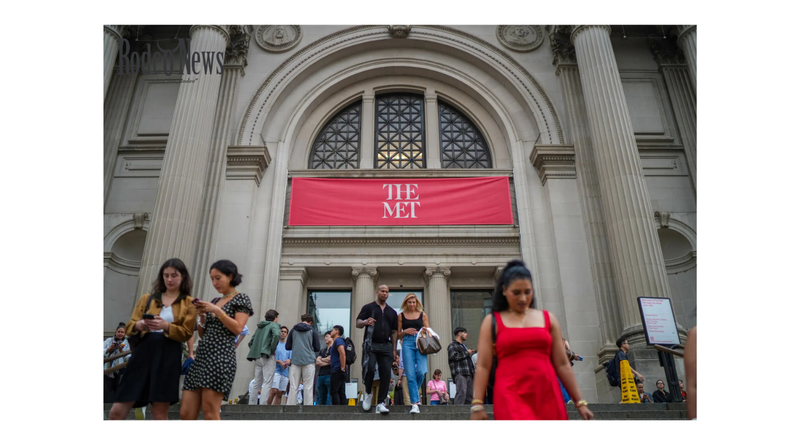
The John Galliano Met Gala plans for 2027 have been canceled after mounting criticism over the designer’s past antisemitic, racist and anti-Asian remarks. The Metropolitan Museum of Art and John Galliano announced on August 31 that the planned Costume Institute exhibition, John Galliano: Horizons, would no longer proceed as scheduled.
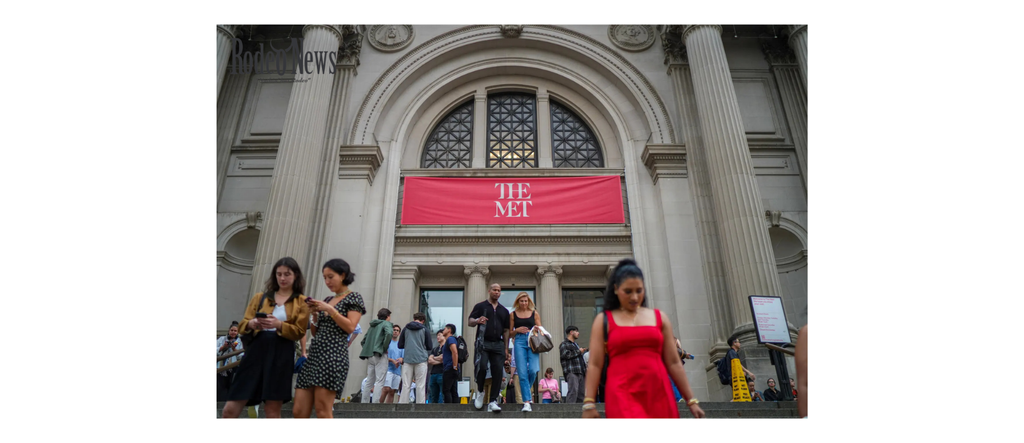
The announcement came only about a month after the Met revealed the exhibition. The planned show was expected to examine Galliano’s four-decade career and serve as the centerpiece of the 2027 Met Gala. However, criticism intensified after the announcement, with Jewish leaders, donors and other critics questioning whether the designer should receive such a prominent institutional honor. TThe Guardian+1
The cancellation does not mean that the Met Gala itself has been permanently canceled. Instead, the museum said that information about a new spring 2027 Costume Institute exhibition and the 2027 Met Gala will be announced at a later date. TThe Metropolitan Museum of Art
Here are five key facts behind the dramatic reversal.
1. The John Galliano Met Gala Exhibition Was Called Off
The planned exhibition was titled John Galliano: Horizons. The Met originally announced it on July 31, describing it as the first major museum exhibition devoted to the British designer.
The exhibition was scheduled to open at The Met Fifth Avenue on May 9, 2027, and run through January 9, 2028. It was intended to explore the full range of Galliano’s creative work, including garments, accessories, sketches, research books, archival materials and other pieces from his career. TThe Metropolitan Museum of Art
The proposed exhibition would have followed Galliano from his early career through major appointments at Givenchy and Christian Dior and later work at Maison Margiela. The Met said its collection contains the largest collection of Galliano’s work of its kind. TThe Metropolitan Museum of Art
The museum also planned to address the controversy surrounding Galliano rather than ignoring it. According to the original exhibition announcement, the show would have examined the designer’s antisemitic, racist and anti-Asian conduct in 2010 and 2011, its consequences and the question of how artistic achievement should be viewed alongside ethical accountability. TThe Metropolitan Museum of Art
Despite that planned context, the project quickly became the center of a wider debate over whether a prestigious museum should celebrate a designer whose past conduct remained deeply controversial.
2. Galliano Took Responsibility for His Past
Galliano announced that the exhibition would not go forward in a statement released Monday.
He expressed gratitude to the Met and its leadership but said he had decided, after reflection and discussions with those involved, that it was best for the exhibition not to take place at this time.
Galliano also acknowledged the harm caused by his previous words, particularly to Jewish and Asian communities. He said that meaningful atonement could not be achieved through an exhibition, institutional recognition or a single public gesture.
That distinction became central to the controversy.
Galliano has spent years attempting to rebuild his career after the events that ended his tenure at Christian Dior. His latest statement suggested that he understood why an exhibition celebrating his work could be painful for some people.
The Met also supported the decision.
Director and CEO Max Hollein said the museum and Galliano had reached the decision together after thoughtful discussions. Costume Institute curator Andrew Bolton similarly acknowledged the pain and concern created by the proposed exhibition. TThe Metropolitan Museum of Art
3. Why the John Galliano Met Gala Plan Faced Opposition
The controversy surrounding Galliano did not begin with the 2027 Met Gala announcement.
In 2010 and 2011, Galliano made racist and antisemitic comments that caused international outrage. The controversy ultimately led to his dismissal from Christian Dior and a legal case in France.
A Paris court convicted Galliano in 2011 over public insults based on race, religion, ethnicity or origin. The episode became one of the biggest scandals in modern luxury fashion and fundamentally changed the public perception of the designer. TThe Metropolitan Museum of Art+1
Galliano later entered treatment for addiction and gradually returned to the fashion industry. His appointment at Maison Margiela in 2014 was viewed as a major second chance, and his work there eventually received substantial critical acclaim.
That comeback, however, never completely removed the controversy surrounding his past.
When the Met announced John Galliano: Horizons, critics immediately questioned the decision to place his name at the center of one of the most influential fashion events in the world.
Opposition reportedly intensified among Jewish leaders and some Met donors. The New York Times, whose original report prompted the story supplied for this article, reported that some donors had threatened to withdraw financial support if the exhibition proceeded. TThe Guardian
4. The Timing Added Another Layer of Controversy
The planned exhibition faced another sensitive issue involving the timing of the 2027 Met Gala.
The annual event was expected to launch the spring Costume Institute exhibition, as it traditionally does. But the planned timing created concern because it coincided with Yom HaShoah, the Jewish day of remembrance for the Holocaust.
That overlap became especially contentious because Galliano’s past remarks included antisemitic statements.
As a result, critics argued that honoring Galliano at such a prominent event during that period would create a particularly painful association for Jewish communities.
The issue placed additional pressure on the museum to reconsider its plans.
The controversy also raised a broader question for cultural institutions: How should museums present artists and designers whose work has had major cultural influence while also acknowledging serious misconduct?
The Met had attempted to build that question into the exhibition itself. Its original plan specifically said the show would consider how artistic achievement, ethical accountability and institutional recognition intersect. TThe Metropolitan Museum of Art
But the response to the announcement showed that explaining the controversy inside an exhibition might not be enough to satisfy critics.
5. The 2027 Met Gala Will Still Need a New Theme
One of the biggest misunderstandings surrounding the story is that the entire 2027 Met Gala has been canceled.
That is not what the Met announced.
Instead, the museum said the Galliano exhibition would not proceed and that information about a new spring Costume Institute exhibition and the 2027 Met Gala would be released later. TThe Metropolitan Museum of Art
This means the Met now has to find a replacement concept for one of the most closely watched events on the fashion calendar.
The decision is significant because the Met Gala is closely connected to the Costume Institute exhibition. The annual event attracts major fashion designers, celebrities, actors, musicians and cultural figures, while the accompanying exhibition provides the intellectual and artistic framework for the evening.
Replacing the Galliano concept therefore requires more than simply choosing another designer.
The museum will likely need to develop an exhibition that can withstand intense public attention while balancing fashion history, artistic significance and cultural sensitivity.
What Was John Galliano: Horizons Supposed to Show?
Before its cancellation, John Galliano: Horizons was designed as a broad retrospective rather than a simple celebration of individual collections.
The Met planned to divide the exhibition into three movements: “Bearings,” “Horizons” and “Atlas of Transformation.”
“Bearings” would have created a chronology connecting Galliano’s career with wider historical and cultural developments. It would also have directly addressed the controversy that transformed his career in 2010 and 2011.
The “Horizons” section would have explored his sources of inspiration, including history, geography, art, storytelling and performance.
Finally, “Atlas of Transformation” would have focused on Galliano’s creative process, showing how ideas and research evolved into finished garments.
The concept demonstrated why the Met considered Galliano such an influential fashion figure. It also illustrated why the controversy was so difficult for the museum to separate from his creative legacy. TThe Metropolitan Museum of Art
Galliano’s Complicated Fashion Legacy
Few modern designers have had a career as visually dramatic as Galliano’s.
His designs became known for theatrical presentation, historical references, elaborate construction and storytelling. His work at Givenchy and Dior helped establish him as one of the most influential designers of his generation.
Later, his work at Maison Margiela demonstrated a different side of his creativity. Galliano became known for transforming discarded materials, unusual references and traditional couture techniques into highly experimental designs.
The Met’s original announcement described him as one of the most inventive and influential designers of the past four decades. TThe Metropolitan Museum of Art
That creative influence is precisely why the proposed retrospective attracted attention.
However, the cancellation demonstrates that artistic influence does not automatically settle questions about institutional recognition.
For museums, fashion archives and cultural organizations, the challenge is increasingly about how to preserve and study influential work without appearing to excuse harmful behavior.
A Major Test for the Met
The cancellation also represents a significant moment for the Metropolitan Museum of Art.
The Met’s Costume Institute is one of the world’s most prominent institutions dedicated to fashion history. Its annual gala has become a global cultural event, while its exhibitions can shape how designers and movements are remembered.
The museum initially attempted to approach Galliano’s legacy through a complicated framework that included both his creative achievements and his misconduct.
But after the backlash, the museum and Galliano concluded that the exhibition should not proceed.
Andrew Bolton’s statement reflected that tension. He said museums have a responsibility to examine difficult histories with rigor, candor and care, while also recognizing the pain and concern caused by the proposed exhibition. TThe Metropolitan Museum of Art
That suggests the debate may continue long after the canceled exhibition disappears from the 2027 calendar.
What Happens Next?
For now, the next chapter of the 2027 Met Gala remains unknown.
The Met has said that details of a new Costume Institute exhibition and the associated gala will be announced later. That leaves the museum with an opportunity to select a new subject and establish a different narrative for the event. TThe Metropolitan Museum of Art
The decision will likely receive significant attention because the original Galliano announcement generated unusually intense discussion before the exhibition had even opened.
For Galliano, meanwhile, the decision represents another complicated moment in a career defined by both extraordinary creative achievement and serious controversy.
His statement acknowledged that atonement is an ongoing process rather than something that can be resolved through institutional recognition.
That message may ultimately become one of the most important elements of the controversy.
The Bottom Line
The John Galliano Met Gala plans have been canceled, but the 2027 Met Gala itself is not gone.
The Metropolitan Museum of Art and Galliano jointly decided not to proceed with John Galliano: Horizons after criticism over the designer’s past antisemitic, racist and anti-Asian remarks. The backlash included concerns from Jewish leaders and reported pressure from some donors. TThe Guardian+1
The Met now faces the task of choosing a replacement exhibition and theme for 2027.
The episode also highlights a larger cultural debate. Fashion history can preserve extraordinary creative achievements, but museums must increasingly confront the ethical histories attached to the people behind those achievements.
For the Met, the next exhibition will therefore be watched not only for its fashion value but also for what it says about the institution’s approach to artistic legacy, accountability and cultural responsibility.