Ukraine Interceptor Drones: 5 Key New Defenses
Ukraine interceptor drones are emerging as a critical part of Kyiv’s effort to confront a rapidly changing Russian aerial threat. As Moscow increases its use of faster, jet-powered attack drones, Ukrainian engineers and military planners are racing to develop cheaper and quicker systems capable of catching them before they reach cities and critical infrastructure.
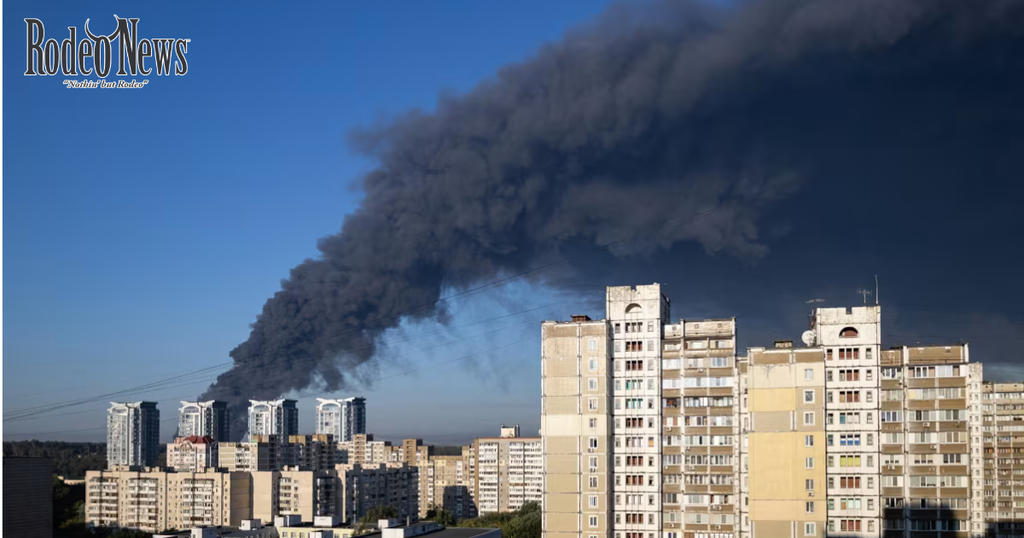
The challenge is becoming more urgent. Russia has expanded its use of drones alongside ballistic missiles and cruise missiles, putting sustained pressure on Ukraine’s already heavily tested air-defense network. Recent attacks around Kyiv have demonstrated how difficult it can be to defend against large waves of drones arriving over long periods.
CNN reported that Ukraine is urgently working on new interceptor systems capable of dealing with the latest generation of Russian reaction-propelled drones. GGround News
The development represents more than another weapons race. It reflects a broader shift in modern warfare, where relatively inexpensive unmanned aircraft can force defenders to spend far more money and use scarce high-end missiles.
Why Ukraine Interceptor Drones Matter
Ukraine has spent years adapting its air defenses to Russia’s drone campaign. Earlier generations of Shahed-type drones were relatively slow, allowing Ukraine to combine electronic warfare, machine guns, mobile air-defense systems and interceptor drones to create a layered defense.
That balance is now changing.
Russia has introduced faster jet-powered versions of its long-range attack drones. Recent reporting indicates that these aircraft can travel substantially faster than earlier propeller-driven models, reducing the time available for Ukrainian defenses to detect, track and destroy them. TThe Guardian+1
That creates a straightforward problem: an interceptor that can successfully chase a slower drone may struggle against a faster target.
Ukraine therefore needs systems designed specifically for speed.
The objective is not necessarily to replace Patriot missile batteries or other sophisticated air-defense systems. Instead, Ukraine interceptor drones can provide another layer between detection and destruction, particularly against targets where using a very expensive missile would be economically difficult.
1. Russia’s Faster Drones Are Changing the Threat
The evolution of Russian drones has become one of the most important developments in the air war.
The earlier Shahed-style attack drones relied on relatively slow engines. Their low cost made them attractive for Russia because large numbers could be launched simultaneously. Ukraine responded by building a broad network of defenses designed to find and destroy them.
But Russia has continued to modify the concept.
Recent attacks have included jet-powered drones capable of reaching much higher speeds. Ukrainian officials have said that hundreds of such aircraft were used during a concentrated wave of attacks in late August. Reuters reported that nearly 1,500 drones were launched over a four-day period, with more than half described as jet-powered. RReuters
That scale matters.
A defensive system does not simply need to shoot down one drone. It must be capable of responding to dozens or hundreds of simultaneous targets while preserving enough ammunition and equipment for the next attack.
The faster the incoming aircraft travel, the more difficult that task becomes.
2. Cheap Interceptors Could Help Protect Expensive Missiles
One of the strongest arguments for Ukraine interceptor drones is economics.
Modern air-defense missiles can be extremely expensive. Using a high-end missile against every low-cost attack drone can quickly exhaust a country’s defensive stockpile.
Interceptor drones offer another option.
Instead of firing a sophisticated missile at every incoming aircraft, defenders can potentially deploy smaller unmanned interceptors against suitable targets. The approach could reduce the pressure on expensive missile systems and allow them to be reserved for threats that require them.
Ukraine has already developed and deployed interceptor drones for use against Russian Shahed-type aircraft. Some systems are designed to collide with or destroy incoming drones, while others use sensors and guided flight to pursue their targets.
The Ukrainian-developed Sting interceptor, for example, has been described as a low-cost system designed specifically to attack Russian Shahed drones. Its development illustrates the wider Ukrainian effort to create affordable defenses against mass drone attacks. WWikipedia
The economic logic is simple: if an inexpensive interceptor can destroy a relatively inexpensive attack drone, defenders can potentially fight large drone waves without consuming their most valuable missile stocks.
3. Speed Is Becoming the Critical Factor
The newest Russian drones are forcing Ukraine to reconsider what makes an effective interceptor.
Earlier counter-drone systems could rely on speed advantages that may no longer exist. A fast target can shorten the engagement window and make pursuit more difficult.
That means Ukraine’s next generation of interceptor drones may need more powerful propulsion, better sensors and increasingly autonomous guidance.
One example reported recently is the Alexa Spatium, a Ukrainian jet-powered interceptor designed to counter Russian attack drones. TechRadar reported that the system is compact enough to be transported by a pickup truck and can be launched from a catapult. TTechRadar
The concept highlights another advantage of interceptor drones: mobility.
Rather than relying entirely on large, fixed air-defense installations, smaller systems can potentially be distributed across different locations. That can make defenses harder to identify and allows commanders to reposition them according to the expected direction of an attack.
4. Ukraine Is Building a Layered Defense
Ukraine interceptor drones should not be viewed as a single solution to Russia’s air campaign.
Ukraine’s air defense depends on multiple layers.
These include electronic warfare, radar systems, conventional anti-aircraft weapons, mobile air-defense platforms, interceptor drones and sophisticated missile systems. Each layer has different strengths and weaknesses.
A drone interceptor might be useful against one type of aircraft but ineffective against a ballistic missile.
A Patriot missile system can address threats that an improvised drone cannot, but it is far more expensive and represents a limited resource.
This makes a layered approach essential.
Ukraine’s experience has demonstrated that no single technology can reliably stop every attack. Russia can vary its weapons, flight paths and tactics. It can also launch large numbers of drones simultaneously in an attempt to overwhelm defensive networks.
Consequently, Ukrainian planners are seeking systems that complement existing capabilities rather than replacing them.
5. The Drone Race Is Becoming a Production Race
Technology alone will not determine the outcome.
Production capacity could be just as important.
Russia has demonstrated its ability to manufacture and deploy large numbers of attack drones. Ukraine therefore needs to produce interceptors at sufficient scale to keep pace.
This creates a difficult industrial challenge.
An interceptor may be highly effective in testing but strategically limited if only a small number can be manufactured. The system must be affordable, reliable and quick to produce.
Ukraine’s domestic defense industry has increasingly focused on this model. Small companies and specialized manufacturers have become important parts of the country’s wartime drone ecosystem.
The same approach that helped Ukraine rapidly expand its reconnaissance and strike-drone capabilities is now being applied to air defense.
That could eventually produce a network in which thousands of relatively inexpensive interceptors are available for use against incoming Russian drones.
Russia’s Drone Offensive Is Putting Kyiv Under Pressure
The urgency behind the new interceptor effort is visible in Ukraine’s cities.
Kyiv and surrounding areas have experienced repeated waves of Russian aerial attacks. Reuters reported that a prolonged drone campaign in late August disrupted transportation and daily life in the capital, while Ukrainian President Volodymyr Zelenskyy said Russia had launched nearly 1,500 drones over four days. RReuters
The attacks have also caused deaths and major damage.
A strike near Kyiv that hit an ammunition facility triggered extensive secondary explosions and killed dozens of people, according to recent reports. TThe Guardian+1
For Ukrainian officials, these attacks demonstrate why air-defense capacity cannot simply be measured by the number of existing missile systems.
The country needs enough defensive weapons to survive repeated attacks over months and years.
That is where interceptor drones could become particularly important.
A New Phase of Drone Warfare
The development of Ukraine interceptor drones reflects a wider transformation in warfare.
Drones were once primarily associated with reconnaissance and specialized military missions. They are now central weapons in large-scale conflicts.
Russia has demonstrated how relatively inexpensive aircraft can be launched in huge numbers to attack infrastructure and military targets. Ukraine has responded with its own rapidly evolving drone industry and increasingly sophisticated counter-drone systems.
The result is a cycle of adaptation.
Russia develops faster and more capable drones.
Ukraine develops better interceptors.
Russia then modifies its drones again.
Ukraine must respond once more.
This cycle is likely to continue.
What Comes Next for Ukraine Interceptor Drones?
The immediate question is whether Ukraine can turn promising interceptor concepts into a large-scale operational capability.
That will depend on several factors.
First, Ukrainian manufacturers must produce enough systems to meet the scale of Russian attacks. Second, the interceptors must be integrated with radar, electronic warfare and command networks so they can identify targets quickly. Third, they must become fast enough to engage the latest Russian drones.
Artificial intelligence and automated targeting could also become increasingly important.
The faster an incoming drone moves, the less time human operators have to react. Automated detection and guidance could therefore help shorten the period between identifying a target and launching an interceptor.
However, technology will not eliminate the problem entirely.
Russia can continue increasing drone numbers, changing flight patterns and introducing new aircraft. Ukraine will have to maintain a flexible defense capable of adapting to each development.
The Bigger Strategic Picture
Ukraine’s race to develop new interceptors illustrates one of the central lessons of the war: air defense is increasingly an issue of affordability as well as technology.
A country can possess some of the world’s most advanced missile systems and still face enormous pressure when an opponent can launch hundreds of relatively cheap drones.
The answer may be a combination of expensive and inexpensive defenses.
High-end missile systems can be reserved for the most dangerous targets. Electronic warfare can disrupt suitable drones. Guns can handle some low-altitude threats. And interceptor drones can pursue aircraft that would otherwise consume valuable missile ammunition.
That layered approach could become a defining feature of future air warfare.
For Ukraine, however, the issue is immediate rather than theoretical.
Russian drone attacks are already testing the limits of the country’s defenses. As jet-powered drones become more common, the margin for error is shrinking.
The race to develop faster, cheaper and more numerous interceptors is therefore becoming a central part of Ukraine’s effort to protect its cities and infrastructure.
If Ukraine can successfully scale these systems, interceptor drones could provide a crucial new layer of defense.
If it cannot, the increasing speed and volume of Russian attacks could place even greater pressure on the country’s existing air-defense network.
The contest is already underway — and the next generation of drones may determine what comes next.
Recommended External Sources
For publication, credible background links can include the original CNN report and recent Reuters reporting on Russia’s drone barrage.
Suggested Internal Links
[Internal link: Ukraine air defense developments][Internal link: Russia-Ukraine war latest news][Internal link: Ukraine drone warfare and technology][Internal link: Latest Russia-Ukraine military developments]
Image ALT Text: Ukraine interceptor drones defending against Russian drone attacks
This version is optimized around the focus keyword without deliberately stuffing it. Because you did not provide a target domain, the internal links are placeholders that should be replaced with actual URLs from your site.