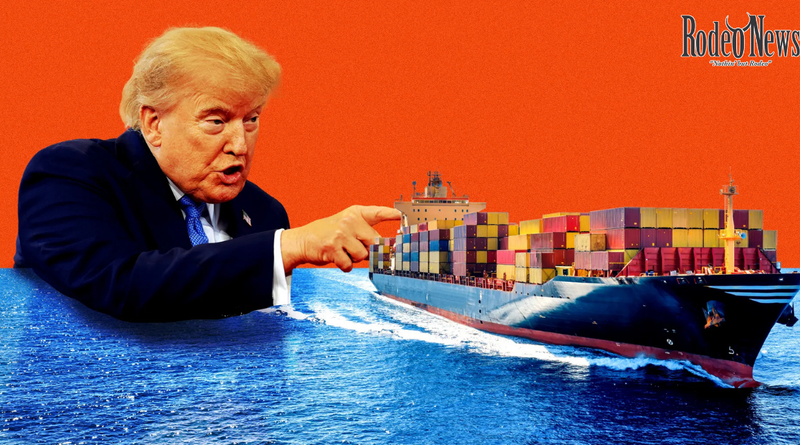
“That sucker is open”: U.S. gains the upper hand in the battle for Hormuz
The Strait of Hormuz has become the center of a major strategic contest between the United States and Iran, with President Donald Trump claiming that American military pressure has restored significant shipping activity through the crucial waterway.
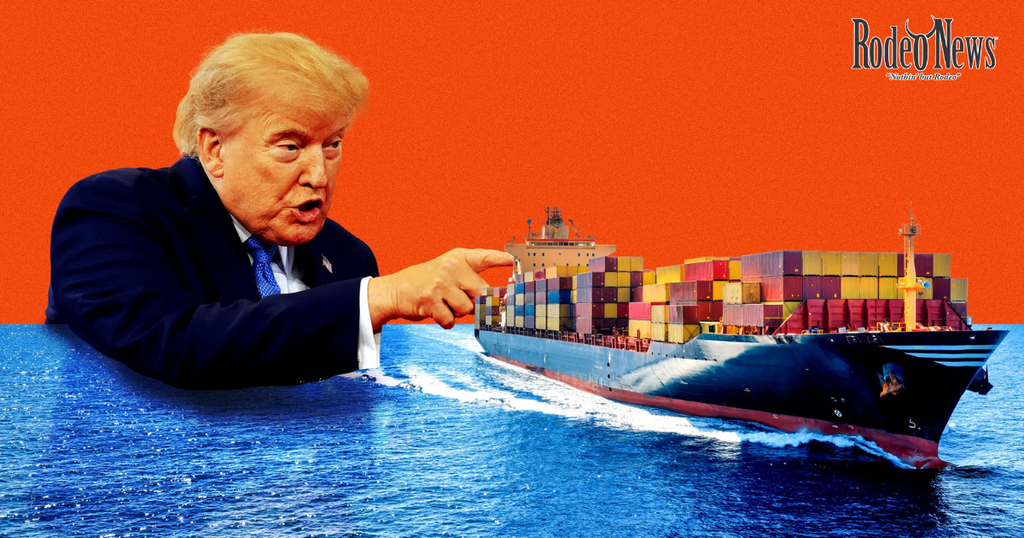
Six months into the war, the situation represents a dramatic shift from the early stages of the conflict. Iranian forces initially disrupted commercial traffic through the strait, threatening one of the world’s most important energy routes. Now, the Trump administration says U.S. military operations have weakened Iran’s ability to control the passage and helped reopen the route to international shipping.
But the picture remains complicated.
Axios reported on Aug. 28 that the United States has gradually gained the upper hand in the battle for the Strait of Hormuz, with commercial traffic returning after months of disruption. At the same time, Iran continues to dispute U.S. claims about the level of control over the waterway.
The disagreement matters because the strait is not simply a military objective. It is one of the world’s most important energy chokepoints.
Strait of Hormuz Becomes the War’s Critical Battleground
The Strait of Hormuz connects the Persian Gulf with the Gulf of Oman and the Arabian Sea. Before the war, enormous volumes of oil and liquefied natural gas passed through the waterway.
Its importance means that any prolonged disruption can affect energy prices far beyond the Middle East.
The conflict initially caused international shipping through the strait to collapse. Tankers became reluctant to enter the waterway because of security risks, while governments and energy companies searched for alternative routes.
That disruption created a significant threat to global oil markets.
Reuters reported that the strait previously carried roughly a fifth of global energy supplies, making its status one of the most important factors influencing oil prices during the conflict.
For Washington, restoring shipping has therefore become both an economic and military objective.
For Tehran, maintaining influence over the waterway provides one of its strongest forms of leverage.
Trump Says the Strait of Hormuz Is Open
Trump has increasingly portrayed the reopening of the Strait of Hormuz as a major achievement for his administration.
According to Axios, U.S. officials believe military operations over the past two months have significantly reduced Iran’s influence over the waterway. The United States has also established a shipping corridor intended to move oil through the strait.
The administration says dozens of tankers are now moving through the area under improved security conditions.
Trump has described the situation in highly favorable terms, arguing that Iran’s ability to threaten international shipping has been substantially reduced.
That represents a sharp change from earlier in the war, when the strait was effectively blocked and energy markets faced severe uncertainty.
However, the word “open” does not necessarily mean normal.
Commercial traffic remains below pre-war levels, according to reporting cited by Axios. Shipping data also suggests that activity remains inconsistent.
Iran Rejects the U.S. Version of Events
Tehran has strongly challenged Washington’s account.
Iran’s Revolutionary Guard has rejected U.S. claims that the Strait of Hormuz has been fully reopened, describing American statements as misleading.
Iranian officials maintain that Tehran still has substantial influence over the waterway.
That creates two competing narratives.
The United States argues that its military campaign has restored freedom of navigation and weakened Iran’s strategic position.
Iran argues that Washington is exaggerating its success and attempting to influence international perceptions, including energy markets.
The disagreement is important because control of the strait is not simply measured by whether individual ships can pass.
Shipping companies also consider insurance costs, security risks, potential attacks and the reliability of future passage.
A waterway can technically remain open while commercial operators continue to avoid it.
Oil Markets Are Watching Every Development
The battle over the Strait of Hormuz has had an immediate effect on global energy markets.
Oil traders have spent months responding to every development in the Iran conflict.
When tensions rise, traders worry that additional supplies could be disrupted. When diplomatic progress appears possible, prices can fall as investors anticipate greater exports.
Reuters reported on Aug. 28 that oil prices settled lower and were on track for a weekly decline as traders considered signs involving Federal Reserve policy and rumors surrounding a possible Hormuz agreement.
That reaction demonstrates an important feature of the current market.
Investors are no longer responding only to battlefield developments. They are also watching diplomatic negotiations, shipping statistics and signals from Washington and Tehran.
The market is effectively trying to determine whether the current reopening is temporary or the beginning of a sustainable return to normal trade.
Shipping Has Improved, But Traffic Remains Uneven
The recovery in traffic through the Strait of Hormuz has not been completely smooth.
Reuters reported that only seven commodity vessels were recorded transiting the strait on one recent day, compared with 17 the previous day and a 10-day average of 15.
Ship-tracking data can be incomplete because vessels may turn off their transponders, but the numbers nevertheless highlight the uncertainty surrounding the waterway.
The contrast is important.
U.S. officials can point to ships successfully making the journey as evidence that the route is functioning again.
Meanwhile, shipping data can show that activity remains significantly below normal.
Both statements can be true at the same time.
The strait may be operational while still falling short of pre-war conditions.
Gulf Countries Face a Difficult Choice
The situation also puts Gulf Arab states in a complicated position.
Countries such as the United Arab Emirates, Bahrain and Kuwait depend heavily on stable energy exports and secure maritime trade. Saudi Arabia and Qatar also have enormous interests in maintaining reliable regional shipping.
The gradual restoration of traffic gives these countries an opportunity to resume greater energy exports.
But they also have to consider their relationships with Iran.
A direct military confrontation involving the Strait of Hormuz creates risks for Gulf countries located close to the conflict.
That explains why regional governments have supported diplomatic efforts even while cooperating with Washington on energy and security matters.
The economic stakes are simply too high for prolonged disruption.
The Strait of Hormuz Is More Than an Oil Story
Although oil dominates the discussion, the Strait of Hormuz is important for several other reasons.
Liquefied natural gas is another major component of the region’s energy trade.
Qatar, one of the world’s largest LNG exporters, relies heavily on maritime routes through the Gulf. Any prolonged disruption therefore affects not only crude oil but also global gas markets.
A sustained crisis could increase energy costs for consumers and industries across Asia and Europe.
It could also affect inflation, transportation costs and manufacturing.
That makes the security of the waterway a global economic issue rather than simply a Middle Eastern military problem.
Trump’s Iran Strategy Has Changed Over Time
The dispute over the Strait of Hormuz also illustrates how Trump’s strategy toward Iran has evolved.
The war began with a much stronger emphasis on military objectives involving Iran’s missile and nuclear capabilities.
Six months later, the waterway has become one of the central issues surrounding the conflict’s future.
Axios reported that Trump’s possible endgames have ranged from continued military pressure to a negotiated agreement tied to reopening the strait.
That creates a difficult strategic question.
If Washington can keep shipping moving without reaching a broader agreement with Tehran, it gains considerable leverage.
But maintaining military operations indefinitely is expensive and carries the risk of escalation.
Trump therefore faces a choice between trying to consolidate the current military advantage and seeking a political agreement that could end the conflict.
Diplomacy Remains on the Table
Despite Trump’s tough public statements, diplomatic efforts have not disappeared.
Regional mediators, including Oman and Qatar, have been involved in attempts to establish conditions for more normal navigation through the Strait of Hormuz.
Reuters reported that Iran had agreed to work on conditions for normalizing navigation following discussions with regional mediators.
The negotiations are complicated by disagreements over control, revenue and security arrangements.
Iran wants assurances regarding its interests.
The United States wants unrestricted commercial navigation and continued pressure on Tehran.
Gulf states want stability.
Oil-producing countries want exports restored.
Those interests overlap in some areas but conflict in others.
That is why a permanent solution remains difficult.
Why Oil Prices Have Not Exploded Higher
One of the most surprising aspects of the crisis has been the resilience of global oil markets.
The Strait of Hormuz is an enormous energy chokepoint, yet crude prices have not remained at extreme levels throughout the conflict.
Reuters recently reported that crude prices remained below $90 per barrel despite the continuing war.
Several factors help explain this.
Alternative supply routes, stockpiles and changes in global demand can cushion some disruptions.
The market is also forward-looking.
If traders believe the strait will eventually reopen fully, they may price that expectation into crude contracts before normal shipping actually returns.
That can limit the impact of temporary supply disruptions.
However, the situation could change quickly if fighting intensifies or shipping through the strait collapses again.
What Happens If Hormuz Closes Again?
A renewed closure of the Strait of Hormuz would immediately raise concerns across global energy markets.
Insurance costs could rise.
Tankers could avoid the region.
Oil exports could fall.
Gas supplies could become tighter.
Governments would likely increase pressure on alternative producers and emergency stockpiles.
The longer such a disruption lasted, the greater the economic consequences would become.
That is why shipping companies are likely to remain cautious even as the United States declares the waterway open.
For businesses, the question is not simply whether a ship can pass today.
They need to know whether it can pass safely tomorrow, next week and next month.
A Strategic Victory for Trump — But Not Yet a Final One
The Strait of Hormuz developments give Trump a potentially powerful political argument.
If U.S. forces have genuinely restored reliable maritime traffic, Washington can claim that military pressure achieved a key objective.
The administration can also argue that Iran’s ability to use the world’s energy markets as leverage has been reduced.
But the ultimate test will be durability.
Can commercial shipping return to normal?
Can Gulf oil exports recover consistently?
Can insurers reduce war-risk premiums?
Can Iran and the United States establish a political arrangement that prevents another closure?
Until those questions are answered, declaring a permanent victory would be premature.
The Global Economy Is Still Watching
The future of the Strait of Hormuz will remain one of the most important indicators for global energy markets.
For the United States, reopening the route would demonstrate that Washington can protect critical maritime trade despite a prolonged regional conflict.
For Iran, maintaining influence over the waterway remains one of its most valuable sources of strategic leverage.
For Gulf countries, stability is essential to economic security.
And for consumers around the world, the outcome could eventually show up at gas stations, on utility bills and in the prices of everyday goods.
The current situation is therefore more than another chapter in the Iran war.
It is a test of whether military power can restore one of the world’s most important commercial routes — and whether that restoration can survive without a broader political settlement.
For now, the United States says the Strait of Hormuz is increasingly open.
Iran says Washington is overstating its control.
Oil markets remain cautious.
And with the war entering its seventh month, the next phase of the struggle over this narrow waterway could have consequences far beyond the Persian Gulf.
Suggested External Links
- Axios — Latest reporting on the U.S. position in the Strait of Hormuz
- Reuters — Oil prices and Hormuz shipping developments
- Reuters — Shipping traffic through the Strait of Hormuz
Suggested Internal Links
Add links to relevant existing articles on your website covering:
- Donald Trump
- Iran war
- Oil prices
- Global energy markets
- Middle East conflict
- U.S. foreign policy
- Gas prices
Image ALT Text
Strait of Hormuz as Trump claims U.S. victory over Iran