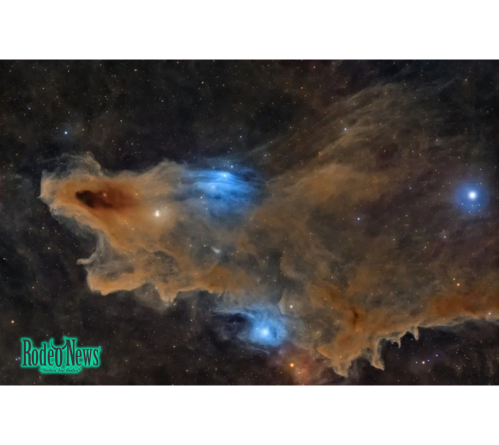
Shark Nebula Photo Wins 2026 Astronomy Photography Prize
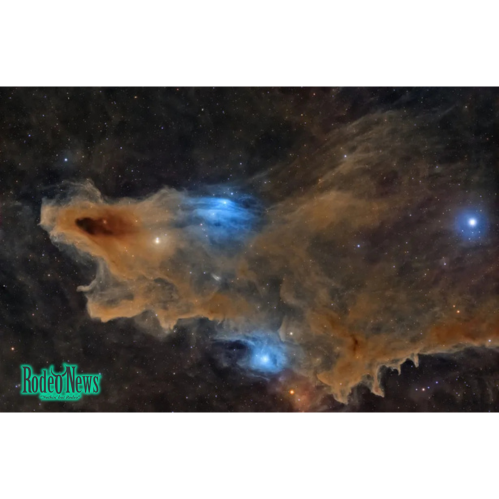
The Shark Nebula has captured worldwide attention after a spectacular photograph of the dark cloud of interstellar dust won the 2026 Astronomy Photographer of the Year competition.
The winning image, titled “The Quiet Predator,” was created by Kuwaiti astrophotographer Ali Alobaidly. The photograph was selected as the overall winner of the 18th edition of the competition, organized by the Royal Observatory Greenwich.
The result marks a milestone for Alobaidly and Kuwait. Royal Museums Greenwich said he is the first overall winner from Kuwait in the history of the competition.
The winning photograph captures the Shark Nebula, officially known as LDN 1235, from the Kuwaiti desert. Located roughly 650 light-years from Earth in the constellation Cepheus, the nebula is a dark region of interstellar dust that blocks light from objects behind it.
The image has been praised for combining scientific detail with an unusually recognizable shape.
Shark Nebula Creates a Predator in the Night Sky
The Shark Nebula gets its informal name from its distinctive silhouette.
Unlike bright nebulae that glow strongly against the background of space, dark nebulae are primarily seen because they block light. Dense clouds of dust obscure stars and other distant objects, creating dark shapes against the surrounding sky.
LDN 1235 is one such object.
According to Royal Museums Greenwich, the Shark Nebula lies nearly 650 light-years away in Cepheus. Its dense interstellar dust is capable of blocking starlight, producing the dramatic appearance that inspired its nickname.
Alobaidly’s photograph takes advantage of that structure.
The dark silhouette appears to resemble a shark moving through an ocean of stars. That visual connection is one reason the image immediately stands out, even to people who may not normally follow astrophotography.
It turns a distant astronomical object into something familiar.
“The Quiet Predator” Captures the Shark Nebula
Alobaidly named his winning image “The Quiet Predator.”
The title reflects both the appearance of the object and the photographer’s personal response to the scene.
Royal Museums Greenwich reported that Alobaidly was drawn to the contrast between the cosmic predator and the Kuwaiti desert below. He described the combination as deeply poetic and connected it with his appreciation of both the universe and the deserts of his ancestors.
The photograph was taken from Kuwait, making the achievement particularly significant for the country’s astrophotography community.
It also demonstrates how modern astrophotography can reveal structures that are difficult or impossible to appreciate with the naked eye.
A dark nebula such as LDN 1235 may not appear as a dramatic shark-shaped object when someone simply looks upward. Long exposures, specialized equipment and careful image processing can reveal the intricate structure hidden in the night sky.
That combination of observation and technology is central to contemporary astrophotography.
Shark Nebula Image Earns £10,000 Prize
Winning the overall competition came with a substantial prize.
Royal Museums Greenwich confirmed that the overall winner of Astronomy Photographer of the Year receives £10,000. Other category winners receive £1,500, while runners-up and highly commended photographers receive additional prizes.
The 2026 competition attracted almost 4,000 images from 769 entrants, according to Royal Museums Greenwich. That made Alobaidly’s achievement especially notable.
The competition is now in its 18th year and has become an international showcase for photographers documenting the night sky.
Entrants range from experienced astrophotographers to younger photographers and newcomers.
The photographs can highlight everything from galaxies and nebulae to planets, the Moon, auroras and night landscapes.
A Historic Win for Kuwait
The Shark Nebula victory also represents an important moment for Kuwait.
Royal Museums Greenwich said Alobaidly is the first overall winner from Kuwait since the competition began.
His winning image therefore carries significance beyond its technical quality.
It places Kuwait on the international astrophotography map and highlights the country’s potential as a location for photographing the night sky.
The country’s desert landscapes can provide a useful setting for astronomical imaging because photographers can move away from densely populated urban areas and search for darker skies.
For Alobaidly, the relationship between the desert and the cosmos was part of the appeal of the Shark Nebula.
His photograph brings those two environments together: an earthly desert landscape and an enormous structure hundreds of light-years away.
What Makes the Shark Nebula So Interesting?
Dark nebulae are fundamentally different from many of the colorful objects commonly seen in space photographs.
Bright emission nebulae can glow because of energetic stars illuminating surrounding gas. Reflection nebulae can shine by reflecting starlight.
Dark nebulae, by contrast, are visible largely because of what they hide.
Their dust absorbs and blocks light from more distant stars and objects.
In the case of LDN 1235, that dust creates a dark silhouette that gives the object its shark-like appearance.
This is one reason astrophotography can be so powerful. A photograph can transform an object that might otherwise look like an indistinct patch of darkness into a detailed structure with layers, contours and depth.
Alobaidly’s image demonstrates that effect particularly clearly.
Distant Galaxies Can Be Seen Through the Scene
One of the striking details highlighted by the judges was the amount of information visible through the Shark Nebula.
Steve Marsh, art editor at BBC Sky at Night Magazine and one of the competition judges, praised the photograph’s presentation, detail and contrast. He also noted that distant galaxies could be seen through the nebula in the image.
That detail adds another layer to the photograph.
The Shark Nebula is not simply an isolated dark shape. Behind it lies a much larger universe.
The dust cloud blocks some light, but not every object behind it is completely hidden. With sufficiently detailed imaging, distant galaxies can still appear through and around the dark structure.
The resulting photograph therefore contains multiple astronomical scales within a single frame.
There is the nearby dust cloud, the stars of our galaxy and even more distant galaxies beyond it.
The Competition Showcases More Than the Shark Nebula
Although the Shark Nebula was the overall winner, the 2026 competition featured many other remarkable photographs.
The Royal Observatory Greenwich’s winners included images covering planets, the Moon, auroras, star trails and other deep-space objects.
Among the winners was “Mineral Moon” by 15-year-old Greek astrophotographer Nikolaos Strimpoulis, who won the ZWO Young Astronomy Photographer of the Year award.
The photograph shows the Moon’s surface in detail, including dark lunar maria and brighter highland regions. The maria are ancient lava plains, while the rugged highlands have been shaped by billions of years of impacts.
Other winning images included a rare view of Saturn’s ring-plane crossing, star trails in Botswana and an aurora.
Together, the photographs show how broad astrophotography has become.
Photographers do not need to focus on one type of celestial object. The competition encourages images that reveal different aspects of the universe and the relationship between Earth and the night sky.
Shark Nebula Exhibition Opens in London
The winning photographs are not staying exclusively online.
Royal Museums Greenwich said the images are being displayed in a special exhibition at the National Maritime Museum in London, which opened on September 18, 2026.
Visitors can see the winning photographs alongside other selected images from the competition.
The exhibition gives the public an opportunity to view astrophotography as both science and art.
That distinction is important because photographs of space can serve different purposes. And they can simply inspire people to look upward.
The Royal Observatory Greenwich has described the annual competition as an international celebration of astrophotographers and the different ways they capture the cosmos.
Technology Is Changing Astrophotography
The success of the Shark Nebula image also highlights how rapidly astrophotography technology has developed.
Modern cameras, sensors, telescopes and image-processing techniques allow photographers to capture details that would have been extremely difficult to record in previous generations.
Royal Observatory Greenwich astronomer and competition judge Dr Greg Brown said improvements in technology, combined with photographers’ skill and innovation, continue to produce new views of familiar astronomical targets.
That means even objects that have been photographed many times can still produce surprising images.
Photographers can experiment with different equipment, exposure techniques, filters and processing methods.
The result is a continually expanding visual record of the universe.
The Shark Nebula is a good example.
Although the object itself has not suddenly changed because of the competition, the ability to photograph it in greater detail allows viewers to see it in a new way.
Alobaidly Wants Astronomy to Reach More People
For Alobaidly, winning the competition is not simply about receiving a major photography award.
He said he hopes to continue using astrophotography to inspire wonder and contribute to scientific research while making astronomy more accessible through communication and education.
That goal reflects the broader role astrophotography can play.
A technical image can introduce a person to astronomy for the first time.
Someone who sees a recognizable shark shape in the night sky may become curious about what the object actually is. That curiosity can lead to questions about stars, galaxies, interstellar dust, light-years and the structure of the Milky Way.
In that sense, a striking photograph can become an entry point into science.
Why the Shark Nebula Photo Matters
The winning Shark Nebula photograph combines several elements that make astrophotography compelling.
And it demonstrates how modern imaging can expose details that are difficult to see without specialized equipment.
Most importantly, the photograph shows that astronomy does not always need to be presented as a collection of abstract numbers or scientific diagrams.
Sometimes, an image can communicate the scale and beauty of space immediately.
A dark cloud of dust almost 650 light-years away becomes a predator swimming through the stars.
That is the central achievement of “The Quiet Predator.”
A New Chapter for Astronomy Photographer of the Year
The 2026 edition of Astronomy Photographer of the Year continues a long-running tradition of bringing astronomy to wider audiences through photography.
The competition is organized by the Royal Observatory Greenwich in association with BBC Sky at Night Magazine, with the winning and shortlisted photographs exhibited at the National Maritime Museum.
This year’s overall winner adds another memorable image to that history.
For Kuwait, it marks a first.
For Alobaidly, it represents international recognition for years of interest in photographing the night sky.
And for viewers, it offers another reminder that the universe can contain familiar shapes in unexpected places.
The Shark Nebula may be hundreds of light-years away, hidden inside a cloud of cosmic dust.
But through one remarkable photograph, it has become one of the most recognizable sights in this year’s celebration of astrophotography.
“The Quiet Predator” is more than a photograph of a nebula. It is a bridge between Earth and deep space — and a striking reminder of how much remains to discover when we look beyond our planet.