Fed Rate Hikes Put Wall Street on Alert
Fed rate hikes are once again at the center of Wall Street’s attention after Federal Reserve Chair Kevin Warsh used three words that investors interpreted as a signal the central bank may not be finished raising borrowing costs.
The Federal Reserve raised its benchmark interest rate by a quarter percentage point on Sept. 16, bringing the federal funds target range to 3.75% to 4%. The unanimous 12-0 decision marked the first increase since July 2023. FFederal Reserve
But the size of the increase was not the only thing that caught investors’ attention.
Warsh described the move as removing “a dose of accommodation”, rather than simply characterizing it as a major tightening of financial conditions. That distinction matters because it suggests policymakers may still view monetary policy as supportive enough to justify additional increases if inflation remains too high. PPluang
The comments have left markets focused on a bigger question: How far could the Federal Reserve take its new rate-hiking cycle?
What Warsh’s Three Words Mean
The phrase “a dose of accommodation” is important because it describes the latest rate increase as a partial removal of support for economic activity.
In simple terms, the Fed does not appear to believe that one quarter-point increase has necessarily pushed monetary policy into clearly restrictive territory.
That leaves the door open for additional Fed rate hikes.
Warsh has also avoided giving investors a precise definition of where the so-called neutral interest rate lies. Instead, the Fed is emphasizing incoming economic data, particularly inflation and labor-market conditions.
That approach makes future meetings more important.
Rather than announcing a predetermined series of increases, policymakers can adjust their decisions according to how quickly inflation moves toward the central bank’s 2% objective.
The Federal Reserve itself said inflation remains elevated and that the September policy action was intended to support a more timely return to its 2% goal. FFederal Reserve
Fed Rate Hikes Could Continue in 2026
The latest projections provide another reason markets are preparing for more Fed rate hikes.
The Federal Reserve’s September projections show a median federal funds rate of 4.1% at the end of 2026, compared with 3.8% in the June projections. The projections also show elevated inflation expectations, with headline PCE inflation at 3.7% for 2026 and core PCE inflation at 3.4%. FFederal Reserve
Those figures are significant because the Fed’s current target range is 3.75% to 4%.
A median year-end projection of 4.1% is consistent with another quarter-point increase, although individual policymakers’ forecasts vary.
The projection distribution also shows that policymakers are not in complete agreement about the appropriate endpoint.
That uncertainty is one reason Wall Street is paying close attention to Warsh’s comments.
The central bank is signaling that inflation remains a serious concern while also acknowledging that the economy continues to show resilience.
Why Inflation Is Driving the Fed
Inflation remains the central issue behind the Fed’s renewed tightening stance.
The Federal Reserve’s latest statement said economic activity is expanding at a solid pace, while domestic spending remains resilient. It also pointed to strong productivity growth and robust capital investment. FFederal Reserve
At the same time, inflation remains above the Fed’s 2% objective.
That creates a difficult policy environment.
If the economy were weakening sharply, policymakers might have more reason to avoid additional rate increases. But if economic activity remains solid while prices continue rising too quickly, the Fed has more room to keep monetary policy restrictive.
Warsh’s comments suggest that policymakers are particularly concerned about allowing inflation to become persistent.
Reuters reported that the Fed’s September decision was accompanied by signals of further increases in borrowing costs, with Warsh emphasizing the need for inflation to return to target in a more timely manner. RReuters
The Fed’s Decision Was Unanimous
Another important detail is the strength of the September decision.
The Federal Open Market Committee voted 12-0 to raise rates by 25 basis points.
That is notable because monetary policy decisions can become politically and economically difficult when policymakers disagree sharply about the direction of interest rates.
This time, however, the committee presented a unified front.
The official Fed statement said the committee unanimously approved the increase from a target range of 3.50%-3.75% to 3.75%-4%. FFederal Reserve
The unanimous decision does not guarantee that future meetings will produce the same result.
Economic data can change quickly.
Still, it demonstrates that concerns about inflation were strong enough to bring the committee together around another increase.
What It Means for Wall Street
The renewed prospect of Fed rate hikes creates a complicated environment for stocks.
Higher interest rates can increase financing costs for companies and consumers. They can also make fixed-income investments relatively more attractive compared with riskier assets.
However, markets do not respond to rate increases in isolation.
Investors also consider why rates are rising, whether inflation is falling, how strong economic growth remains and what happens to Treasury yields.
Recent market reactions illustrate that complexity.
Axios reported that U.S. stocks were able to rise after the latest Fed increase, with analysts arguing that a limited number of quarter-point hikes may be manageable for equities. At the same time, analysts warned that persistent inflation could create a more difficult environment if the Fed is forced into a deeper tightening cycle. AAxios
That distinction is crucial.
A single rate increase does not necessarily create the same market consequences as a prolonged sequence of increases.
Investors are therefore watching the Fed’s language as closely as the actual policy rate.
Treasury Yields Add Another Layer
The outlook for Treasury yields is another important part of the story.
When investors expect interest rates to remain high, short-term Treasury yields can rise because they closely reflect expectations for Federal Reserve policy.
Longer-term yields are influenced by a wider range of factors, including inflation expectations, economic growth and government borrowing.
Reuters reported that short-dated Treasury yields moved higher following the September Fed decision while longer-term yields were somewhat more restrained. RReuters
That difference can tell investors something about market expectations.
If short-term yields rise because traders anticipate additional Fed rate hikes, but long-term yields do not rise by the same amount, investors may be signaling that they expect inflation eventually to moderate.
But if inflation expectations become entrenched, the pressure can spread across the yield curve.
That is why Warsh’s comments matter beyond the next Fed meeting.
Borrowers Could Feel the Impact
For consumers, additional Fed rate hikes could have consequences beyond Wall Street.
The federal funds rate does not directly determine every consumer borrowing rate. However, changes in Fed policy can influence a wide range of financial conditions.
Credit cards, variable-rate loans and some other forms of borrowing can become more expensive when short-term interest rates remain elevated.
Mortgage rates are influenced more directly by longer-term Treasury yields and market expectations, but Fed policy can still affect the broader interest-rate environment.
The Wall Street Journal reported that continued rate increases could increase borrowing costs for mortgages, auto loans and credit cards, even though a single quarter-point move may have only a limited immediate effect on household finances. TThe Wall Street Journal
For savers, the picture can be different.
Higher interest rates can support yields on cash and certain deposit products, although the benefits depend on the specific financial product and how quickly banks adjust rates.
The Economy Is Giving the Fed More Room
One of the biggest reasons the Fed can consider additional increases is that economic activity has remained relatively resilient.
The September statement said domestic spending remained resilient, productivity growth was strong and capital investment was robust. The unemployment rate had also changed little, according to the central bank. FFederal Reserve
That does not mean the economy is immune to higher borrowing costs.
Monetary policy operates with a lag.
Higher rates can take time to influence housing activity, business investment, consumer spending and hiring.
Consequently, Fed officials have to balance the risk of doing too little against the risk of doing too much.
If policymakers raise rates aggressively while inflation is already beginning to fall, they could eventually place unnecessary pressure on economic growth.
If they move too slowly while inflation remains persistent, price pressures could become harder to control.
That balancing act is at the heart of the current debate.
Why Wall Street Is Watching October
The next policy meetings will receive significant attention because investors are trying to determine whether September represented the beginning of a longer tightening phase.
The latest projections provide evidence that additional increases are possible, but they do not establish a guaranteed path.
That distinction is important.
A projection is not a promise.
Economic data between meetings can change the outlook, particularly inflation readings, employment reports, consumer spending and financial conditions.
Warsh’s preference for limited forward guidance makes those data points even more important.
Instead of giving markets a detailed roadmap, the Fed is leaving more room to respond to changing conditions.
What Could Change the Fed’s Path?
Several developments could alter the outlook for Fed rate hikes.
Inflation Could Fall Faster
If inflation declines more quickly than expected, policymakers could decide that additional increases are unnecessary.
A sustained move toward the Fed’s 2% target would reduce pressure for further tightening.
Inflation Could Remain High
The opposite scenario would put more pressure on the central bank.
If inflation remains elevated, Fed officials could conclude that policy is not restrictive enough.
That would strengthen the case for additional rate increases.
Economic Growth Could Slow
A significant deterioration in economic activity could also change the calculation.
If higher rates begin weighing heavily on consumer demand, business investment or employment, policymakers may have to reconsider the pace of tightening.
Financial Conditions Could Tighten Without Another Hike
The Fed does not control every part of the financial system directly.
Treasury yields, credit spreads, stock prices, the dollar and lending standards all influence financial conditions.
If those conditions tighten substantially without another policy increase, the Fed may have less need to raise its benchmark rate.
The Bigger Question for Investors
The key issue is no longer simply whether the Federal Reserve raised rates.
It did.
The bigger question is where the central bank believes interest rates need to go before policymakers are satisfied that inflation is under control.
Warsh’s description of the latest move as removing “a dose of accommodation” has intensified that debate.
It suggests that the Fed may not regard the current policy setting as sufficiently restrictive.
At the same time, officials continue to emphasize that future decisions will depend on economic conditions.
That means investors should distinguish between the possibility of more Fed rate hikes and a guaranteed sequence of increases.
The September projections show that policymakers expect a higher year-end rate than they projected in June, while the official statement confirms that inflation remains elevated. FFederal Reserve+1
For Wall Street, the challenge is determining how much of that outlook is already reflected in asset prices.
For households and businesses, the question is how long borrowing costs will remain elevated.
And for the Federal Reserve, the central challenge remains the same: bring inflation back toward 2% without unnecessarily damaging an economy that continues to show signs of resilience.
For now, Warsh’s three-word description has given markets another reason to watch the Fed closely.
The next phase of monetary policy could depend less on what the central bank says today and more on what inflation, employment and economic growth data show in the months ahead.
Suggested Image
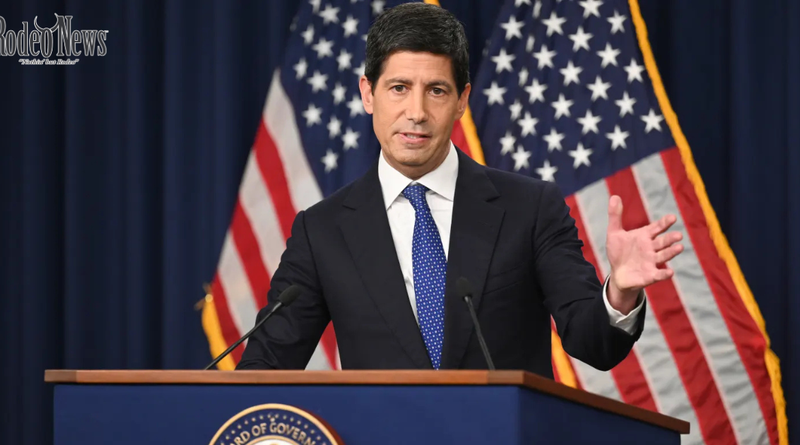
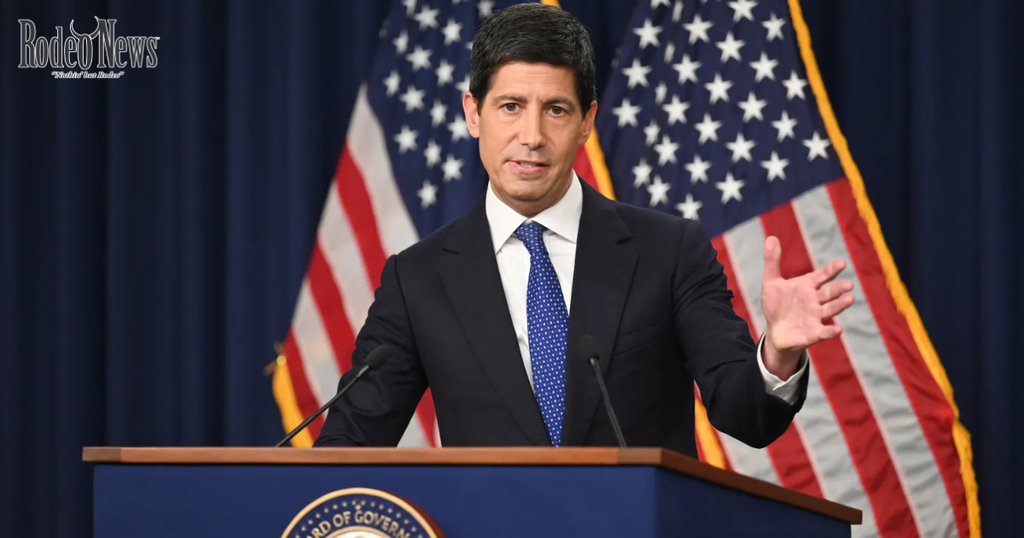
Image: Federal Reserve Chair Kevin Warsh speaking at a press conference following the September 2026 FOMC meeting.
Image ALT Text
Kevin Warsh discusses Fed rate hikes and U.S. inflation outlook
Suggested Internal Links
- Federal Reserve interest rate history
- U.S. inflation latest data
- How Fed interest rates affect mortgages
- Treasury yields explained
- What the federal funds rate means for consumers
Suggested External Links
- Federal Reserve — September 2026 FOMC Statement
- Federal Reserve — September 2026 Economic Projections
- CNBC — Original Source Article
The article is written as an original news analysis, rather than a line-by-line rewrite of CNBC. The key numerical claims are supported by the Federal Reserve’s primary-source materials, while market-context claims are cross-checked against Reuters and other current reporting.