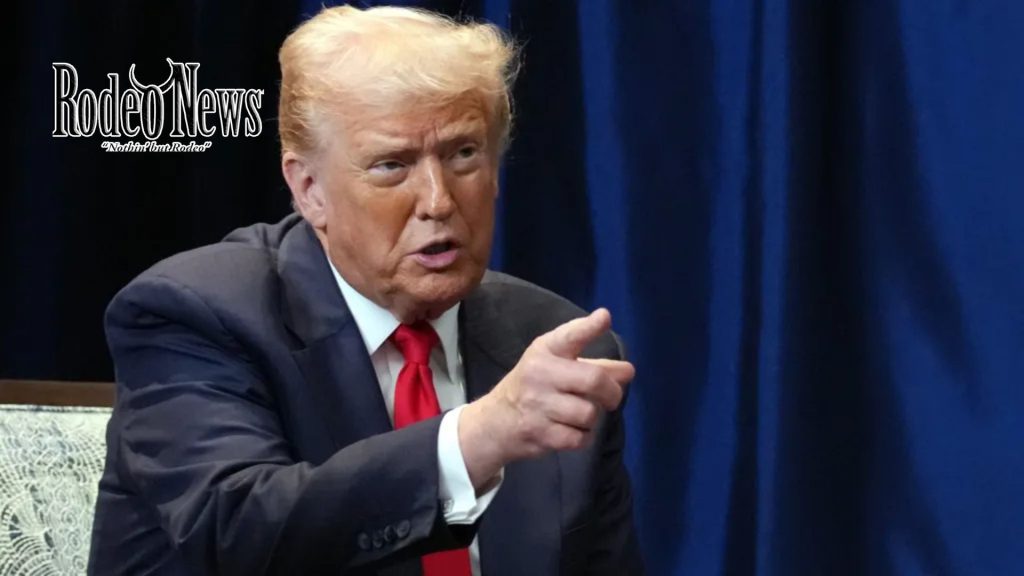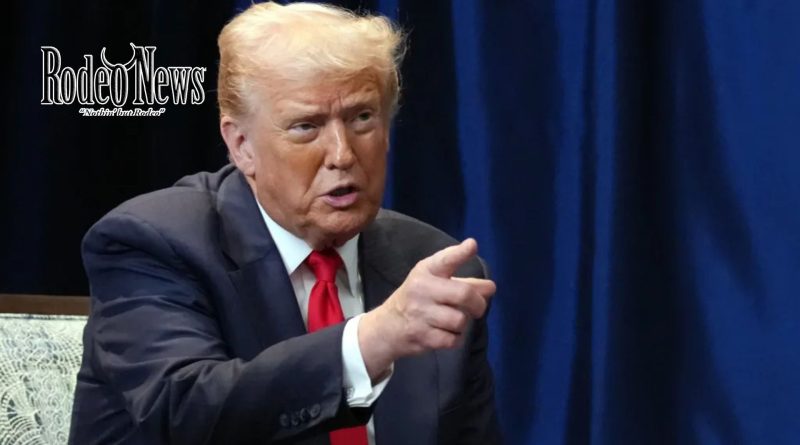
Former US President Donald Trump has formally instructed the United States Department of Defense (DoD) to prepare for possible military action in Nigeria unless the Nigerian government halts what he calls ongoing killing of Christians.
According to published reports, Trump framed Nigeria’s situation as one of “systematic” killing of Christians, and warned that the United States may stop all aid and launch military measures targeting “Islamic terrorists” if the killings do not end.
Nigeria’s government strongly rejected the threat, emphasizing that any foreign military action must respect Nigeria’s sovereignty and that the country remains committed to religious freedom and security for all citizens.
Key details
- Trump stated that the DoD should be ready to act “immediately” if Nigeria fails to respond.
- He tied potential military intervention to the halting of what he describes as the “killing of Christians” in Nigeria, and to the cessation of US assistance unless the Nigerian government takes decisive steps.
- Analysts noted that the evidence for Christians being uniquely or disproportionately targeted remains unclear, and that Nigeria’s conflict context is complex.
- For Nigeria, the threat adds pressure amid ongoing insurgency, communal violence, and security challenges across multiple states.
Implications
This development signals a shift in US foreign-policy posture, linking military readiness and aid to religious-freedom concerns, and applying direct pressure on a key African partner. For Nigeria, the threat complicates already difficult security dynamics and may impact its relations with the United States and other international partners. It also raises broader questions about the legitimacy and practicality of military intervention in Nigeria’s internal conflicts.
Outlook
Whether the US will move from preparation to actual deployment remains uncertain. Key factors will include Nigeria’s response, the US government’s willingness to act beyond rhetoric, and the logistics of any military operation in a country with challenging terrain and multiple actors in play. Nigeria, for its part, may seek to reaffirm its control, reassure domestic and international stakeholders, and push back diplomatically to maintain its sovereignty and strategic autonomy.
Please let me know if you’d like a deeper analysis (e.g., on Nigeria’s security landscape or US-Africa relations) or a version tailored for a different audience.