Nepal Tunnel Rescue Brings Hope After 9 Days Underground
The Nepal tunnel rescue operation delivered a remarkable breakthrough Friday when two hydropower workers were pulled alive from a buried tunnel nine days after catastrophic floods and mudslides struck the Himalayan nation.
The survivors, identified as Sanjay Sah, 30, and Kabir Maharjan, 45, had been trapped inside the Trishuli 3A hydropower tunnel in Nepal’s Rasuwa district. Sah works as a mechanical foreman, while Maharjan is a mechanical supervisor, according to Nepalese authorities.
Their rescue came after emergency crews spent days clearing mud, debris and water from the damaged tunnel. The dramatic discovery has renewed hope that other missing workers could still be found alive.
The two men were taken for medical treatment after being brought to the surface.
Nepal Tunnel Rescue Finds Two Survivors
The rescue unfolded at the Upper Trishuli 3A Hydropower Station, where massive flooding had buried sections of the underground infrastructure.
Rescuers had been working through extremely difficult conditions. The tunnel was damaged and obstructed by mud and debris after flooding swept through the region on August 26.
After more than a week underground, the chances of finding survivors had begun to diminish.
Then rescuers received a critical breakthrough.
Teams heard indications that people could still be alive inside the tunnel. They continued digging and eventually reached the two workers.
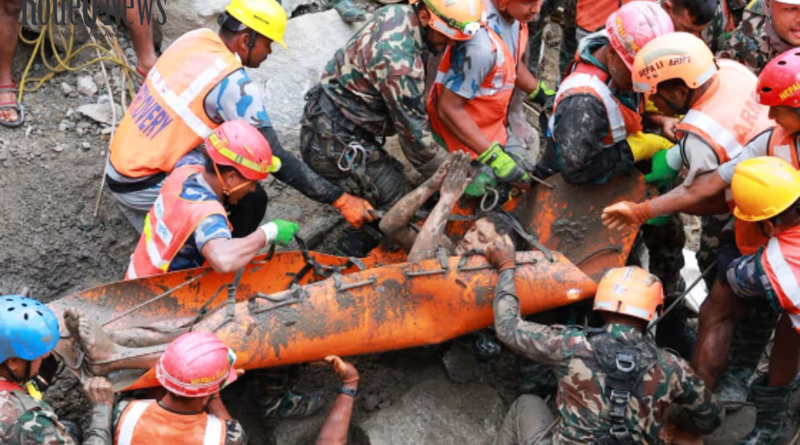
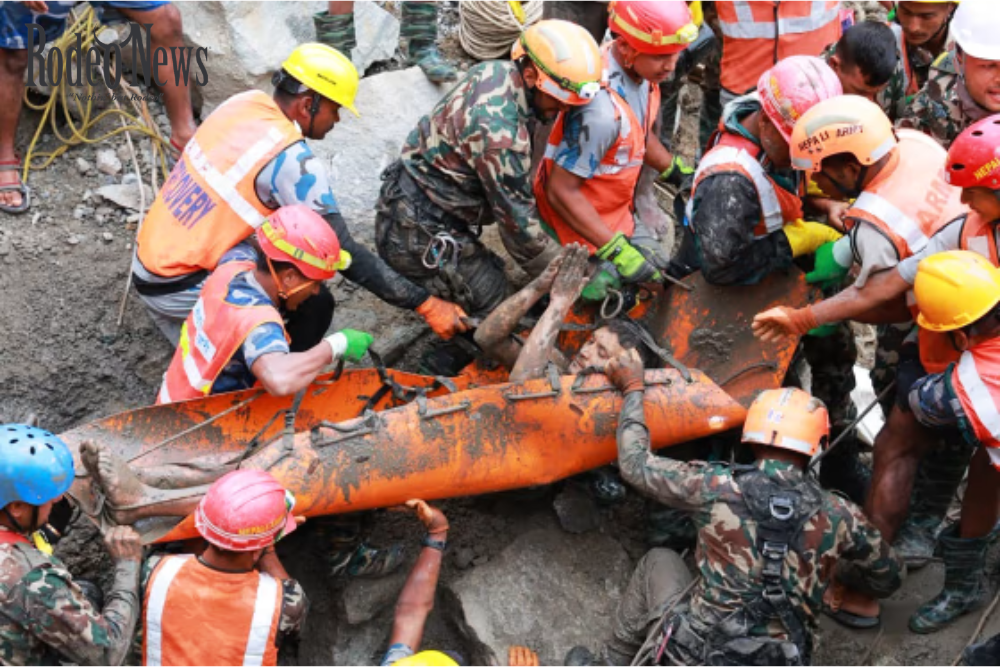
Videos released by Nepalese authorities showed rescuers pulling the men through an opening in the ground. One survivor was carried toward a rescue area, while another was placed on a stretcher before being transported for medical care.
The scenes triggered celebrations among rescue workers and relatives who had been waiting for news.
Who Were the Two Workers Rescued?
The two survivors were identified as Sanjay Sah and Kabir Maharjan.
Sah, 30, was working as a mechanical foreman at the hydropower project. Maharjan, 45, was a mechanical supervisor.
Their identities were confirmed by Nepalese officials following the rescue.
Maharjan’s family expressed enormous relief after learning that he had survived.
His brother, Amir Maharjan, described the emotional impact of the news, saying his heart felt lighter after learning his brother was alive.
For the families of workers still missing, however, the rescue has brought both hope and renewed urgency.
The successful operation demonstrates that people may survive for extended periods inside damaged infrastructure under extremely difficult circumstances.
How the Nepal Tunnel Rescue Was Carried Out
The rescue was not a simple extraction operation.
Teams had to work through a combination of mud, rocks and floodwater while attempting to avoid further danger inside the tunnel.
According to reporting from the operation, rescuers used heavy equipment and other techniques to clear pathways through the debris. Some rocks were extremely large, slowing the effort.
Tunneling expert Arnold Dix, who was involved in advising the rescue operation, described the work as extremely challenging.
Rescuers also had to manage water inside the tunnel. Creating drainage routes became an important part of the operation because additional water could threaten both rescuers and anyone trapped deeper inside.
Eventually, crews created an opening that allowed them to move farther into the damaged structure.
The breakthrough came when rescuers detected signs of life.
They then worked to reach the trapped men and bring them to safety.
Nine Days Trapped Underground
The two workers survived approximately nine days underground after the floods hit the area.
That length of time made their rescue especially remarkable.
They were trapped in a dark, damaged environment where access to food, clean water, fresh air and medical care would have been severely limited.
Reports said the men were transported for treatment after being rescued. Officials indicated that they were receiving medical attention, while reports described injuries and concerns related to their condition after spending so long underground.
The physical challenges of surviving underground can be severe.
Floodwater can create additional hazards, while mud and debris can restrict movement and ventilation. Workers trapped underground can also face dehydration, exhaustion, injuries and psychological stress.
For rescue teams, the priority was therefore not simply finding the workers but reaching them without creating additional danger.
The Disaster Began With Catastrophic Flooding
The tunnel rescue is part of a much larger disaster affecting Nepal.
On August 26, catastrophic flooding struck areas along the Trishuli River valley. Reports have linked the flooding to a glacier collapse in the Himalayan region.
The resulting surge of water and debris devastated communities, damaged infrastructure and swept away homes and bridges.
The disaster has produced a huge humanitarian crisis, with more than 1,200 people reported dead and thousands more missing across affected areas in Nepal and neighboring regions.
Hydropower infrastructure was particularly vulnerable.
Nepal relies heavily on hydropower, and numerous projects operate in mountainous areas where rivers run through steep valleys.
When massive quantities of water, rock and mud move through these valleys, tunnels and construction sites can become extremely dangerous.
Hundreds of Workers Remain Missing
The rescue of Sah and Maharjan does not mean the search is over.
Local authorities have reported that hundreds of hydropower workers remain missing across multiple projects.
One report said approximately 900 workers were missing from 12 hydropower projects, with roughly 500 believed to be trapped inside tunnels.
Those figures illustrate the enormous scale of the rescue challenge.
Every tunnel presents different conditions. Some may have been completely flooded, while others may have been filled with mud or blocked by massive rocks.
Rescuers must determine where workers could be located and whether sections of the tunnels remain structurally safe enough to enter.
The successful rescue at Trishuli 3A could provide valuable encouragement for those operations.
More Voices Heard Inside the Tunnel
The discovery of the two survivors has also raised hopes because rescue crews reportedly heard voices from deeper inside the damaged tunnel.
That development is potentially significant.
If additional workers are alive, rescue teams may need to move quickly while maintaining safe access routes.
At the same time, rescuers face a difficult balance.
Moving too aggressively through unstable debris could cause additional collapses or expose emergency personnel to dangerous water flows.
The operation therefore requires engineers, soldiers, medical personnel and specialized rescue teams to work together.
The Nepalese Army has played a central role in the rescue effort.
Nepali Army Leads Critical Rescue Efforts
Nepali Army personnel were among those who brought the two workers to the surface.
Images and video released after the rescue showed soldiers and emergency personnel carrying survivors away from the tunnel.
The army also provided medical assistance at the rescue site.
One video showed medical personnel attending to a survivor before he was transported for further treatment.
The rescue highlights the importance of specialized emergency teams during large-scale disasters.
Mountainous terrain, damaged roads and destroyed infrastructure can make it difficult to bring conventional rescue equipment into affected areas.
In Nepal, those difficulties have been compounded by the widespread destruction caused by the flooding.
Families Wait for News
For families of missing workers, every hour has brought uncertainty.
Many have had little information about what happened to their relatives after the floods struck.
The rescue of Sah and Maharjan has therefore created a powerful sense of hope.
For relatives of the two men, the moment they learned their loved ones were alive was a dramatic reversal after days of fear.
But other families continue waiting.
The number of missing people remains large, and authorities are still trying to determine who may have survived, who may be trapped and who may have died in the disaster.
The rescue operation will therefore continue despite the difficult conditions.
Why the Rescue Is So Significant
The Nepal tunnel rescue is significant for several reasons.
First, it demonstrates that survival remains possible even after many days inside a damaged underground structure.
Second, it provides rescuers with evidence that other missing workers could potentially still be alive.
Third, it gives families a reason to maintain hope while search teams continue their operations.
The rescue also demonstrates how complicated disaster response can become when floods affect underground infrastructure.
A tunnel that normally provides protection from weather can become a trap when floodwater and debris enter its passages.
What Happens Next?
Authorities are expected to continue searching the Trishuli 3A tunnel and other affected hydropower facilities.
The immediate priority is locating additional survivors and determining which areas can be safely accessed.
Medical teams will also monitor the two rescued workers as they recover.
For rescue crews, the operation remains a race against time.
Every cleared section of tunnel could reveal additional survivors or provide information about those who remain missing.
The rescue of Sah and Maharjan has changed the atmosphere surrounding the operation.
Before Friday, families had faced days of increasingly difficult news.
Now, there is tangible evidence that survival underground is possible.
A Rare Moment of Hope in a National Tragedy
Nepal’s devastating floods have caused enormous loss of life and widespread destruction.
Entire communities have been affected. Roads and bridges have been damaged, infrastructure has been destroyed, and thousands of families have been left searching for missing relatives.
Against that backdrop, the survival of two hydropower workers after nine days underground represents a rare moment of hope.
The images of rescuers bringing the men into daylight captured the emotional significance of the operation.
One survivor was seen covered in mud as rescue workers helped him from the tunnel. Another was carried away on a stretcher.
For their families, the rescue represents far more than a successful emergency operation.
It means that two people who had been feared lost are alive.
And for the teams still searching through Nepal’s damaged tunnels, their survival provides another reason to keep going.
The Search Continues
The Nepal tunnel rescue has delivered an extraordinary breakthrough, but the wider emergency remains far from over.
Sanjay Sah and Kabir Maharjan are now receiving medical attention after surviving nine days underground.
Meanwhile, rescue teams continue searching for other workers believed to be trapped or missing.
The scale of the disaster means that authorities face a long and difficult recovery.
Yet the rescue at Trishuli 3A offers an important message: even after days of silence, hope cannot necessarily be ruled out.
As crews continue clearing tunnels and searching damaged hydropower projects, families across Nepal will be watching for the next breakthrough.
For now, the survival of two workers after nine days has provided one of the most powerful moments of hope since the catastrophic floods struck the country.