Hackers Heat French Supermarket Fridges to 50°C in Cyberattack
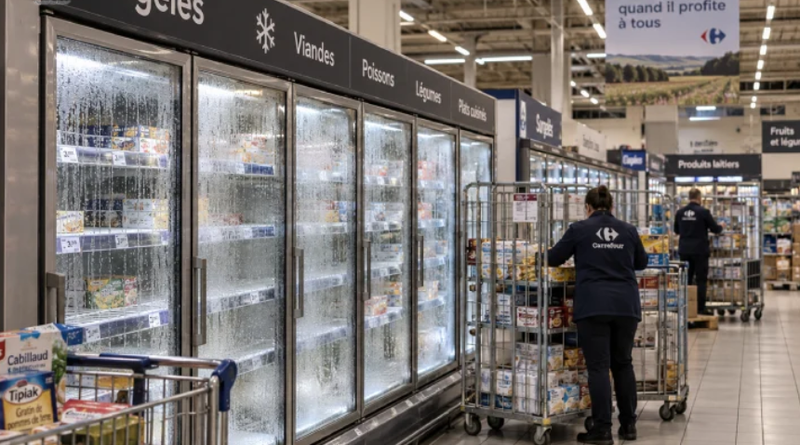
A major French supermarket cyberattack has disrupted refrigeration systems at hundreds of retail locations, forcing stores to discard food after attackers remotely manipulated cooling equipment. Some refrigerators and freezers reportedly reached temperatures as high as 50°C, turning essential food-preservation systems into a source of serious operational and financial damage.
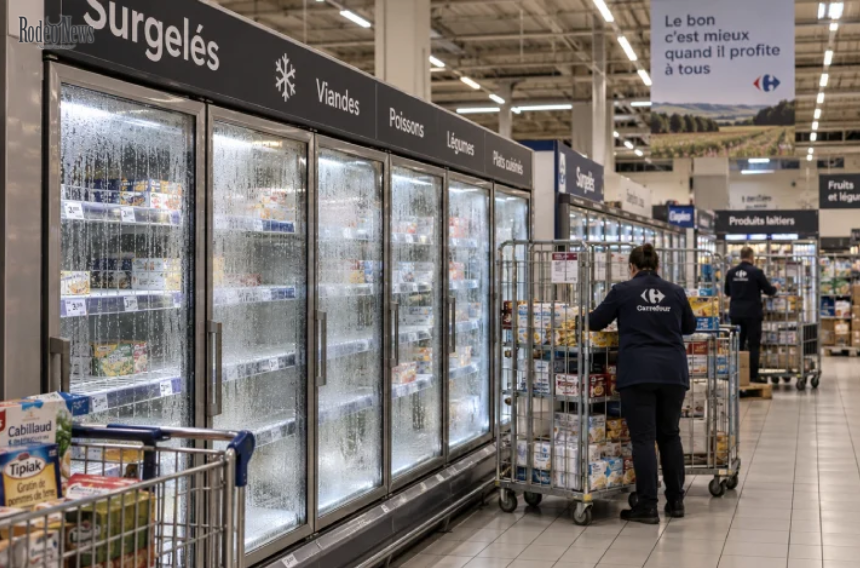
The incident occurred overnight on October 11, 2026, and affected several major French supermarket chains. Authorities are investigating the attack, while cybersecurity officials have warned operators about vulnerabilities associated with internet-connected refrigeration controllers.
French Supermarket Cyberattack Targets Refrigeration Systems
The attack reportedly targeted refrigeration management controllers manufactured by Danish company Danfoss. These devices regulate the operation of supermarket refrigerators and freezers and can be accessed remotely by authorized maintenance providers.
According to reports, attackers manipulated the systems to activate defrost functions, causing temperatures inside refrigeration units to rise dramatically. Les Mousquetaires, the retail group that owns Intermarché, confirmed that affected equipment reached temperatures of up to 50°C.
The incident demonstrates how cyberattacks can cause physical damage without directly targeting traditional computer systems, customer databases, or payment platforms.
Instead, the attackers allegedly interfered with equipment responsible for maintaining safe storage conditions for perishable products.
Major French Retailers Report Disruptions
Several major supermarket operators reported being affected by the incident, although the number of impacted locations and the extent of the damage varied between companies.
Intermarché and its parent group, Les Mousquetaires, reported significant disruption, with approximately 150 stores directly affected according to one company account. Other reports indicated that at least 300 Intermarché and Netto outlets were targeted.
Coopérative U and Carrefour also reported incidents involving refrigeration equipment. Monoprix and E.Leclerc were among the other retailers identified in reports about the wider attack.
Not every affected store necessarily experienced food losses. The extent of the damage depended partly on whether employees and maintenance teams could respond before refrigeration conditions deteriorated.
However, some supermarkets had to dispose of affected products to prevent potential food-safety risks. The incident also disrupted normal store operations as employees assessed damaged equipment and removed compromised stock.
Danfoss Controllers Become a Cybersecurity Concern
France’s national computer emergency response team, CERT-FR, issued an alert on October 12 concerning compromises involving two Danfoss controller series: the AK-SM and AK-SC.
The agency advised operators to disconnect affected controllers from the internet or strictly filter access to them. CERT-FR operates under ANSSI, France’s national cybersecurity agency.
Danfoss said many of the affected devices were older models that no longer receive software or security updates. The AK-SM 800 and AK-SC 355 were among the models identified in reporting about the incident.
Older equipment can present additional security challenges when manufacturers discontinue support. Without ongoing updates, known weaknesses may remain unresolved, making it more difficult for operators to protect systems against emerging threats.
Nevertheless, authorities have not publicly established exactly how the attackers gained access to the controllers. The precise entry point and the identity of those responsible remain unconfirmed.
Authorities Investigate the French Supermarket Cyberattack
French authorities have begun investigating the incident and assessing its wider implications. The Paris prosecutor’s office confirmed that the attack affected connected refrigeration equipment at several major food retailers and was associated with food losses and reported fires.
ANSSI is also involved in the response, with French officials coordinating with European counterparts to determine whether organizations in other countries may have been affected.
The incident has raised concerns about the security of connected industrial equipment used in essential commercial operations. Although refrigeration controllers may not attract the same attention as corporate servers, their disruption can have immediate consequences for businesses and consumers.
Investigators must establish how the systems were accessed, which equipment was compromised, and whether the incidents across different retail chains were connected.
As of October 13, 2026, public reporting had not identified the attackers or confirmed a definitive technical explanation for the intrusion.
Why Internet-Connected Refrigeration Systems Need Protection
The French supermarket cyberattack highlights the risks associated with remotely managed operational technology. These systems control physical processes, including cooling, heating, manufacturing, and building management.
When attackers gain control of such equipment, the consequences can extend beyond data theft or temporary IT outages. In this case, manipulated refrigeration settings reportedly led to spoiled food, financial losses, and disruption across retail locations.
Businesses can reduce these risks by limiting remote access to trusted users, avoiding direct exposure of management interfaces to the public internet, replacing unsupported equipment, and applying available security updates.
Organizations should also review passwords, user accounts, network segmentation, and monitoring procedures. Remote maintenance access should be restricted to approved service providers and protected through appropriate authentication and network controls.
Regular incident-response exercises can further help employees identify abnormal equipment behavior and escalate suspected cyber incidents quickly.
Cybersecurity Risks Extend Beyond Traditional IT
The attack illustrates why cybersecurity planning must include physical infrastructure, not just office computers and online services. Systems that appear routine, such as supermarket refrigeration controllers, can become attractive targets because they directly influence business operations.
For retailers, a successful intrusion can create multiple problems simultaneously: damaged inventory, interrupted sales, emergency maintenance costs, and potential safety concerns. The financial consequences may continue even after systems are restored.
The investigation will be important in determining whether the incident exploited outdated equipment, inadequate remote-access protections, or another security weakness.
For now, French authorities and affected retailers are working to assess the damage and secure vulnerable systems. The incident serves as a warning that connected equipment must be treated as part of an organization’s critical cybersecurity infrastructure.
As more businesses rely on remotely managed industrial devices, protecting those systems will be essential to maintaining reliable services, safeguarding products, and reducing the potential impact of future cyberattacks.