

Landlords Offer Concessions: 5 Key Rental Trends
The U.S. rental market is giving tenants more room to negotiate as landlords offer concessions to attract renters and fill vacant properties. New data from Realtor.com shows that nearly half of rental listings in the nation’s 50 largest metropolitan areas included some form of incentive in August 2026. RRealtor+1
The shift comes as median asking rents continue to decline on a year-over-year basis. At the same time, a wave of newly built apartments has expanded rental supply in several major markets, increasing competition among property owners.
According to Realtor.com’s August rental report, the national median asking rent for studio, one-bedroom and two-bedroom properties fell 0.9% from a year earlier to $1,699. That marked the 37th consecutive month of annual rent declines. RRealtor
For renters, the combination of lower asking rents and more concessions could create additional opportunities this fall.
1. Landlords Offer Concessions on 43.5% of Listings
One of the clearest signs of changing rental-market conditions is the growing prevalence of concessions.
In August, 43.5% of 0-to-2-bedroom rental listings across the 50 largest U.S. metropolitan areas offered at least one concession, according to Realtor.com. That was up from 40.4% a year earlier, representing a 3.1-percentage-point increase. RRealtor
A concession is an incentive designed to make a rental property more attractive without necessarily reducing its advertised monthly rent.
Common examples include:
- Waived or reduced application fees
- Rent credits
- One or more months of free rent
- Upgraded amenities
- Moving assistance
- Gift cards
The strategy can benefit both sides of a rental transaction. Renters can reduce their upfront or total housing costs, while landlords can make a vacant property more competitive.
The increase also suggests that advertised rent alone may no longer tell the entire story of what renters can actually pay over the course of a lease.
For example, an apartment advertised at a fixed monthly rate could come with several weeks or months of free rent. The tenant’s effective cost could therefore be lower than the headline asking rent suggests.
2. Denver Leads the Nation in Rental Concessions
The national average masks substantial differences between individual markets.
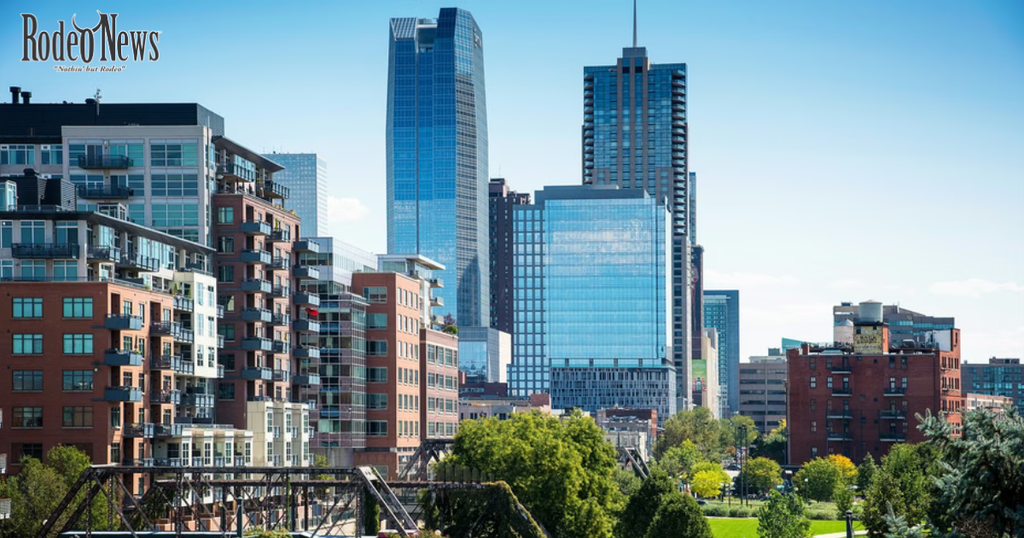
Denver recorded the highest concession rate among the 50 largest metropolitan areas, at 71.9%. That means nearly three out of every four qualifying rental listings included an incentive in August. RRealtor
Other markets with particularly high concession rates included:
- Austin: 70.7%
- Las Vegas: 69.6%
- Nashville: 69.0%
- San Antonio: 67.9%
- Tampa: 63.9%
- Jacksonville: 63.2%
- Houston: 60.3%
- Orlando: 58.5%
- Seattle: 57.9%
These markets are concentrated heavily in the South and West, regions that have experienced significant housing construction in recent years.
The high concession rates suggest that landlords in some cities are competing intensely for tenants.
That does not mean every renter in these markets will automatically receive a discount. Individual properties can have very different vacancy levels, locations, amenities and ownership structures.
However, the overall market data indicates that incentives are becoming an increasingly common part of rental negotiations.
3. New Apartment Construction Is Increasing Competition
One major factor behind the increase in concessions is the growth in rental inventory.
Several markets across the South and West have experienced substantial apartment construction. As new properties enter the market, existing landlords may need to offer additional incentives to attract tenants.
Nashville provides one example.
Brittany Cyr, a broker and property manager at Prime Rentals & Real Estate, told Realtor.com that rental inventory in the city has accumulated over several years. She attributed much of the supply increase to newly constructed apartments and single-family homes that have moved into the rental market. RRealtor
Some homeowners who cannot sell their properties at their desired prices are also choosing to rent them instead.
These owners can effectively become “accidental landlords,” adding additional inventory to an already competitive rental market.
The result is a different environment from the tight rental markets many tenants experienced earlier in the decade.
When available properties are scarce, landlords generally have greater leverage. When available units become abundant, renters have more alternatives.
That can make concessions an important competitive tool.
4. Rent Prices Are Still Above Pre-Pandemic Levels
Despite the recent declines, it would be misleading to describe rents as universally cheap.
The median asking rent of $1,699 in August remained significantly above the comparable level from before the pandemic.
According to Realtor.com, the median asking rent was 15.4% higher than in August 2019, equivalent to $227 more. At the same time, it was $65, or 3.7%, below its summer 2022 peak. RRealtor
Different unit sizes showed similar patterns.
The August median asking rents were:
- Studio: $1,436, down 1.2% year over year
- One-bedroom: $1,586, down 0.8%
- Two-bedroom: $1,896, down 0.9%
Two-bedroom rents remained 17.7% above their August 2019 level, while one-bedroom rents were 14.4% higher and studio rents were 13.1% higher. RRealtor
So while the direction of rent growth has changed, renters are still paying considerably more than they did before the pandemic.
This distinction is important when interpreting the latest rental-market data.
The current environment represents moderation and increased choice, rather than a complete reversal of the affordability pressures of recent years.
5. High Vacancies Are Encouraging More Incentives
Vacancy conditions appear to be one of the strongest factors encouraging landlords to offer concessions.
A recent Avail survey of independent landlords found that high vacancy rates were the strongest catalyst for offering incentives. Among landlords dealing with high vacancy or a lack of renter inquiries, 33.3% said they actively offered concessions, while 25.9% considered doing so. Another 24.1% reduced their base rent instead. RRealtor
The data highlights an important distinction between reducing advertised rent and offering a concession.
A landlord may prefer to provide a temporary incentive rather than permanently reduce the property’s listed rent.
For example, free rent during part of the initial lease can lower a tenant’s effective cost while allowing the landlord to maintain the advertised monthly rate.
That can matter when the property is marketed again or when the lease is renewed.
For renters, however, the financial value can still be significant.
What Types of Concessions Are Landlords Offering?
Not every incentive has the same value.
Avail’s survey found that reduced or waived fees were the most common type among independent landlords who offered or considered concessions. About 37.9% selected this approach.
Other strategies included:
- 37.9%: Reduced or waived fees
- 30.7%: Upgraded amenities
- 25%: Free rent
- 6.4%: Gift cards or moving assistance
The survey also showed that landlords remain cautious about eliminating security deposits entirely. RRealtor
That makes sense from a risk-management perspective. A security deposit provides protection against certain property damage or unpaid obligations.
Free rent, meanwhile, can provide a meaningful benefit to renters without removing that protection.
Realtor.com reported that 30.6% of 0-to-2-bedroom listings offered a period of free rent in August 2026. RRealtor
Year-Long Concessions Are Becoming More Common
Some concessions are no longer simply temporary promotions.
Realtor.com’s analysis found that 5.1% of rental communities managed by institutional landlords had offered concessions continuously during the previous 12 months. RRealtor
The share was substantially higher in some markets.
Phoenix recorded the highest share of communities with year-long concessions at 14.9%, followed by Austin at 13.8% and Denver at 13.0%. RRealtor
Persistent incentives can indicate that a landlord is using concessions as part of its ongoing pricing strategy rather than as a short-term response to a seasonal slowdown.
That distinction could become increasingly important if elevated rental supply continues.
Not Every U.S. Rental Market Is Moving in the Same Direction
Although concessions increased in many metropolitan areas, the rental market remains highly regional.
Realtor.com reported that concessions increased year over year in 39 of the 50 largest metros. They declined in 11 markets. RRealtor
The Bay Area provides a notable contrast.
In August, median asking rents rose 4.7% in San Jose and 4.5% in San Francisco. Concession rates also declined sharply in those markets compared with a year earlier. RRealtor
This demonstrates why national rental statistics should be interpreted carefully.
A renter in a market with abundant new construction may encounter several competing properties offering free rent or reduced fees. Someone in a supply-constrained market could face rising rents and fewer incentives.
Local supply and demand remain crucial.
What This Means for Renters
For renters, the latest data suggests that the advertised monthly rent may not be the only number worth examining.
A property offering one or two months of free rent could have a substantially different effective cost from another property with a slightly lower advertised rent but no concession.
Renters may therefore want to compare the total cost over the full lease term, rather than focusing exclusively on the headline monthly figure.
Other factors also deserve attention.
A concession may apply only to certain months, require a particular lease length or depend on specific conditions in the rental agreement. Renters should review the lease carefully before assuming an advertised incentive applies automatically.
It can also be useful to ask about additional fees, renewal terms, parking charges, utilities and security deposits.
In markets where landlords offer concessions frequently, renters may have more opportunities to compare competing packages.
What This Means for Landlords
The same market shift presents a different challenge for property owners.
More rental inventory means landlords may need to compete not only on price but also on amenities, location, lease terms and incentives.
A concession can help fill a vacant property while avoiding a permanent reduction in the advertised rent.
However, the financial benefit depends on whether the incentive successfully reduces vacancy and attracts a qualified tenant.
Long vacancy periods can be expensive because the owner continues to carry costs without receiving rental income.
That is one reason concessions can become attractive in markets with elevated supply.
The Rental Market Heads Into Fall
Realtor.com expects rental conditions to remain relatively soft as the U.S. enters the fall season.
The company noted that rents typically slow on a monthly basis during this part of the year. At the same time, the large amount of multifamily construction completed in recent years could continue putting downward pressure on year-over-year rent growth. RRealtor
That does not guarantee that rents will fall in every city.
Instead, the national data points to a rental market where supply, incentives and local competition are increasingly important.
For tenants, this can translate into more choices and more opportunities to negotiate.
For landlords, it can mean greater pressure to keep properties occupied.
Bottom Line
The latest U.S. rental data shows a meaningful change in the balance between landlords and renters.
Median asking rent fell to $1,699 in August, marking the 37th consecutive year-over-year decline. Meanwhile, 43.5% of rental listings in the 50 largest metropolitan areas offered concessions, up from 40.4% a year earlier. RRealtor
Markets such as Denver, Austin, Las Vegas, Nashville and San Antonio recorded concession rates above 65%, highlighting the effect of abundant rental supply in several major cities.
At the same time, rents remain well above pre-pandemic levels, and conditions vary considerably from one metropolitan area to another.
The biggest takeaway is that renters should look beyond the advertised rent. In markets where landlords offer concessions, free-rent periods, reduced fees and other incentives can materially change the cost of a lease.
As new apartment supply continues to work through the market, the competition for tenants could remain an important factor shaping U.S. rental trends through the remainder of 2026.
Suggested Internal Links
Because your target website/domain was not included, these should be replaced with your site’s actual URLs:
- U.S. housing market trends → link to your housing-market category/article
- 2026 real estate trends → link to your real-estate trends article
- Rent prices and affordability → link to your rental/affordability article
- Apartment rental guides → link to your renter-focused category
External Sources
- Realtor.com August 2026 Rental Report
- Original Realtor.com article