Pakistan and Afghanistan Announce Ceasefire After Deadliest Clashes in Years
ISLAMABAD, Pakistan — Pakistan and Afghanistan agreed to a temporary ceasefire on Wednesday following days of intense cross-border fighting that left dozens dead and further strained relations between the two neighbors.
The fighting — some of the deadliest in recent years — erupted along the volatile border near Spin Boldak in southern Kandahar and the Pakistani town of Chaman. The violence has raised concerns among regional stakeholders, as both countries grapple with growing instability and the resurgence of militant groups.
Mutual Blame, Conflicting Narratives
Pakistan’s Foreign Ministry described the ceasefire as a 48-hour pause, reportedly initiated at Afghanistan’s request. However, Taliban spokesman Zabihullah Mujahid offered a different version, claiming the truce came at Pakistan’s insistence. His statement notably did not mention any specific duration.
This divergence reflects the deep mistrust between the two governments, even as they try to prevent a full-scale escalation.
Earlier the same day, Pakistan claimed its military had killed dozens of Afghan security personnel and militants during overnight combat operations. Officials alleged the attacks were in retaliation to “unprovoked aggression” by Afghan forces. Pakistan continues to accuse Afghanistan of harboring anti-Pakistan militant groups — a charge firmly denied by the Taliban-led Afghan administration.
Explosions in Kabul, Civilian Toll Mounts
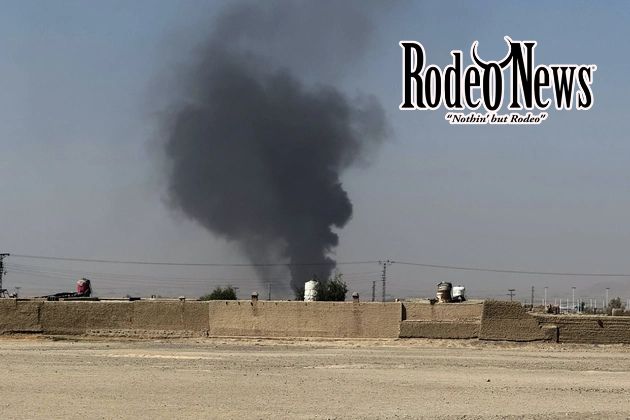
While tensions flared at the border, explosions were reported in the Afghan capital, Kabul, adding to the growing humanitarian crisis. Emergency NGO, which operates a trauma hospital in the city, said it received five bodies and 40 injured victims, many suffering from shrapnel wounds, burns, and blunt force trauma.
Ten of the wounded were listed in critical condition, according to Dejan Panic, the NGO’s country director in Afghanistan.
The exact cause of the blasts remains unclear. The Taliban confirmed an oil tanker explosion, while two Pakistani security sources suggested artillery had struck militant hideouts in the area. Neither account could be independently verified.
On the Ground: Border Towns Under Fire
In Chaman, a border town on the Pakistani side, local residents described terrifying scenes as mortars landed near residential areas. Eyewitness Najibullah Khan said entire families were fleeing their homes amid fears of renewed violence.
“People who live close to the border are leaving the area,” he said. “Both countries need to find a way to end this conflict permanently.”
Border crossings remained closed as of Wednesday night, disrupting trade and travel for thousands of civilians who rely on the porous border for daily life.
A Region Trapped in History
This latest round of clashes underscores the long-standing volatility of the Afghanistan–Pakistan border, a region with a troubled past marked by wars, insurgencies, and foreign interventions.
Pakistan became a frontline state during the Soviet invasion of Afghanistan in 1979, and its tribal belt turned into a haven for militants after the 9/11 attacks. The rise of the Afghan Taliban, al-Qaida, and later Islamic State affiliates has made border control a persistent security nightmare for Islamabad.
According to Abdullah Khan, a defense analyst and director of the Pakistan Institute for Conflict and Security Studies, the border remains a “soft underbelly” for both countries.
“Militant groups exploit this rugged terrain for cross-border operations, and unless both governments adopt a coordinated policy, we’ll continue to see these flare-ups,” he warned.
Regional Concerns and Diplomatic Pressure
The violence has alarmed regional powers, with Saudi Arabia and Qatar reportedly playing roles in pushing for calm. Both countries have called on Islamabad and Kabul to exercise restraint and pursue diplomatic solutions.
The ceasefire, while fragile, offers a glimmer of hope in a region where peace has often been elusive.
But with conflicting narratives and mutual distrust still defining the relationship, analysts caution that lasting peace will require more than temporary truces — it will demand robust dialogue, verified commitments, and regional cooperation.