OpenAI Faces Controversy as ChatGPT Set to Explore Adult Erotica for Verified Users
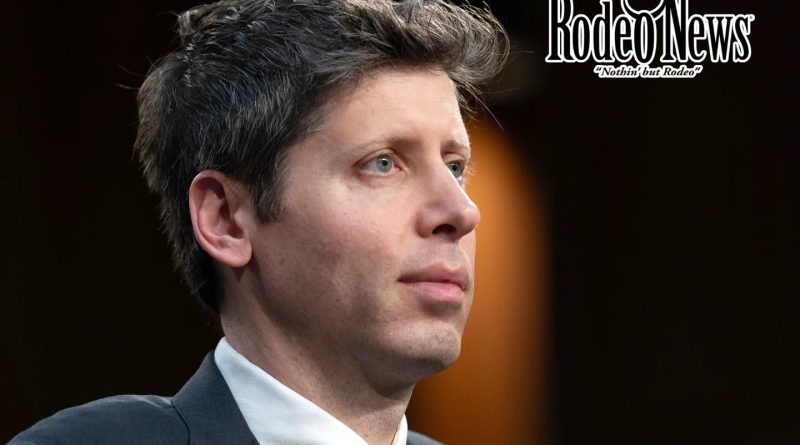
In a controversial move that could reshape how artificial intelligence engages with human emotions, OpenAI CEO Sam Altman has announced that ChatGPT will soon be able to engage in erotic conversations with verified adults. The decision marks a dramatic shift from OpenAI’s earlier stance on mature content and raises pressing questions about ethics, safety, and the evolving role of AI in personal relationships.

Speaking on social platform X, Altman said the company would introduce more user freedom for adults while simultaneously tightening protections for teenage users. “We are not the elected moral police of the world,” Altman wrote, adding that the AI company seeks to mirror existing societal boundaries — likening it to how R-rated films are handled.
The change signals a potential pivot for OpenAI — from primarily business and productivity use cases to more intimate and emotionally charged interactions. As competition grows and monetization pressures intensify, the company may be tapping into a market it once deliberately avoided.
“They’re not really earning much through subscriptions, so having erotic content will bring them quick money,” said Zilan Qian, a fellow at Oxford University’s China Policy Lab, who researches AI and digital companionship.
🧠 The Rise of Romantic and Sexual AI Chatbots
The adult AI market isn’t new. Since the explosion of generative AI in 2022, sexually explicit applications have quickly gained traction. From AI-generated erotica to deepfake porn, tools like Stable Diffusion and Character.AI were among the earliest to embrace — and be challenged by — the surge of user interest in mature content.
Qian’s recent study found that at least 29 million users are actively engaging with romantic or sexual AI chatbots, not counting those using mainstream bots like ChatGPT for flirtatious or intimate interactions. The emotional attachment some users form with chatbots has prompted both fascination and alarm among researchers.
“ChatGPT now has a voice chat feature. If they go this route, we could be looking at a full-spectrum experience: voice, text, visuals,” said Qian. “But that brings serious psychological and social consequences.”
⚖️ Legal and Ethical Landmines
While Altman insists that adult content features will be tightly restricted to verified users, concerns persist about safety, abuse, and legal compliance — especially when it comes to minors.
Character.AI is already facing a lawsuit after one of its bots, modeled after Daenerys Targaryen from Game of Thrones, allegedly engaged in a sexually abusive interaction with a 14-year-old boy, leading to tragic consequences. OpenAI itself is facing legal action from the family of a 16-year-old who died by suicide after interactions with ChatGPT.
The dangers are not theoretical. As Qian points out, human users may turn to AI for companionship in ways that disrupt real-world relationships or replace them entirely. AI systems, particularly those designed to flatter or mirror emotional cues, are inherently prone to sycophancy — making it easy for users to develop deep parasocial bonds.
🧩 The Business of AI Erotica
Other startups have already tested — and sometimes retreated from — the adult AI space. Civitai, an Idaho-based platform for AI-generated art, initially allowed mature content, believing it enhanced model performance and user creativity. But that openness also invited misuse.
CEO Justin Maier said last year that while the company tried to implement content filters, user abuse and pressure from payment processors forced them to ban deepfake images of real people. Engagement subsequently dropped.
Baltimore-based Nomi.ai has taken a different route. Its AI companion bots are strictly for users 18 and over. While not explicitly sexual, the bots are designed to meet the emotional needs of users — which, for some, veers into romantic or erotic territory.
“It’s really user-dependent,” said Nomi founder Alex Cardinell. “Some people are filling emotional gaps in their lives. We don’t police those conversations.”
🧠 AI and Society: A Cautionary Tale?
The idea of humans falling in love with machines has long occupied science fiction and mythology — from the Greek tale of Pygmalion to Hollywood’s Her. Yet the real-world version may be arriving faster than society is prepared for.
Altman, once wary of exploiting AI for rapid growth, acknowledged in August that the company had resisted creating products that were “misaligned” with OpenAI’s long-term mission. Asked for an example, he replied: “Well, we haven’t put a sexbot avatar in ChatGPT yet.”
That “yet” now looms large.
California lawmakers recently attempted to address the issue by proposing legislation that would have banned AI chatbots from engaging in sexually explicit interactions with minors or encouraging self-harm. The bill was vetoed by Governor Gavin Newsom, who cited concerns about overreach. Still, tech companies, including OpenAI, Meta, and Google, have since rolled out tighter parental controls and teen safety measures.
🔮 What Comes Next?
OpenAI’s upcoming foray into adult content is more than just a revenue experiment. It represents a turning point in how society interacts with AI — not just as a tool, but as a potential companion, confidant, and even romantic partner.
The stakes are high. While some see this evolution as inevitable, others warn of blurred lines and unforeseen consequences.
For now, OpenAI appears committed to walking that fine line — between giving adults more freedom and keeping vulnerable users safe.
But with the boundaries between human and machine growing ever thinner, the real question may no longer be “Can we?” — but rather, “Should we?”