KOSPI Swings Expose Fragility in South Korea’s Hottest Stock Market
South Korea’s benchmark stock index has delivered one of the most dramatic weeks in its history, plunging sharply before staging a massive rebound — a roller-coaster ride that has left investors questioning the stability of one of Asia’s fastest-rising equity markets.
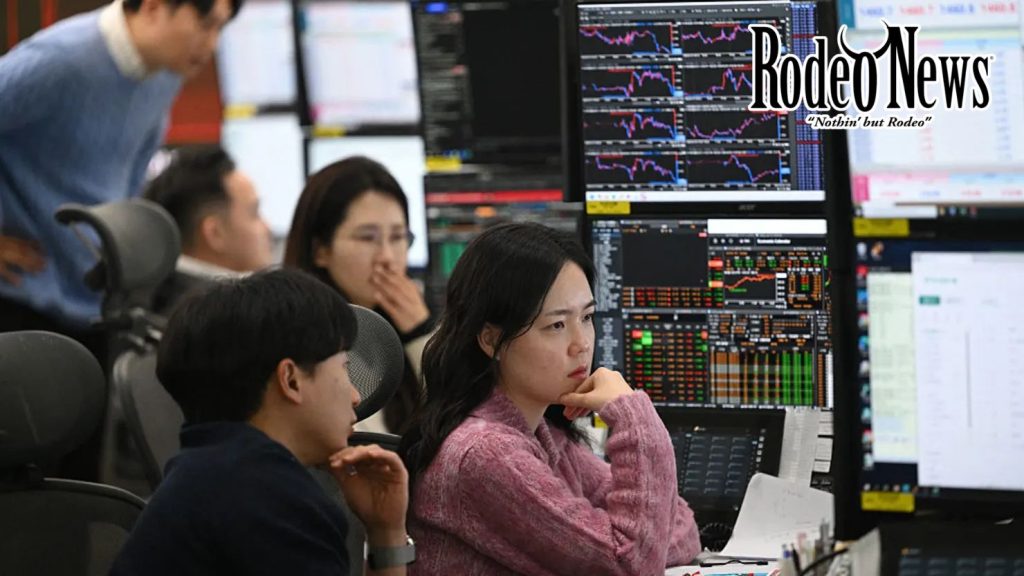
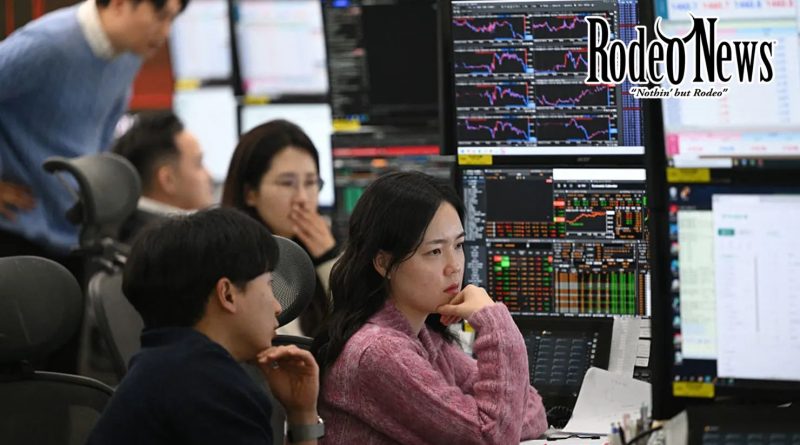
The benchmark KOSPI has experienced extreme volatility in recent days, with double-digit declines followed by equally dramatic gains. The dramatic swings come after months of extraordinary growth that had turned South Korea’s equity market into one of the world’s hottest trades.
But the sudden turbulence is now raising broader questions about the sustainability of that rally and the risks facing global investors heavily exposed to South Korean technology giants.
A Historic Drop Followed by a Rapid Rebound
Earlier this week, the KOSPI recorded one of the sharpest declines in its history, falling by roughly 12% in a single trading session as geopolitical tensions and global risk aversion triggered widespread selling. The dramatic fall erased hundreds of billions of dollars in market value and forced trading halts as panic swept across the market.
The selloff did not last long.
Within days, the index rebounded sharply, posting one of its largest one-day gains ever. At one point the market surged nearly 10%, illustrating just how rapidly sentiment had swung between fear and optimism.
Analysts say the sharp reversal highlights both the strength of investor interest in South Korea’s technology sector and the fragility of the rally that has pushed the market to record highs.
The Market That Rose Too Fast
The volatility comes after a stunning surge in South Korean equities.
The KOSPI crossed the 6,000 mark earlier this year, reaching new record highs after a rapid rally fueled by optimism about artificial intelligence, semiconductor demand and corporate governance reforms.
South Korea is home to some of the world’s most important semiconductor manufacturers, including major producers of memory chips that power AI infrastructure and global data centers. Strong demand for these chips has helped drive corporate earnings expectations sharply higher.
In fact, the index had risen roughly 50% earlier in the year before the recent turbulence began to cut into those gains.
For months, global investors viewed the Korean market as a high-growth opportunity tied to the AI boom and global technology supply chains. But the same forces that fueled the rally have also amplified market swings.
Geopolitical Shocks Rattle Investors
Much of the sudden volatility has been linked to geopolitical tensions that have rattled global markets.
Concerns surrounding conflict in the Middle East triggered a sharp flight to safety earlier in the week, sending investors out of risk assets and into traditional havens such as the U.S. dollar and gold.
Asian markets broadly reacted to those developments, but South Korea’s market proved particularly sensitive.
The KOSPI dropped again later in the week as investors continued to react to geopolitical uncertainty and rising energy prices, reflecting how exposed the export-dependent economy is to global shocks.
Because South Korea relies heavily on global trade — particularly technology exports — sudden shifts in global sentiment can quickly ripple through its equity markets.
Retail Investors Add Fuel to the Swings
Another factor driving the market’s dramatic moves is the growing role of retail investors.
Over the past year, individual traders have poured into the Korean stock market in record numbers, chasing high-growth sectors such as artificial intelligence, robotics and semiconductor manufacturing.
Market strategists say this surge of retail activity has amplified price movements.
Retail traders often move more quickly than institutional investors, reacting rapidly to headlines and momentum signals. When large numbers of individual investors pile into the same trades, the result can be exaggerated market swings — both upward and downward.
In Korea’s case, that behavior appears to have intensified the recent volatility.
Technology Stocks at the Center
Much of the turbulence has centered around South Korea’s technology heavyweights.
The country dominates the global memory chip industry, with companies such as Samsung Electronics and SK Hynix supplying key components used in AI systems, smartphones and cloud infrastructure.
When investor sentiment toward technology shifts — particularly around artificial intelligence — the impact on the KOSPI can be immediate and dramatic.
Sharp moves in semiconductor stocks earlier this week triggered cascading selloffs and automated trading activity, accelerating the decline before the market stabilized.
Analysts Say It May Be a Correction, Not a Collapse
Despite the recent turmoil, some analysts argue the market’s long-term outlook remains positive.
Investment banks say the recent selloff may simply represent a correction after months of rapid gains. Even after the volatility, the KOSPI remains significantly higher than it was a year ago.
Strategists at major global banks have suggested the market could still climb further if earnings growth in the semiconductor sector continues to accelerate.
Strong global demand for AI infrastructure — including advanced memory chips — is expected to support Korean technology companies for years to come.
A Warning Sign for Global Markets
Even so, the sudden swings are serving as a reminder that the global AI-driven market rally carries significant risks.
South Korea’s market is deeply intertwined with global technology supply chains. When volatility strikes there, it can ripple across semiconductor stocks worldwide.
For investors, the message from this week’s turbulence is clear: the same forces that created one of the world’s most exciting stock market rallies can also produce equally dramatic corrections.
As geopolitical uncertainty, retail speculation and technology-sector enthusiasm collide, the KOSPI may remain one of the most unpredictable — and closely watched — markets in the global financial system.