Iran War Takeaways: 3 Key Insights Revealed
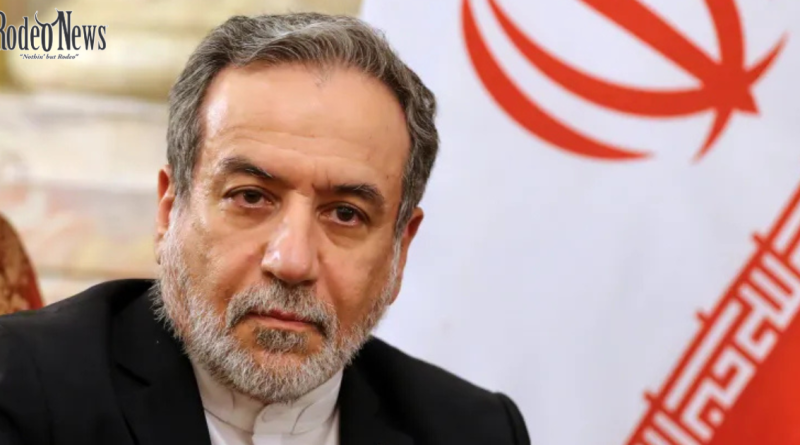
The latest Iran war takeaways from Iranian Foreign Minister Abbas Araghchi’s exclusive interview provide critical insight into the direction of one of the most volatile conflicts in the world today. As tensions escalate across the Middle East, his remarks shed light on diplomatic contacts, military strategy, and the future of global energy security.
The interview comes at a time when the war continues to expand regionally, with missile strikes, oil disruptions, and rising geopolitical uncertainty shaping international responses. Understanding these Iran war takeaways is essential for grasping what may come next.
1. Direct US-Iran Contact Exists — But No Formal Negotiations
One of the most significant Iran war takeaways is the confirmation that communication channels between Iran and the United States remain open.
Araghchi acknowledged direct contact with US envoy Steve Witkoff. However, he firmly rejected the notion that these interactions amount to formal negotiations.
This distinction is crucial.
While communication suggests a potential pathway to de-escalation, Iran appears unwilling to frame these exchanges as diplomatic talks. Instead, Tehran is signaling that any engagement is limited, cautious, and far from a structured peace process.
This aligns with broader developments in the conflict. Reports indicate that messages between the two countries are often indirect and mediated, reflecting deep mistrust on both sides.
Why this matters
The presence of communication without negotiation creates a fragile dynamic:
- It reduces the risk of immediate escalation
- But also limits the chances of a quick diplomatic resolution
In other words, the conflict may persist in a prolonged “in-between” state — neither fully escalating nor meaningfully resolving.
2. Iran Rejects the Idea of Negotiating Under Pressure
Another key point among the Iran war takeaways is Iran’s firm stance against negotiating under military or political pressure.
Araghchi emphasized that Iran does not consider current exchanges as negotiations, reinforcing the country’s long-standing position: diplomacy cannot happen under coercion.
This reflects a broader Iranian strategy seen throughout the conflict. Tehran has consistently framed the war as externally imposed and has resisted calls to concede under pressure.
At the same time, US officials have indicated a dual-track approach — maintaining military pressure while leaving the door open for diplomacy.
A clash of strategies
This creates a fundamental mismatch:
- The US seeks leverage through pressure
- Iran demands conditions free of pressure
As a result, both sides are effectively talking past each other.
Implications for the war
This deadlock suggests:
- A ceasefire is unlikely in the short term
- Diplomatic breakthroughs will be slow and uncertain
- Military operations may continue alongside limited communication
These Iran war takeaways highlight a reality where diplomacy exists — but progress remains stalled.
3. Strait of Hormuz Emerges as a Critical Flashpoint
Perhaps the most globally significant of the Iran war takeaways involves the Strait of Hormuz — one of the world’s most vital energy chokepoints.
Araghchi stressed that the strategic waterway falls under the territorial control of Iran and Oman, signaling Tehran’s influence over its security and operations.
This statement carries enormous implications.
Why the Strait matters
The Strait of Hormuz is responsible for transporting a significant portion of the world’s oil supply. Any disruption can have immediate global consequences:
- Rising fuel prices
- Supply chain disruptions
- Economic instability
Recent developments underscore these risks. Missile strikes have already impacted shipping routes, including incidents involving oil tankers in the Gulf.
A growing international concern
Global powers are closely watching the situation:
- Some nations are considering military coalitions to secure the route
- Others are urging diplomatic solutions to avoid escalation
Meanwhile, conflicting statements from US officials suggest uncertainty over who will ensure the Strait remains open.
The bottom line
Among all Iran war takeaways, this is perhaps the most critical for the global economy.
Any escalation around the Strait of Hormuz could transform a regional war into a worldwide economic crisis.
Broader Context: A War Expanding Beyond Borders
These Iran war takeaways cannot be viewed in isolation.
The conflict has already spread across multiple countries, with attacks reported in Lebanon, Kuwait, and Qatar. Regional instability is increasing, and alliances are being tested.
At the same time, political messaging from all sides continues to shape public perception:
- Iran portrays itself as resisting external aggression
- The US frames its actions as necessary for security and stability
This narrative battle further complicates efforts to reach a resolution.
What Comes Next?
Looking ahead, the Iran war takeaways suggest several possible scenarios.
1. Prolonged conflict
With no clear path to negotiations, the war could continue for weeks or even months.
2. Limited diplomacy
Communication channels may prevent full-scale escalation but are unlikely to produce immediate peace.
3. Economic ripple effects
Any disruption in the Strait of Hormuz could trigger global economic consequences, affecting everything from fuel prices to international trade.
Expert Perspective: A Conflict Without Easy Answers
Analysts increasingly describe the situation as a “controlled escalation.”
Both sides appear to be:
- Testing limits
- Avoiding full-scale war
- Maintaining strategic pressure
However, this balance is fragile.
Even a small miscalculation — such as an attack on critical infrastructure or a misinterpreted military move — could rapidly escalate the conflict.
Conclusion: Why These Iran War Takeaways Matter
The latest Iran war takeaways reveal a complex and evolving conflict defined by contradiction:
- Communication without negotiation
- Pressure without compromise
- Strategy without resolution
Araghchi’s interview highlights the reality that, while diplomacy is not entirely absent, it remains deeply constrained.
At the same time, the growing importance of the Strait of Hormuz adds a global dimension that cannot be ignored.
For now, the world is watching closely.
Because these Iran war takeaways are not just about one conflict — they are about the stability of an entire region, and potentially, the global economy.