IMF Chief Warns of Prolonged Global Uncertainty: “Buckle Up” for Economic Turbulence
By KilatNews.id | Washington, D.C. — October 8, 2025
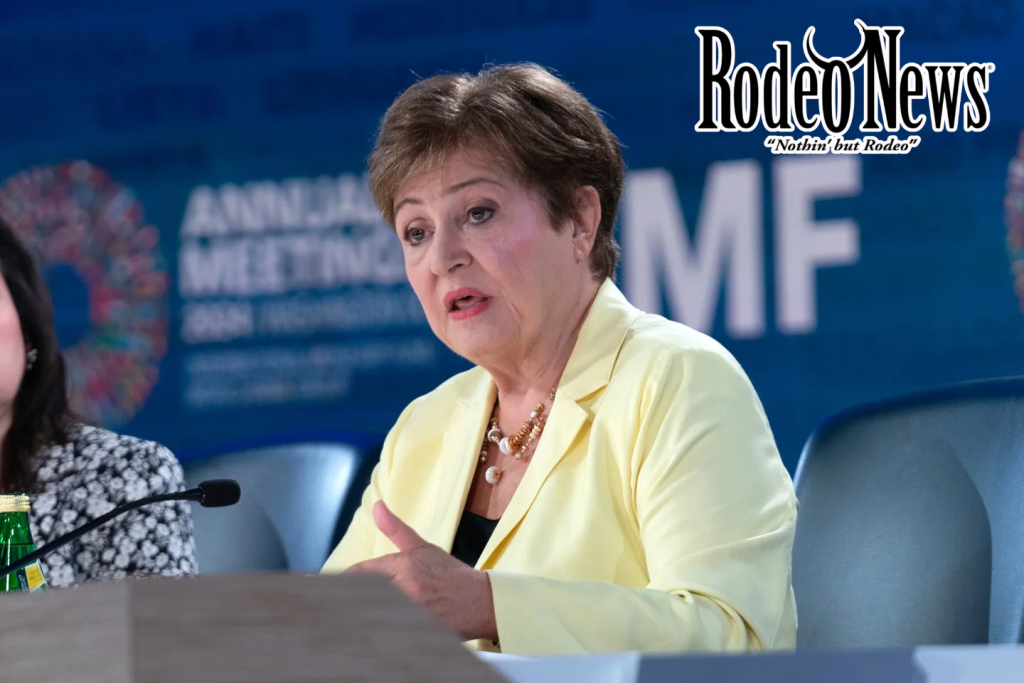
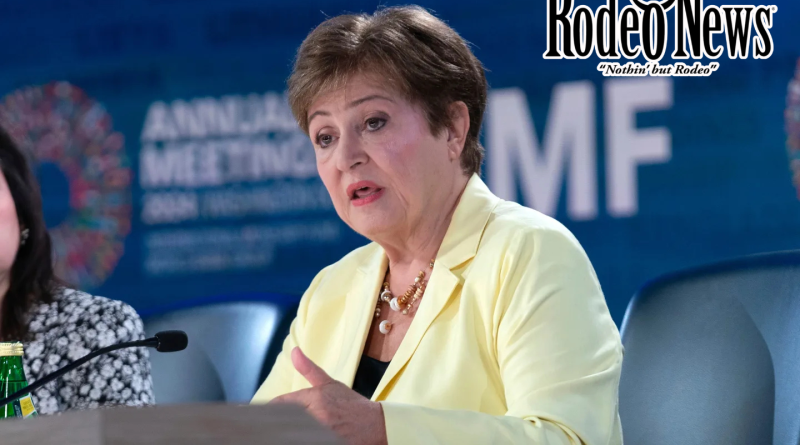
In a sobering assessment of the global economy, the head of the International Monetary Fund (IMF), Kristalina Georgieva, urged governments, markets, and citizens to prepare for prolonged uncertainty and potential volatility — despite a surprisingly steady economic performance so far.
“Buckle up. Uncertainty is the new normal, and it is here to stay,” Georgieva warned in a keynote speech at the Milken Institute on Wednesday, just days before global financial leaders convene in Washington for the IMF and World Bank’s annual meetings.
A Resilient Yet Fragile Global Outlook
While the world economy is projected to grow by 3% this year — a number that exceeds many earlier forecasts — Georgieva cautioned that current resilience might mask deeper vulnerabilities.
“Decisive policy actions, adaptation from the private sector, and the fact that tariff impacts have been somewhat less severe than feared — all of these have helped,” she said. “But we must not mistake stability for safety.”
One clear sign of underlying concern is the record-breaking surge in gold prices, which hit $4,000 per ounce for the first time this week. Analysts interpret this as a flight to safety amid mounting geopolitical tensions and currency volatility — notably a weakening U.S. dollar.
Trade Tensions Still Casting a Long Shadow
A major contributor to global economic anxiety remains the lingering effects of trade tariffs imposed by the Trump administration. These tariffs, affecting nearly all U.S. trading partners — from China and Brazil to Canada and even Lesotho — continue to fuel market unpredictability.
“The full impact of these tariffs is still unfolding,” Georgieva noted. “In the U.S., we’re already seeing margin compression in key industries. If companies begin to pass costs onto consumers, that could spark inflation and force the Federal Reserve’s hand on monetary tightening.”
President Trump, defending his policy, remarked bluntly this week: “We’re the king of being screwed by tariffs,” during a meeting with Canadian Prime Minister Mark Carney in the Oval Office.
Even as the U.S. signs new trade frameworks with countries like the UK and Vietnam, the ripple effects of rerouted global supply chains are far from settled. Georgieva warned that a “second wave of tariffs” could emerge if displaced goods flood secondary markets.
The legal basis for Trump’s authority to enact some of these tariffs will also be tested soon, as the U.S. Supreme Court is set to hear arguments next month regarding the International Emergency Economic Powers Act.
Global Discontent on the Rise
Beyond trade and inflation, Georgieva highlighted a more intangible but powerful trend: growing youth discontent worldwide.
“Young people from Paris to Nairobi, Lima to Jakarta — they are taking to the streets, demanding better futures,” she said. “There’s a widespread sense that they will be worse off than their parents.”
In the United States, that sense of economic stagnation is echoed in declining intergenerational mobility — a trend that Georgieva said has “helped precipitate a policy revolution” now reshaping not just trade, but also immigration and global institutions.
Regional Recommendations: From Asia to Africa
Georgieva’s speech also touched on regional prescriptions for economic reform:
- Asia should deepen internal trade links to shield itself from external shocks.
- Africa must pursue more business-friendly reforms to boost investor confidence.
- Europe needs to enhance competitiveness to sustain growth in a fast-changing global economy.
A Call for U.S. Fiscal Discipline
Turning her focus back to the United States, Georgieva issued a pointed warning about the country’s mounting federal debt and lack of household savings.
According to Treasury data, U.S. national debt has ballooned from $380 billion in 1925 to $37.64 trillion in 2025. A July report from the Congressional Budget Office projected that recent tax cuts and increased government spending will add another $3.4 trillion to that figure by 2034.
“Fiscal responsibility is not optional,” Georgieva stated. “To protect long-term stability, the U.S. must take steps to reduce debt burdens and encourage households to save more.”
Looking Ahead
As finance ministers, central bankers, and economists gather in Washington next week, Georgieva’s message will likely frame much of the dialogue: a world economy more resilient than feared, yet walking a tightrope of systemic risks.
The IMF, a 191-member organization headquartered in D.C., plays a pivotal role in safeguarding global financial stability. But as Georgieva made clear, much of that stability now depends on leadership — and preparation — at both the national and global levels.
“We can’t afford to be complacent,” she concluded. “We must stay alert, stay coordinated, and above all — stay ready.”