Iran War: Qatar Leads Key Push to End Crisis
The Iran war entered another critical phase Thursday as Qatar intensified diplomatic efforts to reduce tensions between Tehran and Washington, while a reported attack on an oil tanker in the Strait of Hormuz underscored the continuing risks facing one of the world’s most important commercial waterways.
Qatari Prime Minister Sheikh Mohammed bin Abdulrahman Al Thani traveled to Tehran for talks with senior Iranian officials as regional governments searched for a possible path toward de-escalation. His visit came as the conflict approached its six-month mark and as international concerns continued to grow over shipping disruptions, energy supplies and the wider consequences of the fighting.
The diplomatic push came against a complicated backdrop. The United States has maintained pressure on Iran through sanctions and military measures, while Tehran has continued to demand changes before normal shipping and broader negotiations can resume.
At the same time, violence involving Israel, Gaza and Lebanon has added another layer of uncertainty to an already fragile regional situation.
Iran War Drives New Diplomatic Push
Qatar has emerged as one of the key regional players attempting to create space for negotiations.
During his visit to Tehran, Al Thani met with Iranian Foreign Minister Abbas Araghchi, President Masoud Pezeshkian and parliamentary speaker Mohammad Bagher Qalibaf. According to Qatar’s Foreign Ministry, discussions focused on reducing escalation and protecting freedom of navigation through the Strait of Hormuz.
The talks also included a proposed arrangement involving Iran and Oman to facilitate commercial shipping through the strategically important waterway.
For Qatar, the diplomatic effort reflects the broader concern that the Iran war could continue to destabilize the Gulf and place additional pressure on regional economies.
The Strait of Hormuz is particularly important because it connects the Persian Gulf with the Gulf of Oman and the wider Indian Ocean. Before the conflict, roughly 15 million barrels of oil a day moved through the waterway, according to estimates cited by AP and commodities analysts. Current flows remain significantly lower.
Any prolonged disruption could therefore affect energy markets far beyond the Middle East.
Tanker Attack Raises Fresh Hormuz Concerns
While Qatar pursued diplomacy, the security situation around the Strait of Hormuz remained unsettled.
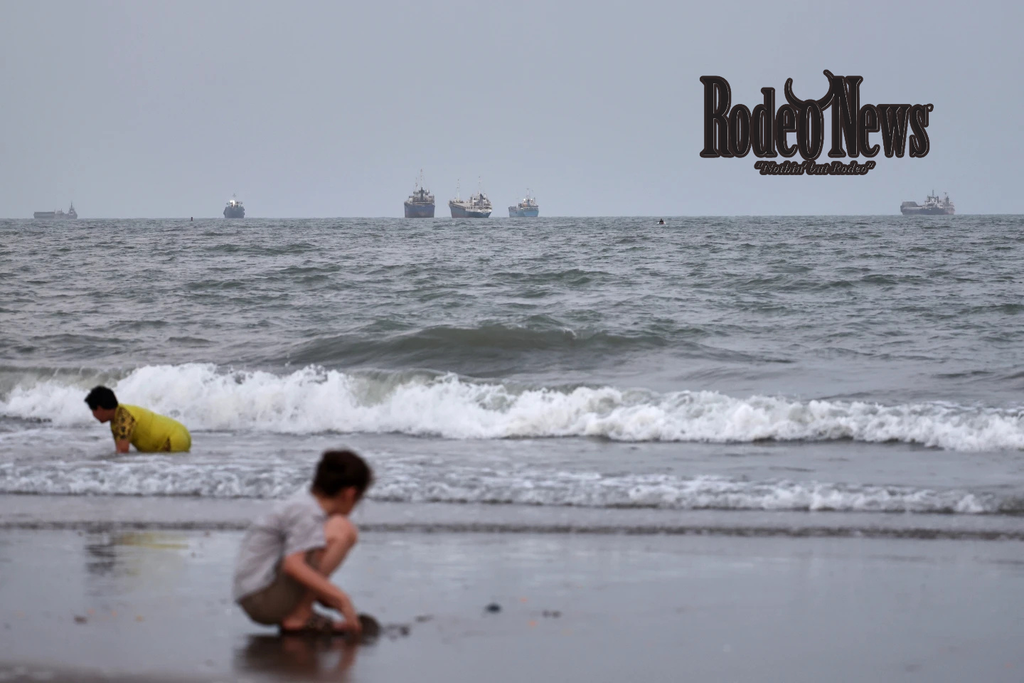
The United Kingdom Maritime Trade Operations organization reported receiving information about an oil tanker that was hit by an unidentified projectile Tuesday in waters between Iran and Oman. The vessel caught fire, but its crew was reported safe and there were no immediate reports of environmental damage.
The incident was another reminder of the risks facing commercial shipping during the Iran war.
Although oil and gas carriers continue to pass through the strait, traffic remains below prewar levels. Shipping analysts cited by AP said the number of oil and gas carriers increased by about 50% last week compared with the previous week, suggesting that some commercial activity is gradually returning.
However, the security risks remain substantial.
The U.S. government has claimed that as much as 9 million barrels a day have moved through the waterway during short periods. Analysts at ING have questioned that estimate, suggesting actual flows may be closer to 2 million to 6 million barrels per day.
The uncertainty itself highlights the difficulty of measuring commercial activity while military operations, restrictions and security threats continue.
Iran Rejects New U.S. Sanctions
At the same time, Tehran rejected Washington’s latest economic pressure.
Iranian Foreign Ministry spokesman Esmail Baghaei criticized the new U.S. sanctions and accused Washington of attempting to build a coalition against Iran. Iranian parliamentary speaker and top negotiator Mohammad Bagher Qalibaf also praised China for opposing what he described as Washington’s economic pressure campaign.
The latest confrontation follows repeated warnings from Iranian officials that further economic pressure could trigger retaliation.
Earlier in August, Iran’s new security leadership warned that countries supporting expanded U.S. sanctions could be treated as hostile. Iranian officials have also threatened to target alternative oil-shipping routes if neighboring countries cooperate with measures aimed at isolating Tehran.
That rhetoric has increased concern among Gulf states, which are attempting to protect their economic interests while navigating relationships with both Washington and Tehran.
Trump Says There Is No Deadline
Diplomatic efforts face another major obstacle in Washington.
U.S. President Donald Trump told Al Jazeera that he had no fixed timetable for ending the conflict. The remarks came as the Iran war approached six months, signaling that the administration was not necessarily preparing for an immediate conclusion to military operations.
The lack of a clear deadline adds uncertainty to regional diplomacy.
For Qatar and other mediators, the immediate objective appears to be preventing another escalation while creating conditions for broader negotiations.
The proposed arrangements concerning the Strait of Hormuz could become an important part of that effort. Ensuring that commercial ships can travel safely would not resolve the larger dispute between Iran and the United States, but it could reduce one of the most dangerous economic consequences of the conflict.
Gulf States Look for Greater Security Options
The continuing conflict is also changing the security calculations of countries across the Gulf.
For decades, many Gulf governments have depended heavily on the United States for defense and regional security. However, the Iran war has encouraged some governments to explore additional security partnerships.
Pakistan and Kuwait announced a military cooperation agreement Thursday covering areas including training, capacity building and border management. Pakistan has also continued diplomatic engagement with Iran.
The agreement comes after Saudi Arabia signed a mutual defense pact with Pakistan and Turkey earlier in August, according to AP.
These developments suggest that regional governments are increasingly interested in building multiple security relationships rather than relying exclusively on one major power.
That shift could have long-term consequences even after the current conflict ends.
Gaza Violence Adds to Regional Pressure
The Iran war is unfolding alongside continuing violence in Gaza.
Israeli strikes killed four people in Gaza on Wednesday and Thursday, according to local health officials cited by AP. Israeli authorities said the strikes targeted Hamas militants.
The attacks drew criticism from Nickolay Mladenov, who oversees the Gaza peace effort under the Trump administration. Israel’s government has maintained that Hamas must disarm before the next stage of reconstruction and the wider peace process can proceed.
The renewed violence illustrates how difficult it remains to separate the various conflicts and political disputes affecting the region.
Even when diplomatic attention focuses on Iran and the Strait of Hormuz, developments in Gaza, Lebanon, Syria and the West Bank continue to influence regional calculations.
Israel and Lebanon Remain on Edge
Tensions also continued along Israel’s northern border.
Israeli airstrikes in southern Lebanon killed one woman and wounded six others, including a child, according to Lebanon’s state-run National News Agency. Israel said the strikes followed attacks by Hezbollah drones against Israeli troops near Nabatiyeh.
No Israeli troops were reported killed in the drone attacks.
The incident nevertheless demonstrated how quickly violence in one part of the region can create new pressure elsewhere.
For international mediators, the challenge is therefore not simply finding an agreement between Washington and Tehran. They must also prevent connected conflicts from undermining any progress.
Syria’s Kurdish Question Takes a New Turn
Elsewhere, Syria saw a significant political and security development.
The Kurdish-led Syrian Democratic Forces announced that they had completed a merger with the Syrian army. Former SDF commander Mazloum Abdi was subsequently appointed as an adviser to Syria’s interim president, Ahmad al-Sharaa.
The development could reshape the balance between Damascus and Kurdish communities in northeastern Syria.
The Syrian government also announced that Kurdish-language classes would be permitted in areas where Kurdish citizens represent a significant portion of the population.
However, important questions remain about how former SDF forces will be integrated into government institutions, including the future of the group’s female fighting units.
The changes demonstrate that even as the Iran war dominates international attention, Syria continues to undergo major political and military transformations.
Why the Strait of Hormuz Matters
The Strait of Hormuz remains at the center of the crisis because of its importance to global energy markets.
The narrow waterway is one of the world’s most important routes for oil and gas exports. Any sustained disruption could increase transportation costs, create supply concerns and put additional pressure on energy prices.
That is why the reported tanker attack has significance beyond the individual vessel.
If commercial operators become increasingly concerned about safety, shipping companies may reduce activity or seek alternative routes. Those alternatives can be longer and more expensive, increasing costs across the energy supply chain.
For consumers and businesses around the world, the consequences could eventually extend beyond fuel prices.
The economic impact would depend heavily on how long disruptions last and whether regional governments can restore confidence in commercial shipping.
A Difficult Path Toward De-escalation
Qatar’s latest diplomatic initiative offers a possible opening, but there is no guarantee that it will produce a lasting agreement.
Iran continues to resist U.S. pressure, while Washington has shown little indication that it intends to quickly abandon its campaign against Tehran.
Meanwhile, regional governments are trying to keep commercial routes open and prevent the conflict from spreading.
The proposed Iran-Oman arrangement for shipping through the Strait of Hormuz could provide one limited avenue for reducing tensions. Qatar’s diplomatic involvement could also help establish communication between parties that remain deeply divided.
Yet the broader political disagreements remain unresolved.
The future of the Iran war will depend on whether diplomatic initiatives can move beyond temporary arrangements and address the underlying disputes between Tehran and Washington.
What Comes Next for the Iran War?
The coming days could prove important.
If Qatar, Oman and other regional governments succeed in creating a workable mechanism for commercial shipping, the Strait of Hormuz could gradually become less volatile. Increased shipping traffic would also provide a sign that businesses are regaining confidence in the region.
But another major incident could quickly reverse that progress.
The tanker attack demonstrates how vulnerable the current situation remains. Even without a major escalation, uncertainty surrounding maritime security is likely to continue affecting international trade.
For now, Qatar’s diplomatic push represents one of the clearest efforts to find an off-ramp from the crisis.
Whether Tehran and Washington are willing to use it remains the central question.
As the Iran war approaches the six-month mark, the region faces a delicate balance between military pressure and diplomacy. The immediate priority for many governments is preventing further escalation, protecting shipping routes and keeping open the possibility of negotiations.
The stakes extend well beyond Iran and the United States. The security of the Strait of Hormuz, the stability of Gulf economies and the future of several interconnected conflicts could all depend on what happens next.
Suggested Image
Recommended image: Qatari Prime Minister Sheikh Mohammed bin Abdulrahman Al Thani meeting Iranian officials in Tehran, or a commercial tanker in the Strait of Hormuz.
Image ALT Text:
Iran war diplomacy as Qatar seeks to reopen safe shipping through the Strait of Hormuz
Suggested External Sources
- Associated Press — latest developments on the Iran war, Gulf diplomacy and the Strait of Hormuz.
- UK Maritime Trade Operations — maritime security information concerning incidents in the Strait of Hormuz.
- Qatar Ministry of Foreign Affairs — diplomatic statements concerning Qatar-Iran discussions.
Suggested Internal Links
For the target website, add contextual internal links to existing articles covering:
- Iran and U.S. relations
- Strait of Hormuz and global oil markets
- Middle East conflict
- Gaza ceasefire developments
- Israel and Lebanon tensions
SEO Note: The Focus Keyword “Iran war” is placed in the SEO title, meta description, slug, opening paragraph, multiple subheadings and throughout the article while keeping usage natural.