Roman Telescope Launch Revealed: 8 Key Breakthroughs
The Roman Telescope launch marks a major milestone in modern astronomy, arriving ahead of schedule and under budget—an increasingly rare achievement in large-scale space missions. NASA’s next-generation observatory, the Nancy Grace Roman Space Telescope, is now ready for deployment, promising to reshape our understanding of the universe in profound ways.
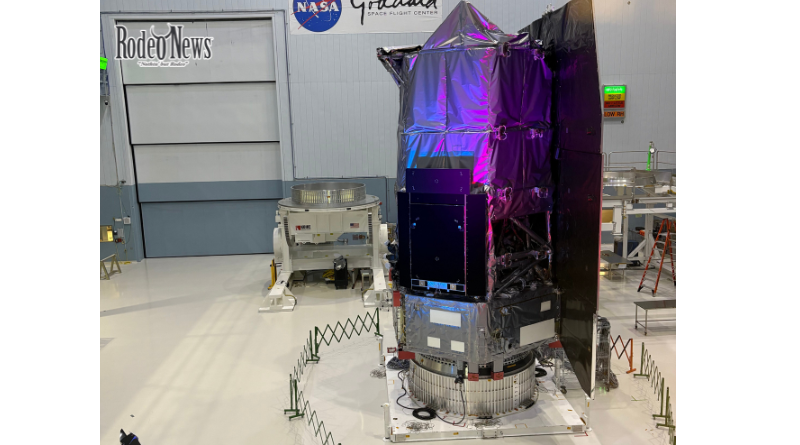
Scheduled for launch as early as September 2026, the telescope represents years of engineering, innovation, and strategic planning. Even more impressive, it will launch roughly eight months earlier than expected while staying within its multi-billion-dollar budget.
Below are the eight most important breakthroughs that make this mission one of the most anticipated scientific events of the decade.
1. Early Completion Defies Industry Norms
Large-scale space missions often face delays and cost overruns. However, the Roman Telescope breaks that pattern.
NASA confirmed the observatory is ready ahead of schedule, demonstrating improved project management and technological maturity.
This achievement signals a shift in how future missions may be planned and executed, potentially reducing taxpayer costs while accelerating scientific discovery.
2. Built Using Repurposed Spy Satellite Technology
One of the most fascinating aspects of the Roman Telescope is its origin. The telescope’s core hardware was derived from unused U.S. spy satellite technology.
This repurposing significantly reduced development costs and accelerated production timelines.
Moreover, it highlights how government assets can be creatively reused for scientific advancement rather than remaining dormant.
3. A Field of View 100 Times Larger Than Hubble
While the Hubble Space Telescope revolutionized astronomy, the Roman Telescope takes a different approach.
Instead of focusing narrowly, Roman will scan vast portions of the sky. Its field of view is about 100 times larger than Hubble’s, allowing astronomers to observe massive cosmic structures in a single frame.
This capability makes it ideal for large-scale surveys of galaxies, star clusters, and cosmic phenomena.
4. Ultra-Fast Sky Mapping Capabilities
Speed is another defining feature of the Roman Telescope.
NASA states that its survey capabilities are more than 1,000 times faster than Hubble when mapping large areas of space.
As a result, scientists can gather enormous datasets in a fraction of the time previously required, enabling faster breakthroughs and discoveries.
5. Advanced Instruments for Exoplanet Discovery
The Roman Telescope is equipped with cutting-edge instruments designed to detect planets beyond our solar system.
Its coronagraph technology allows it to block out starlight, making it possible to directly image exoplanets.
Additionally, the mission could identify tens of thousands of new worlds, significantly expanding our understanding of planetary systems.
6. Designed to Solve Dark Energy Mysteries
One of the mission’s primary goals is to investigate dark energy—the mysterious force driving the expansion of the universe.
By mapping galaxies in three dimensions, the Roman Telescope will provide critical data to test cosmological theories and refine our understanding of the universe’s structure.
This could lead to groundbreaking discoveries about the fate of the cosmos.
7. Massive Data Collection Power
The Roman Telescope is not just powerful—it is data-intensive.
It is expected to generate hundreds of terabytes of data each year, far surpassing previous missions.
Such vast datasets will allow scientists to conduct detailed analyses of cosmic phenomena, from supernovae to galaxy formation.
8. Strategic Launch with SpaceX Falcon Heavy
The telescope will be launched aboard a SpaceX Falcon Heavy rocket, one of the most powerful launch vehicles currently available.
After launch, it will travel to the Sun-Earth L2 Lagrange point—a stable region of space also used by other major observatories.
This location provides an optimal environment for deep-space observation, free from Earth’s interference.
How the Roman Telescope Compares to Other Observatories
The Roman Telescope will work alongside existing missions like the James Webb Space Telescope, complementing rather than replacing them.
While Webb focuses on deep, detailed observations of distant objects, Roman specializes in wide-field surveys.
Together, these observatories will provide a more complete picture of the universe—from its smallest details to its largest structures.
Why This Mission Matters Now
The timing of the Roman Telescope launch is particularly significant.
Astronomy is entering a data-driven era, where massive datasets and advanced instruments are essential for progress. Roman’s capabilities align perfectly with this shift.
Furthermore, the mission’s success could influence future space exploration strategies, emphasizing efficiency, collaboration, and innovation.
Challenges Still Ahead
Despite its readiness, several challenges remain before launch.
Final testing, transportation to the launch site, and integration with the Falcon Heavy rocket must all proceed flawlessly.
Additionally, long-term mission success depends on the telescope’s performance in the harsh conditions of space.
Internal and External Resources
For more insights on space exploration and technology, visit:
- Internal: https://yourwebsite.com/space-exploration-trends
- External: NASA Roman Mission Overview (https://roman.gsfc.nasa.gov/)
Final Thoughts
The Roman Telescope launch represents more than just another space mission—it signals a new era of astronomical discovery.
By combining speed, scale, and advanced technology, NASA is poised to unlock some of the universe’s deepest secrets. From dark energy to exoplanets, the Roman Telescope could redefine our place in the cosmos.
As the countdown to launch begins, the world watches with anticipation. If successful, this mission will not only expand scientific knowledge but also inspire the next generation of explorers.