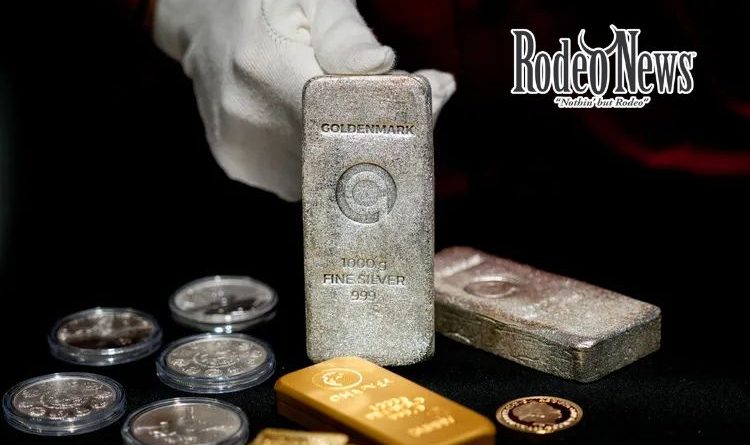
Gold and Silver Prices Plunge from Record Highs After Fed Chair Nomination
Gold and silver prices tumbled sharply on Friday, retreating from record highs as investors rushed to lock in profits following President Donald Trump’s nomination of former Federal Reserve Governor Kevin Warsh to lead the U.S. central bank.
The sell-off marked a dramatic reversal for precious metals, which had surged to historic levels amid geopolitical turmoil, a weakening U.S. dollar, and growing anxiety over the Federal Reserve’s independence. Markets appeared to recalibrate after Trump’s announcement eased some of Wall Street’s most pressing fears about political interference at the Fed.
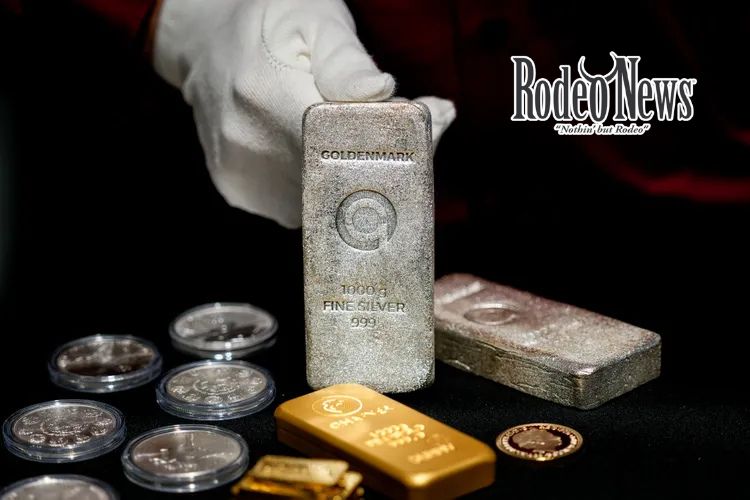
Spot gold fell roughly 9% to around $4,905 per troy ounce, retreating from a record near $5,600 reached a day earlier. Silver prices suffered an even steeper drop, sliding more than 25% to $86.60 an ounce after briefly topping $120, an all-time high.
Exchange-traded funds tracking the metals mirrored the declines. The SPDR Gold Shares (GLD) and iShares Silver Trust (SLV) were both under heavy pressure as investors exited positions built during the metals’ explosive rally.
A Rally Meets Its Breaking Point
Gold and silver had been among the strongest-performing assets over the past year, buoyed by a rare combination of economic uncertainty, geopolitical risk, and currency weakness. Heading into Friday’s session, gold prices were up nearly 90% year over year, while silver had soared by approximately 250%.
Those gains reflected investors’ growing appetite for safe-haven assets as global markets grappled with persistent inflation, trade tensions, and volatile equity markets. The U.S. dollar’s steady decline further amplified the rally, making dollar-denominated commodities more attractive to overseas buyers.
But the same forces that drove prices higher also left the metals vulnerable to a sudden reversal.
“Parabolic moves have hair triggers,” said Jeff deGraaf, chairman and head of technical research at Renaissance Macro Research. “Those hair triggers can go off at any point in time. That’s why they’re so dangerous and so susceptible to mass changes in psychology. They really have nothing to do with the fundamentals.”
Fed Nomination Shifts Market Psychology
The catalyst for Friday’s sell-off was President Trump’s decision to nominate Kevin Warsh, a former Federal Reserve governor, to replace current Fed Chair Jerome Powell, whose term ends in May.
Warsh was widely viewed as a more conventional and institutionally minded choice compared with other candidates reportedly under consideration. Over the past year, Trump has repeatedly criticized the Fed and pushed for aggressive interest rate cuts, even as inflation remained elevated and tariff uncertainty clouded the outlook.
Investors had grown increasingly concerned that a more overtly political appointment could undermine the Federal Reserve’s independence, destabilizing U.S. monetary policy and rattling global markets. Warsh’s nomination appeared to calm those fears—at least for now.
Markets interpreted the move as a sign of continuity rather than disruption, prompting a reassessment of risk and a rotation out of defensive assets such as precious metals.
Dollar Rebounds, Metals Retreat
The nomination also sparked a rally in the U.S. dollar, adding further pressure to gold and silver prices. The U.S. Dollar Index, which had touched a four-year low earlier in the week, rose about 0.9% on Friday.
A stronger dollar typically weighs on precious metals by making them more expensive for international buyers. The dollar’s rebound interrupted a longer-term downtrend that has been a major tailwind for gold and silver.
Since Trump’s return to office, the dollar index has fallen more than 10%, a decline that helped propel metals to record levels. Friday’s currency bounce, however, reinforced the sense that a turning point may be emerging.
Shockwaves Across the Metals Market
The sell-off extended beyond gold and silver, rippling across the broader precious metals complex. Palladium, which had doubled in value over the past year, fell roughly 14% on Friday. Platinum dropped about 18% after nearly tripling during the same period.
The synchronized declines underscored how crowded the trade had become and how quickly sentiment can shift when investors begin to unwind positions.
Despite the steep losses, some analysts cautioned against interpreting Friday’s move as the end of the precious metals bull market. Structural drivers—such as geopolitical instability, fiscal deficits, and long-term currency debasement concerns—remain firmly in place.
Still, the episode served as a reminder of the risks associated with chasing momentum-driven rallies.
What Investors Should Watch Next
Looking ahead, investors will be closely monitoring confirmation hearings and policy signals from Warsh to gauge how the Fed’s leadership transition may influence interest rates, inflation management, and the dollar.
Any indication that the central bank will maintain its independence and pursue a measured policy path could further reduce demand for safe-haven assets. Conversely, renewed political pressure or unexpected economic shocks could quickly revive interest in gold and silver.
For now, Friday’s plunge reflects a market recalibrating after an extraordinary run—one driven as much by psychology as by fundamentals.