Pluto Planet Status Still Divides Scientists 20 Years Later
The Pluto planet status debate has lasted two decades, but the argument over whether Pluto should be considered a planet is far from settled. On Aug. 24, 2006, the International Astronomical Union (IAU) voted to classify Pluto as a dwarf planet, reducing the Solar System’s official planet count from nine to eight.
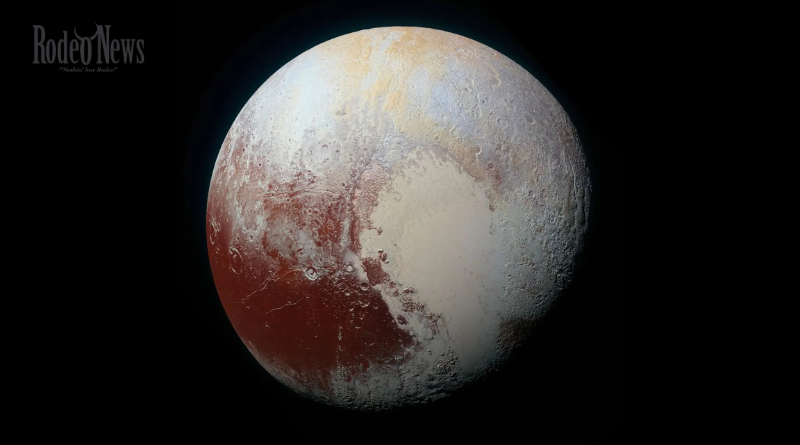
Twenty years later, the decision remains controversial. The IAU has not changed its official definition since 2006, and Pluto remains classified as a dwarf planet. However, some planetary scientists argue that the definition itself should be reconsidered.
The disagreement is not simply about nostalgia for the ninth planet many people learned about in school. It reflects a deeper question in modern astronomy: What exactly makes a world a planet?
The debate has become even more interesting as scientists have learned more about Pluto and other distant worlds.
Why Did Pluto Lose Its Planet Status?
For most of the 20th century, Pluto was widely recognized as the ninth planet. American astronomer Clyde Tombaugh discovered it in 1930 at Lowell Observatory in Arizona, and generations of students grew up memorizing it as the Solar System’s most distant planet.
That changed as astronomers discovered more objects beyond Neptune.
During the 1990s, observations revealed numerous bodies in the Kuiper Belt, a distant region filled with icy objects. Many of these worlds followed orbits resembling Pluto’s. The discovery of Eris in 2005 intensified the problem because Eris was comparable in size to Pluto.
Astronomers faced an important classification question.
If Pluto was a planet, should Eris become the 10th planet? And if Eris qualified, what about other large objects that might eventually be discovered?
The possibilities became increasingly complicated. Proposals considered by astronomers could have expanded the Solar System to include many more planets.
Instead, the IAU chose another approach.
On Aug. 24, 2006, members approved a formal definition of a planet. Under that definition, a planet must orbit the Sun, have enough mass for its gravity to make it nearly round, and have cleared the neighborhood around its orbit. Pluto satisfies the first two requirements but not the third.
As a result, Pluto was officially classified as a dwarf planet.
The IAU Definition That Changed Pluto
The most controversial part of the IAU definition is the requirement that a planet must have cleared its orbital neighborhood.
This does not mean that a planet must literally remove every asteroid or small object from its orbit. Instead, the idea is that a planet should gravitationally dominate its region of the Solar System.
Earth, Jupiter and Neptune satisfy this criterion because their gravitational influence is overwhelmingly greater than that of the smaller objects occupying nearby regions.
Pluto does not have the same level of dominance.
It exists within the Kuiper Belt alongside numerous other icy bodies. Its orbit is also unusual and is influenced by Neptune. Under the IAU’s framework, that makes Pluto a dwarf planet rather than a full planet.
The IAU still stands behind that classification.
Its current astronomy FAQ explicitly says that the organization has not changed the definition of a planet since 2006 and that Pluto remains a dwarf planet under the existing rules.
That means Pluto has not officially regained planetary status.
But the scientific debate has continued.
Scientists Still Argue Pluto Is a Planet
One of the strongest arguments for changing Pluto’s classification comes from planetary scientists who believe the IAU definition places too much emphasis on an object’s location and orbital environment.
Planetary astronomer Paul Byrne, quoted by Space.com, argues that Pluto should be considered a planet, along with several other dwarf planets.
His argument is based largely on geology and planetary processes.
Pluto is not simply a frozen rock drifting through space. NASA’s New Horizons spacecraft revealed a remarkably complex world when it flew past Pluto in 2015. The mission observed mountains, plains, layered terrain, atmospheric features and active nitrogen glaciers.
Those discoveries changed how scientists viewed Pluto.
Rather than looking like an insignificant icy object, Pluto appeared to be a dynamic world with geological processes of its own.
That raises an important question: if a round world has an active geological system, an atmosphere and a complex interior, should it really be placed in a separate category simply because it has not cleared its orbital neighborhood?
Some planetary scientists say no.
Pluto’s New Horizons Mission Changed the Conversation
The Pluto planet status debate might have remained mostly theoretical if scientists had not received detailed observations of Pluto.
That changed dramatically with NASA’s New Horizons mission.
The spacecraft launched in 2006 and reached Pluto in July 2015. Its close encounter provided humanity’s first detailed views of the distant world.
New Horizons revealed Pluto’s famous heart-shaped region, later associated with the Tombaugh Regio, along with extensive plains and mountain ranges. It also showed evidence of active surface processes, including nitrogen glaciers.
The observations demonstrated that Pluto is geologically complex.
For supporters of planetary reclassification, this matters because it suggests that planetary status should be connected to what a world actually is rather than simply where it is located.
However, the discoveries did not automatically overturn the IAU decision.
Scientific classification requires consistent rules that can be applied across many objects. Pluto’s remarkable geology does not change the fact that it shares its region with numerous other Kuiper Belt objects.
That is the central tension in the debate.
Could Pluto Become a Planet Again?
Technically, yes. Scientifically and institutionally, however, it would require a major change in how the astronomical community defines a planet.
The IAU could revisit its definition at a future General Assembly. If astronomers agreed on a new classification system, Pluto could potentially receive a different status.
But there is currently no official indication that Pluto is about to regain its old title.
The IAU’s current position remains clear: Pluto is a dwarf planet under the definition adopted in 2006.
For Pluto to become a planet again, scientists would first need to agree on a replacement definition.
One possible approach would focus more heavily on physical characteristics.
Under such a system, an object could qualify as a planet if it is massive enough to become spherical and undergo geological differentiation and other planetary processes.
That approach could potentially make Pluto a planet again.
But it would also create a much larger Solar System.
What Happens If There Are Hundreds of Planets?
This is one of the biggest challenges facing any proposal to restore Pluto’s planetary status.
Astronomers expect the distant Solar System to contain many more undiscovered objects. Some may be large enough to become spherical under their own gravity.
If all of those objects were classified as planets, the Solar System could eventually contain dozens or even hundreds of planets.
That possibility was one reason the IAU adopted a definition designed to distinguish the eight dominant planets from smaller bodies such as Pluto.
However, supporters of a broader definition argue that having more planets is not necessarily a problem.
In fact, the discovery of hundreds of new worlds could provide a richer picture of the Solar System rather than create confusion.
The debate therefore comes down partly to philosophy.
Should a planet be defined by its physical characteristics?
Or should a planet be defined partly by its ability to dominate its orbital neighborhood?
There is no universal agreement among scientists on which approach is best.
The Problem With the Word “Dwarf”
Another criticism centers on the term dwarf planet.
The word can sound as though dwarf planets are simply smaller versions of the eight major planets. But scientists do not necessarily view the Solar System as a hierarchy in which large planets are inherently more important than smaller worlds.
Pluto, Eris, Ceres, Haumea and Makemake are all classified as dwarf planets, and each provides valuable information about the formation and evolution of planetary systems.
Supporters of Pluto’s planetary status argue that the term “dwarf planet” can unintentionally make these worlds sound less scientifically significant.
Yet the opposite argument also has merit.
The dwarf-planet category provides a useful way to distinguish Pluto-like objects from the eight dominant planets.
Without such a category, astronomers could face difficult questions about where the planetary boundary should be drawn.
Pluto Is More Than Its Classification
The continuing Pluto debate sometimes overshadows the most important scientific discovery of all: Pluto is fascinating regardless of what humans call it.
New Horizons showed a world with mountains, plains, glaciers, a complex atmosphere and an extraordinarily varied surface.
Those features make Pluto an important target for planetary science.
Its distance from the Sun also makes it valuable for understanding the cold outer Solar System. Studying Pluto helps researchers investigate how icy worlds form, how their surfaces evolve and how planetary systems develop far from their stars.
In that sense, the word “planet” does not determine Pluto’s scientific importance.
Whether it is called a planet or dwarf planet, Pluto remains one of the most intriguing worlds known to humanity.
Will Pluto Ever Get Its Planet Title Back?
For now, the answer is probably not anytime soon.
The IAU’s official classification remains unchanged, and there is no current consensus requiring Pluto to be restored as the ninth planet.
However, the debate is unlikely to disappear.
As astronomers discover more worlds in the outer Solar System, existing definitions may face new challenges. A future discovery could reveal an object that does not fit comfortably into today’s categories.
If that happens, astronomers may eventually be forced to rethink what the word “planet” means.
That could reopen Pluto’s case.
For now, though, Pluto remains a dwarf planet by the official IAU definition.
Yet its controversial status has produced an unexpected benefit. The debate has encouraged scientists and the public to ask deeper questions about how worlds are classified and what makes them scientifically interesting.
Twenty years after its historic reclassification, Pluto may have lost its official planet title.
But it certainly has not lost its place in the scientific conversation.