Trump Talks Regime Change in Iran After Strikes, but History Shows It Could Be Very Hard
Barely an hour after the first U.S. and Israeli missiles struck Iranian targets, President Donald Trump delivered a pointed message aimed not at Tehran’s rulers, but at its people.
“Now is the time to seize control of your destiny,” he said in a video address. “This is the moment for action. Do not let it pass.”
The implication was unmistakable: Washington would welcome — perhaps even encourage — regime change in Iran.
On its surface, the proposition can sound straightforward. Iran’s economy has been battered by sanctions and internal mismanagement. Waves of protests have rocked major cities in recent years, met with force. Regional allies such as Hamas and Hezbollah have been weakened. And Iranian state media confirmed early Sunday that Supreme Leader Ali Khamenei was killed in the strikes.
But history suggests that toppling a government — particularly one rooted in ideology, religion and a dense security apparatus — is rarely simple.
The Weight of History
The United States has a long and fraught record when it comes to regime change. In 1953, the CIA helped orchestrate a coup that ousted Iran’s democratically elected prime minister, restoring power to Shah Mohammad Reza Pahlavi. For decades, the shah ruled with U.S. backing, until he was himself overthrown during the 1979 Islamic Revolution.
That episode continues to shape Iranian suspicion of Washington — and stands as an early example of how regime change can produce unintended consequences.
Elsewhere, U.S. efforts have followed similarly complicated arcs. In Iraq after 2003, the overthrow of Saddam Hussein gave way to insurgency, sectarian conflict and years of American casualties. In Afghanistan, a mission launched after 9/11 ultimately ended with the Taliban’s return to power. In Latin America, covert and overt interventions during the Cold War left scars that endure today.
Ironically, the risks of such policies were once central to Trump’s own rhetoric. During his 2016 campaign, he sharply criticized “nation-building” and regime change. In a 2025 speech in Saudi Arabia, he derided past interventions in Iraq and Afghanistan, arguing that U.S. leaders had intervened in “complex societies that they did not even understand.”
Now, critics and allies alike are asking whether Washington understands what could follow in Tehran.
What Would Regime Change Even Mean?
Even defining “regime change” in Iran is difficult.
Iran’s political system is not built around a single figure. While the supreme leader wields immense authority, power is diffused across clerical institutions, the Islamic Revolutionary Guard Corps (IRGC), elected bodies and entrenched patronage networks.
Some analysts suggest that Washington may not seek a wholesale dismantling of the system, but rather a recalibration — encouraging pragmatic insiders to sideline hardliners and open the door to negotiations.
Jonathan Schanzer of the Foundation for Defense of Democracies argued that for such a shift to occur, key figures within the regime would need to believe survival depends on cooperation with the United States. But in a system bound tightly by ideology and religious conviction, that is a tall order.
“The true believers,” he suggested in remarks to reporters, are unlikely to defect.
Phillips O’Brien, a professor of strategic studies at the University of St. Andrews, framed the challenge more starkly: airpower can cripple infrastructure and eliminate leaders, but it cannot dictate political outcomes.
“We’ll see whether elements of the regime start moving against each other,” he said. “Air power can damage a leadership. But it can’t guarantee that you’ll bring in something new.”
Indeed, even if factions emerge, there is no assurance that what follows would be more democratic — or more stable. Leaders perceived as installed or backed by Washington risk being dismissed domestically as illegitimate.
Lessons From Latin America
The Western Hemisphere offers further cautionary tales.
The Monroe Doctrine, articulated in 1823, established Latin America as a U.S. sphere of influence. Over the next century, that principle evolved into repeated interventions — from Central America to the Caribbean — often justified as bulwarks against European influence or communism.
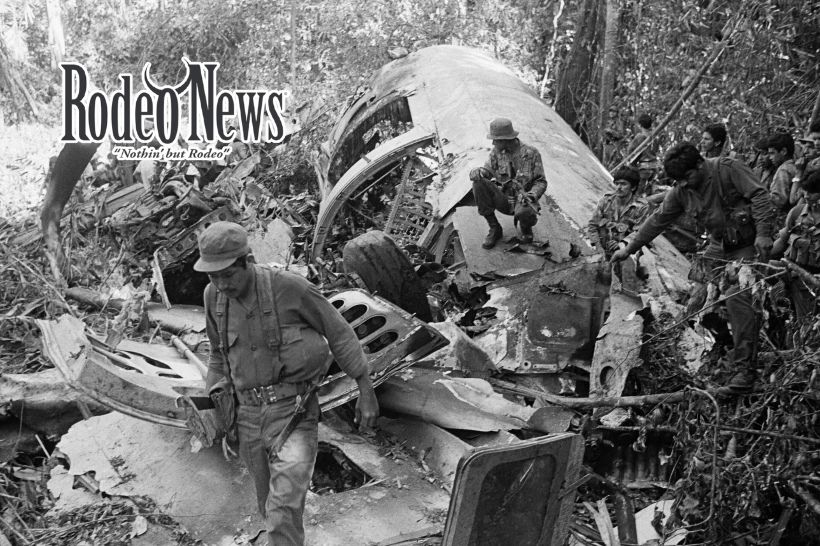
In Guatemala, U.S. involvement in the 1950s preceded a brutal civil war that lasted four decades and claimed more than 200,000 lives. In Nicaragua during the 1980s, U.S. backing of Contra rebels fueled a protracted conflict that devastated the country’s economy and deepened political divisions.
More recently, the Trump administration has signaled a willingness to reassert American power in the region. U.S. forces captured Venezuelan leader Nicolás Maduro on Jan. 3, flying him to the United States to face drug and weapons charges. Many observers expected Washington to elevate opposition figure María Corina Machado. Instead, the administration appeared open to working with President Delcy Rodríguez, Maduro’s former deputy.
The result was not a full transformation of Venezuela’s political order, but a reshuffling at the top.
“There are those who could claim that what we did in Venezuela is not regime change,” Schanzer said. “The regime is still in place. There’s just one person that’s missing.”
That distinction may be instructive for Iran. Removing a leader does not necessarily dismantle a governing system.
A Fragile Moment
Inside Iran, the situation remains fluid. The country’s economy is under severe strain, and public frustration has simmered for years. January’s crackdown on protests reportedly left thousands dead and tens of thousands detained, but dissent has not vanished.
At the same time, the regime’s security forces remain cohesive. The IRGC commands vast economic and military resources. Clerical networks are deeply entrenched. And nationalist sentiment — particularly in the face of foreign attack — can blunt internal divisions.
In some cases, external military pressure has rallied populations around embattled governments rather than fractured them.
The coming days may reveal whether fractures within Iran’s leadership widen or whether hardliners consolidate power. Much will depend on whether pragmatic officials believe accommodation with Washington ensures survival — or whether resistance strengthens their legitimacy.
The Uncertain Endgame
For the White House, the strategic calculus is delicate.
Encouraging regime change without a clear post-conflict plan risks repeating past missteps. Direct intervention carries enormous costs and unpredictable consequences. Even indirect pressure can reshape political landscapes in ways that defy expectations.
The history of U.S. regime change efforts — from Tehran in 1953 to Baghdad in 2003 — underscores a stubborn reality: removing a government is one thing; building a stable successor is another.
Trump’s message to the Iranian people was urgent and direct. Whether it marks the beginning of a political transformation or another chapter in the long, complicated story of American intervention abroad remains to be seen.
For now, one lesson stands out. History rarely yields to simple scripts.