Trump Presidential Records Act Challenge Faces Court Scrutiny
WASHINGTON — The Trump administration’s effort to invalidate the Presidential Records Act faced pointed questions from federal appeals court judges on October 16, placing the future of White House recordkeeping and public access to presidential documents at the center of a significant legal dispute.
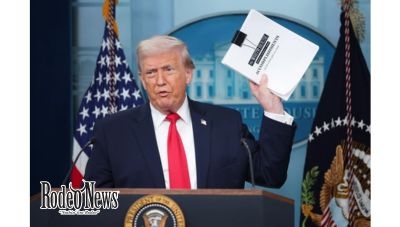
During oral arguments at the US Court of Appeals for the District of Columbia Circuit, judges questioned the Justice Department’s position that Congress lacked the constitutional authority to require presidents to preserve official records. The law, enacted in 1978 following the Watergate scandal, establishes that presidential records belong to the federal government rather than to the president personally
The hearing brought renewed attention to the Trump Presidential Records Act challenge, which could affect how presidential communications are preserved, transferred between administrations and eventually made available to the public.
The Justice Department argues that the law places unconstitutional restrictions on the executive branch and could discourage presidential advisers from speaking candidly. Historians and government watchdog groups challenging the administration’s position say the statute is a lawful safeguard that protects the historical record and supports government accountability.
The judges’ questions suggested substantial concern about the consequences of eliminating the existing framework. However, the hearing itself did not produce a final ruling, leaving the dispute unresolved.
At stake is a fundamental question about the presidency: who controls the official records created while a president conducts the business of government?
1. What the Presidential Records Act Requires
The Presidential Records Act of 1978 established a federal framework for preserving documents created or received by a president and White House staff while carrying out official duties.
The law emerged from the political and legal disputes surrounding former President Richard Nixon’s records after the Watergate scandal. Congress sought to establish that presidential materials documenting official government business should be preserved rather than left entirely to an individual president’s discretion.
Under the existing framework, presidential records are transferred to the National Archives and Records Administration when an administration ends. Many records eventually become available to the public, although disclosure restrictions apply to sensitive materials and protected information.
The law covers more than paper documents. Modern presidential records can include emails, electronic messages, memoranda, meeting notes and other communications documenting official decisions.
This distinction is increasingly important because government business is conducted across multiple digital platforms. Without effective preservation requirements, important communications could become difficult or impossible to recover.
For historians, journalists and researchers, presidential records provide evidence of how decisions were made. They can help establish timelines, clarify disagreements among officials and explain the reasoning behind major policy choices.
The law therefore serves both an administrative function and a historical one.
2. Why the Trump Administration Is Challenging the Law
The Justice Department’s central argument is that the Presidential Records Act exceeds Congress’s constitutional authority and interferes with the independence of the executive branch.
In an opinion issued in April 2026, the department’s Office of Legal Counsel concluded that the statute was unconstitutional. The administration argued that Congress could not impose the existing preservation framework on the president in the way the law requires.
Government lawyer John Bailey advanced that position during the October 16 appeals hearing. He argued that the law could discourage advisers from speaking candidly if they knew their communications might later be transferred to a successor administration and potentially disclosed.
From the administration’s perspective, presidential advisers need confidence that their internal discussions will not automatically become accessible to future political opponents.
Bailey also argued that a successor president could use records from a previous administration for political purposes. That concern formed part of the government’s broader case for giving presidents greater control over their official papers.
However, the legal question is not simply whether presidents should have privacy in their internal discussions. It is whether Congress has the constitutional authority to require preservation of records created in the conduct of government business.
That distinction lies at the heart of the dispute.
3. Judges Question the Consequences of Treating Records as Personal Property
Several judges on the D.C. Circuit panel pressed the government about what would happen if the Presidential Records Act were invalidated.
One concern was the possibility that presidential records could be sold, destroyed or inherited as personal property rather than transferred to the federal government.
Judge Patricia Millett questioned what safeguards would remain if the existing statutory framework disappeared. Judge Cornelia Pillard also challenged the logic of treating presidential papers as private property that could pass to family members after a president’s death.
These questions illustrated the practical implications of the administration’s argument.
If presidents were able to exercise unrestricted control over their official records, a future administration might have less access to information explaining decisions made by its predecessor. Records concerning national security, diplomatic conversations and government operations could become especially important during a transition.
The judges also considered whether the current law already provides protections that address the administration’s concerns.
The Presidential Records Act contains restrictions governing the disclosure of sensitive information. Presidential communications privilege and other legal protections may also apply in appropriate circumstances.
The plaintiffs argue that these mechanisms demonstrate that preserving records does not mean immediately making every communication public.
The court must assess those arguments against the administration’s constitutional objections before determining how the case should proceed.
4. Historians and Watchdog Groups Defend the Law
The legal challenge was brought by the American Historical Association and government watchdog organizations, including American Oversight and Citizens for Responsibility and Ethics in Washington.
The groups argue that the administration cannot simply declare a federal statute unconstitutional and stop following its requirements while the courts consider the dispute.
Their position emphasizes Congress’s authority to preserve government records and the public interest in maintaining an accurate historical account of presidential decisions.
They also argue that the law does not automatically make all records public. Instead, it establishes a system for retaining official materials and determining when disclosure is appropriate.
The plaintiffs received support through legal briefs submitted by former government officials, national security experts and former leaders of the National Archives. These submissions argued that presidential recordkeeping serves important interests in government continuity and accountability.
The groups also point to existing legal precedent. In Nixon v. Administrator of General Services, the Supreme Court upheld a predecessor framework for preserving former President Nixon’s records after his resignation.
The plaintiffs argue that this precedent supports Congress’s authority to establish rules governing presidential documents.
The administration, meanwhile, maintains that the current law improperly intrudes on executive authority. The appeals court must evaluate the competing constitutional arguments rather than assume that either side’s interpretation is correct.
5. The Case Revives Questions About Trump’s Earlier Records
The dispute also has significance because of Trump’s handling of government documents after his first presidency ended in January 2021.
National Archives officials sought the return of records that had been taken to Trump’s Mar-a-Lago residence in Florida. The subsequent investigation into classified documents led to federal criminal charges in 2023.
That criminal case was later dismissed on procedural grounds concerning the appointment of the special counsel, and the Justice Department dropped the prosecution after Trump returned to office. The records dispute now before the appeals court is a separate legal matter.
The current lawsuit concerns the constitutionality of the Presidential Records Act and whether the administration can be required to preserve official records while the case continues.
A federal district judge ruled in May 2026 that White House officials covered by the order must continue complying with the law during the litigation. The administration appealed that decision.
The distinction between the two matters is important. The appeals court is not deciding the earlier criminal case. It is considering whether the federal government can enforce the statutory framework for preserving presidential records.
Nevertheless, the broader history has made the latest challenge particularly consequential for records management and public accountability.
What Happens Next?
The D.C. Circuit must consider the arguments and determine whether the lower court’s order should remain in place. The October 16 hearing did not itself settle the constitutionality of the law.
The court could issue a decision addressing the legal merits, resolve aspects of the case on procedural grounds or produce a ruling that leads to further appeals. A final outcome may ultimately depend on review by the Supreme Court, although that is not guaranteed.
In the meantime, the existing court order requiring covered White House officials to preserve records remains a key part of the dispute.
The outcome could shape how future administrations manage presidential emails, electronic messages, internal memoranda and other official communications. It could also affect the ability of historians and the public to understand government decisions after presidents leave office.
For now, the core question remains unresolved: how far can Congress go in requiring the preservation of presidential records, and what constitutional protections govern the president’s control over official communications?
The appeals court’s eventual answer will help determine the legal framework governing presidential records for the current administration and those that follow.