Washington Post Photographer Heidi Levine Beaten During Attack on Palestinian Olive Harvesters in West Bank
A veteran Washington Post photographer was hospitalized after being beaten by masked Israeli settlers while covering Palestinian farmers harvesting olives in the occupied West Bank, an incident that has renewed concerns about the safety of journalists and escalating violence against Palestinian communities.
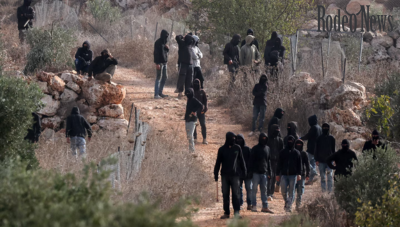
Heidi Levine, an experienced photojournalist who has documented conflicts across the Middle East and Ukraine for decades, was attacked Friday, October 16, in Abu Falah, a village northeast of Ramallah. Witnesses said dozens of masked men descended from a nearby hill and assaulted Palestinians gathering their annual olive harvest.
The attackers reportedly threw stones, used slingshots and set fire to olive groves. Levine, who was wearing a protective vest marked “PRESS” and a helmet, was knocked to the ground and repeatedly kicked. Her cameras and phone were also taken during the assault.
The incident was captured on video by journalists at the scene, providing visual evidence of the violence as authorities faced calls to investigate the attack and hold those responsible accountable.
Photographer Describes Repeated Beatings
Levine said the attackers surrounded her, pushed her to the ground and continued kicking her while she struggled to protect herself.
“They just kept kicking me and kicking me,” she told reporters, describing the assault after being taken to a hospital in the Ramallah area.
According to witness accounts, the violence continued for several minutes. The attackers reportedly pulled Levine to her feet before knocking her down again and resuming the beating.
Journalists who witnessed the incident eventually reached her and helped move her away from the attackers. American journalist Jasper Nathaniel was among those who assisted Levine as the group attempted to reach safety.
Video footage showed Levine being struck while on the ground. Witnesses also reported that the attackers used sticks and continued threatening journalists as they tried to leave the area.
After Palestinian medics transported Levine for treatment, the assailants reportedly charged again and threw rocks at several journalists.
Her protective equipment may have prevented more serious injuries, according to her account. Nevertheless, the assault left her requiring medical attention and highlighted the risks faced by reporters documenting violence in the occupied territory.
Palestinian Farmers Targeted During Olive Harvest
The attack occurred during the annual olive harvest, an important agricultural season for Palestinian families who depend on their groves for income.
Olive cultivation is deeply connected to Palestinian economic and cultural life. For many households, harvesting olives provides essential earnings while maintaining family connections to land passed down through generations.
However, farmers in the West Bank have increasingly faced reports of intimidation, physical assaults and damage to agricultural property during the harvest season.
In Abu Falah, witnesses said masked settlers attacked villagers as they collected olives. Trees and surrounding groves were reportedly set on fire, while rocks were thrown at Palestinians and members of the press.
The violence was not confined to a single location. Reports on Friday described additional attacks in nearby communities, including incidents involving burned vehicles and damaged olive trees.
These incidents have intensified concerns among Palestinian residents, agricultural organizations and rights groups about whether farmers can safely access their land during the harvest.
For families whose livelihoods depend on olive production, the destruction of trees and crops can have financial consequences extending well beyond a single season.
Israeli Forces Face Questions Over Response
Witnesses said Israeli troops arrived in the area around the time of the violence. Accounts of the military’s response differ, but journalists and local observers alleged that soldiers used tear gas against Palestinians while settlers remained nearby.
One witness also reported that a Palestinian man was wounded by gunfire during the incident.
The Israeli military and other authorities faced questions about whether sufficient measures had been taken to protect civilians and journalists. As of the initial reports, the precise circumstances surrounding every injury and the actions of individual participants remained under investigation.
Israeli Prime Minister Benjamin Netanyahu condemned violence against Jews, Arabs, Christians and journalists, while calling for an investigation into the confrontation. His statement also questioned aspects of the accounts surrounding the incident.
The Washington Post expressed outrage over the attack on Levine and called for a thorough investigation.
The case has added to longstanding concerns about accountability for attacks against Palestinians and journalists in the West Bank. Rights organizations have repeatedly called for investigations into settler violence and stronger enforcement against those responsible.
Washington Post Calls for Accountability
Levine’s assault has drawn attention to the dangers faced by journalists reporting from areas experiencing prolonged conflict and political tension.
Press identification and protective equipment are intended to help distinguish journalists from other participants during dangerous situations. However, Levine’s experience demonstrates that these precautions cannot eliminate the risks faced by reporters covering violent incidents.
Journalists play a critical role in documenting events that might otherwise receive limited public attention. Attacks against them can also prevent witnesses from recording incidents and restrict the flow of independently gathered information.
Media organizations have repeatedly emphasized the importance of protecting journalists and ensuring that attacks on members of the press are investigated.
The circumstances of Levine’s assault are particularly concerning because she was visibly identified as a journalist while documenting an attack on civilians.
Authorities are under pressure to establish what happened, identify those involved and determine whether criminal charges are warranted.
Rising Concerns Over West Bank Violence
The attack comes amid broader concerns about increasing settler violence across the occupied West Bank.
United Nations figures cited in reporting by The Washington Post documented more than 1,600 settler attacks resulting in injuries or property damage between January and August 2026.
The figures reflect a wider pattern of incidents affecting Palestinian residents, agricultural workers and communities located near Israeli settlements.
Another journalist, Agence France-Presse photographer Jaafar Ashtiyeh, was reportedly beaten by settlers earlier in October while working in the northern West Bank, underscoring the risks faced by media professionals covering the region.
For Palestinian farmers, the violence threatens access to agricultural land during a season that is vital to household incomes. For journalists, it raises serious questions about whether they can safely document events in the field.
As the investigation into Levine’s assault proceeds, calls for accountability are likely to remain central to the response.
The incident has highlighted two connected concerns: the protection of Palestinian civilians attempting to harvest their crops and the safety of journalists documenting events in the occupied West Bank. The findings of the investigation will be important in determining responsibility and whether further measures are needed to prevent similar attacks.