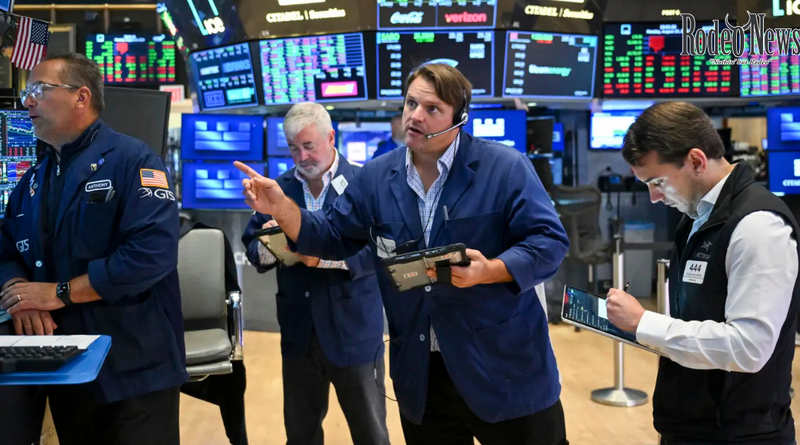
Stock Market Today: Wall Street Ends Mixed
The stock market today finished with a mixed performance on Monday, Aug. 24, as investors weighed sharp losses in technology and semiconductor shares against gains in financial and other defensive areas. The Dow Jones Industrial Average advanced, while the S&P 500 and Nasdaq Composite closed lower.
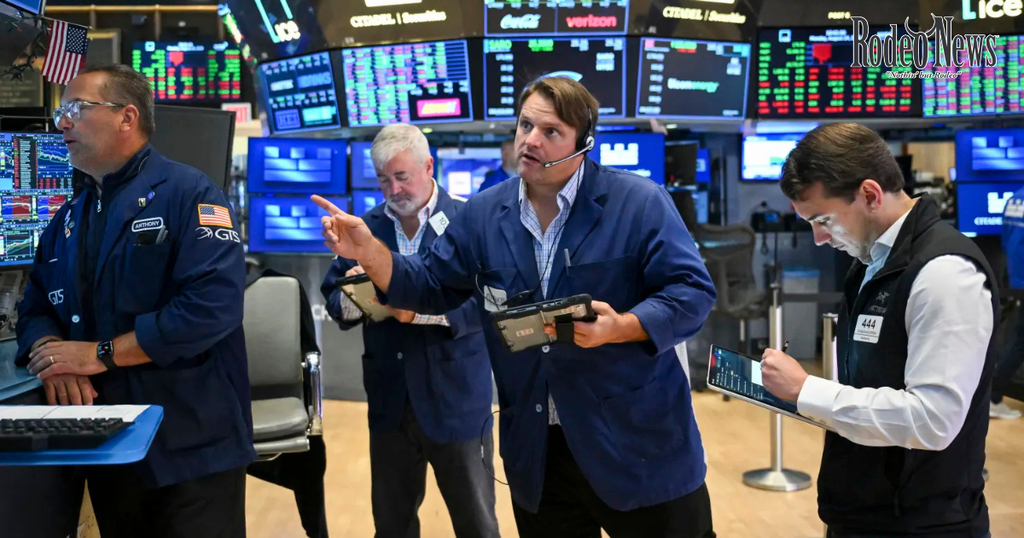
The Dow gained 140.15 points, or about 0.3%, to finish at 53,417.16. The S&P 500 fell 21.51 points, or 0.3%, to 7,652.86, while the Nasdaq Composite dropped 200.26 points, or 0.8%, to 25,980.19. The Russell 2000 also declined about 0.8%.
The uneven session reflected a market facing several competing forces. Investors were cautious about expensive technology stocks, geopolitical developments involving Iran, renewed trade tensions with Canada and a busy economic calendar that includes Nvidia earnings and fresh inflation data.
Monday’s trading also showed how sensitive Wall Street remains to developments in artificial intelligence, interest rates and government policy.
Stock Market Today Shows a Growing Tech Divide
One of the biggest stories in the stock market today was weakness across technology and semiconductor shares.
The technology sector came under pressure as investors reduced exposure to some of the market’s strongest recent performers. Semiconductor companies were among the hardest hit, putting additional pressure on both the Nasdaq and the broader S&P 500. Reuters reported that Nvidia, Micron Technology and Broadcom were among the chipmakers weighing on the market.
The decline is particularly important because technology stocks have played a major role in driving U.S. equities higher this year.
Investors have increasingly questioned whether elevated valuations in artificial intelligence-related companies can be supported by future earnings growth. That concern has made major chipmakers especially sensitive to earnings expectations.
Nvidia is at the center of that debate.
The company was scheduled to report quarterly results later in the week, making its earnings announcement one of the most important events for investors. Strong results could reinforce confidence in the AI investment boom. However, any sign of slowing demand or weaker guidance could trigger another round of selling across the technology sector.
That explains why Nvidia’s stock movement has become an important indicator for the broader market.
Dow Jones Gains as Financial Stocks Provide Support
While technology shares struggled, the Dow Jones Industrial Average benefited from strength in financial companies.
Shares of major financial firms, including Visa and JPMorgan Chase, helped support the blue-chip index. Reuters noted that gains in financial stocks helped keep the Dow in positive territory despite weakness in technology and semiconductor shares.
The difference between the major indexes is significant.
The Dow contains a different mix of companies than the Nasdaq and has less exposure to the technology stocks that have driven much of the recent market rally. As a result, investors can see the Dow rise even when technology-heavy indexes decline.
Monday provided a clear example of that dynamic.
The Dow’s advance also suggested that investors were not abandoning equities altogether. Instead, some traders appeared to be rotating toward companies and sectors viewed as more resilient in an uncertain environment.
That rotation could become increasingly important if volatility remains elevated.
Nvidia Earnings Become a Major Market Test
Nvidia is one of the most closely watched companies in the stock market today, and its upcoming earnings report could have implications far beyond the semiconductor industry.
The company has become a central beneficiary of the massive investment in artificial intelligence infrastructure. Its processors are widely used to power AI systems, and demand for those products has helped fuel strong growth.
However, expectations are now extremely high.
When a company becomes one of the most valuable businesses in the market, investors often demand more than simply strong earnings. They want evidence that growth can continue at an exceptional pace.
That creates a difficult setup for Nvidia.
Even a strong quarterly report could produce a muted market reaction if investors had already priced in excellent results. Conversely, any disappointment involving revenue growth, margins, future demand or guidance could affect other AI-related stocks.
The broader semiconductor sector therefore remains a key area to watch as the week develops.
Iran Tensions Add Another Layer of Uncertainty
Geopolitical developments also influenced the stock market today.
Investors continued to monitor U.S. pressure on Iran and the possibility of additional sanctions. Reuters reported that the Trump administration signaled potential expansion of Iran-related sanctions, adding another source of uncertainty for global markets.
Geopolitical tensions can affect stocks through several channels.
Oil prices are one of the most important.
A major disruption involving Iran or the wider Middle East could affect global energy supplies and push oil prices higher. Higher energy costs can increase inflation pressure, potentially complicating the Federal Reserve’s decisions about interest rates.
On Monday, however, oil prices moved lower. That provided some relief for investors concerned about inflation and energy costs.
The market reaction illustrates the complicated relationship between geopolitics and financial assets.
Investors may initially sell stocks because of geopolitical uncertainty. At the same time, falling oil prices can reduce concerns about inflation and potentially support consumer and business activity.
Canada Trade Tensions Also Return to Focus
Trade policy was another important factor for Wall Street.
U.S.-Canada trade negotiations broke down, raising concerns about additional tariffs and their potential impact on businesses and consumers.
Investors have become accustomed to sudden changes in trade policy over recent years. Nevertheless, renewed tariff threats can create uncertainty for companies that rely on cross-border supply chains.
Higher tariffs can increase production costs and put pressure on profit margins. Companies may eventually pass some of those costs to consumers, creating another possible source of inflation.
That is particularly important when investors are already focused on Federal Reserve policy.
The market therefore has to consider several connected risks at the same time: trade restrictions, inflation, interest rates, geopolitical tensions and corporate earnings.
Federal Reserve Policy Remains Crucial
Another major focus for the stock market today is the Federal Reserve.
Investors are watching comments from Fed officials for clues about the direction of interest rates. The Federal Reserve’s annual Jackson Hole symposium is taking place during a particularly important period for financial markets.
Fed Chair Kevin Warsh is expected to speak later in the week, giving investors another opportunity to assess the central bank’s thinking about inflation, economic growth and monetary policy.
Interest rates remain especially important for technology companies.
When Treasury yields rise, future corporate earnings can become less attractive when valued today. High-growth technology companies can therefore experience greater pressure when bond yields move higher.
The opposite can also be true.
Falling yields can provide support for growth stocks because the relative attractiveness of future earnings improves.
That relationship helps explain why the bond market remains closely linked to stock-market performance.
Inflation Data Could Set the Tone
Investors are also waiting for the latest U.S. inflation data.
The personal consumption expenditures price index, commonly known as PCE, is scheduled for release later in the week. The measure is closely watched by the Federal Reserve and investors because it provides an important view of price pressures in the U.S. economy.
A softer inflation reading could strengthen expectations for more accommodative monetary policy.
A hotter-than-expected reading could have the opposite effect.
For stock investors, the ideal combination is relatively simple: continued economic growth combined with easing inflation and stable interest rates.
The problem is that financial markets rarely receive all three signals at once.
That uncertainty is likely to keep market volatility elevated as traders move between economic data, earnings reports and policy announcements.
What Investors Should Watch Next
The stock market today provided an important reminder that market leadership can change quickly.
Technology stocks remain powerful drivers of the major indexes, but their valuations also make them vulnerable to disappointing earnings, rising yields or shifts in investor sentiment.
Several events could determine the market’s direction over the remainder of the week.
First, investors will closely examine Nvidia’s earnings report. The company is expected to provide another important test of the AI investment boom.
Second, traders will watch Federal Reserve officials for clues about interest rates.
Third, the PCE inflation report could influence expectations for monetary policy.
Finally, investors will continue monitoring developments involving Iran and U.S. trade policy.
Each factor could move markets independently. Combined, they create a particularly busy environment for investors.
Wall Street Faces a High-Stakes Week
Monday’s mixed session does not necessarily signal a major change in the long-term market trend.
The major indexes remain substantially higher for the year. According to AP, the S&P 500 and Nasdaq were both up about 11.8% year to date after Monday’s decline, while the Dow had gained about 11.1%. The Russell 2000 was up approximately 20.7%.
Those gains show why investors may be reluctant to interpret a single weak session as the beginning of a prolonged downturn.
Still, Monday’s trading highlights an important shift in the market’s near-term focus.
The question is no longer simply whether stocks can continue rising. Investors increasingly want to know whether corporate earnings can justify current valuations, whether AI spending can maintain its momentum and whether inflation will allow the Federal Reserve to ease financial conditions.
Those questions will become clearer as the week’s major events unfold.
For now, the stock market today is sending a mixed message. The Dow’s advance shows continued demand for established companies and financial stocks, while losses in the S&P 500 and Nasdaq demonstrate that investors remain cautious about technology valuations and semiconductor exposure.
With Nvidia earnings, inflation data and Federal Reserve commentary ahead, Wall Street may be entering one of the most consequential weeks of the month.
Key Market Takeaways
- Dow Jones: Rose 140.15 points, or about 0.3%, to 53,417.16.
- S&P 500: Fell 21.51 points, or 0.3%, to 7,652.86.
- Nasdaq Composite: Dropped 200.26 points, or 0.8%, to 25,980.19.
- Technology: Semiconductor and AI-related stocks faced significant selling pressure.
- Nvidia: Earnings are a major focus for investors this week.
- Federal Reserve: Investors are watching for signals on future interest-rate policy.
- Inflation: The PCE price index is another major market catalyst.
- Geopolitics: Iran-related developments and trade tensions with Canada remain risks.
Source: CNBC, Reuters and Associated Press market coverage.
Suggested External Links:
Suggested Internal Links:
Link to your website’s existing articles about Nvidia, Federal Reserve interest rates, AI stocks, S&P 500, or Nasdaq using those terms as natural anchor text.
Image Recommendation:
Use a licensed editorial image showing a Wall Street trading floor, major U.S. stock indexes, or a market screen displaying the Dow, S&P 500 and Nasdaq.
Image ALT Text:Stock market today August 24 2026 as Dow rises and Nasdaq falls