Trump Pressures Venezuela: US Announces Airspace Closure and Escalates Military Efforts
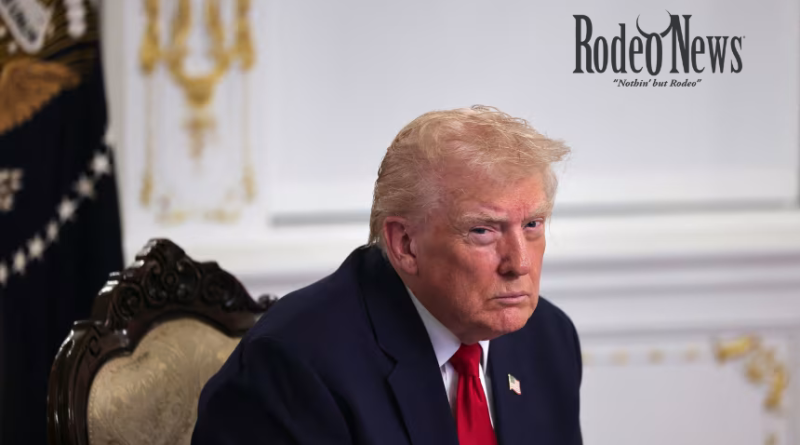
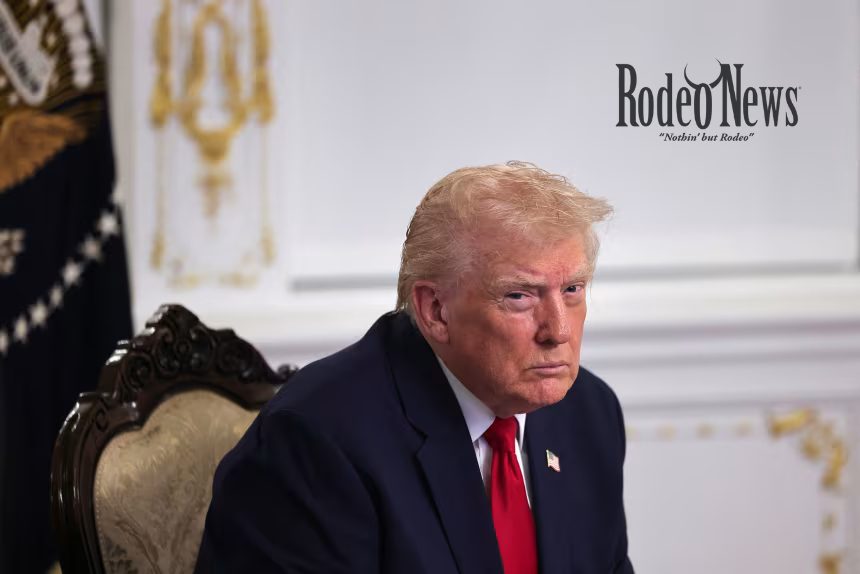
Palm Beach, Florida – President Donald Trump ramped up his campaign against Venezuela on Saturday, calling for a complete closure of the country’s airspace, intensifying tensions between the U.S. and the South American nation.
In a post on Truth Social, Trump urged international airlines, pilots, and criminal organizations to avoid Venezuelan airspace, labeling the region as entirely “closed.” This marked another sharp escalation in the U.S. administration’s ongoing efforts to remove Venezuelan President Nicolás Maduro from power.
While the Trump administration officially frames its actions as part of a broader initiative to curb illegal drug trafficking and migrant flows, there is growing speculation that regime change remains a key objective.
Venezuela Responds: “Colonialist Aggression”
Venezuela quickly condemned Trump’s statement, with the nation’s foreign minister denouncing the directive as a “colonialist threat” and an “illegal and unjustified aggression.” The government claimed that the U.S. has no authority to close another nation’s airspace, especially as international aviation guidelines are generally managed by global bodies like the International Civil Aviation Organization.
While direct flights from the U.S. to Venezuela have been suspended since 2019, some U.S. airlines continue to fly over Venezuelan territory, primarily on routes to South America.
Heightened U.S. Military Presence
The announcement came as Trump continued to push for stronger actions against Venezuela, including military interventions aimed at disrupting the flow of drugs from the country. The President recently authorized covert CIA operations inside Venezuela, a move that raises the stakes in an already volatile geopolitical situation.
Trump also intensified his rhetoric earlier this week, naming Maduro and his government allies as members of a foreign terrorist organization (FTO), a designation that opens the door for expanded U.S. military options inside Venezuela.
The President even hinted at possible land-based military strikes, commenting during a Thanksgiving call with U.S. troops that actions to counter drug traffickers on land would be “starting very soon.”
“We’re going to stop them by land,” Trump said. “The land is easier, but that’s going to start very soon.”
Republican Support for Trump’s Strategy
Senator Lindsey Graham (R-SC) voiced strong support for Trump’s comments, praising the President’s resolve to confront Venezuela’s “drug caliphate.” Graham commended Trump’s decision to use military force if necessary, calling Venezuela a major concern for U.S. national security.
The U.S. military has already amassed a significant presence in the region, including more than a dozen warships and 15,000 troops as part of “Operation Southern Spear,” an initiative aimed at disrupting Venezuelan drug networks. Recent operations have resulted in numerous drug interdictions, including deadly boat strikes against trafficking vessels.
Venezuelans Weigh in Amid Growing Tensions
For many in Venezuela, the increasing tension has sparked a mixture of resignation and anxiety. Despite the looming threat of U.S. military action, the impact on daily life remains minimal for now. In Caracas, many continue to live their lives under the harsh conditions of the ongoing economic crisis, government repression, and rising insecurity.
Marilyn, a waitress in the capital, expressed the uncertainty shared by many Venezuelans. “Will they bomb? Will they not bomb? Who knows… I don’t really follow the news, and honestly, no one knows anything,” she said, speaking on condition of anonymity for fear of government retribution.
Despite the threats of military action, the Maduro government continues to project defiance, with President Maduro publicly declaring that “Venezuela is invincible,” vowing that the country would not be defeated by external forces.
The Road Ahead: Diplomatic Stalemate
While informal talks between U.S. and Venezuelan officials have taken place in the past, they have yielded little in terms of tangible results. Maduro has signaled a potential willingness to step down, but only after 18 months, a timeframe that Washington is unwilling to accept. The White House has made it clear that it seeks Maduro’s immediate departure, and as such, diplomatic efforts remain deadlocked.
For the U.S., the question remains whether further military action will eventually come to fruition. If it does, it could have serious consequences not only for U.S.-Venezuela relations but for the broader geopolitical landscape of Latin America.
In Venezuela, meanwhile, life goes on despite the uncertainty. Christmas decorations adorn the streets of Caracas, while Black Friday deals capture the attention of shoppers. On television, Maduro delivers his usual public addresses, continuing to frame himself as the steadfast leader of the nation in the face of foreign pressure.