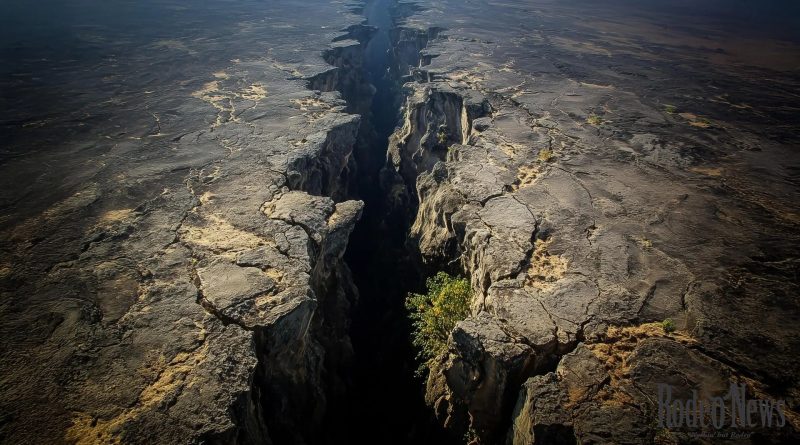
Africa Splitting Apart: Scientists Reveal Critical Rift Breakthrough
A groundbreaking scientific discovery has revealed that Africa splitting apart is no longer just a distant geological theory—it is actively happening beneath the surface of East Africa. Researchers studying the Turkana Rift have found that the Earth’s crust in the region has thinned to a critical level, signaling that the continent may be gradually breaking into two.
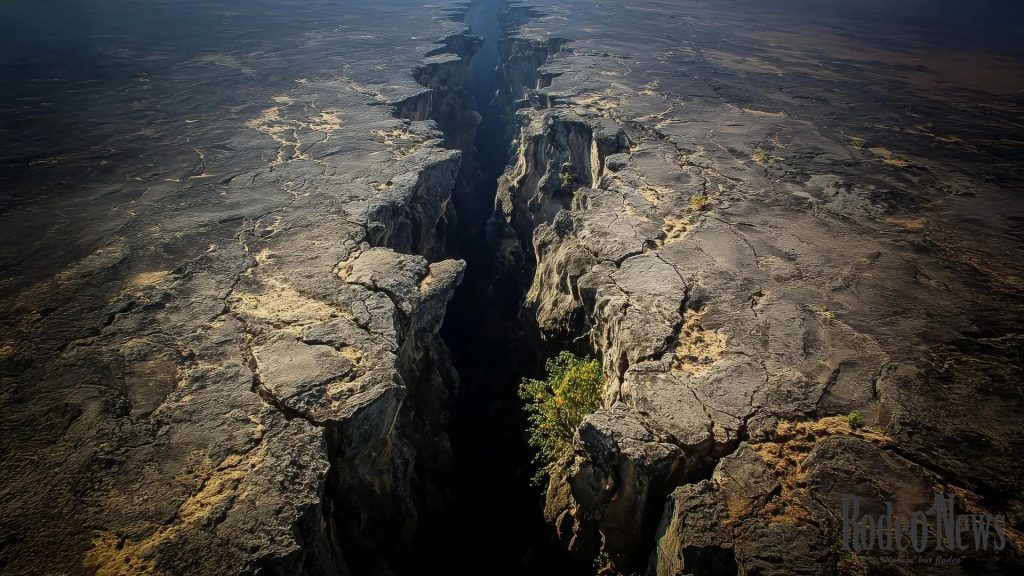
The findings, published in Nature Communications and highlighted by ScienceDaily, provide new insights into how continents divide and reshape the planet over millions of years.
What Is Happening Beneath East Africa?
The phenomenon of Africa splitting apart is centered in the Turkana Rift, a geological region stretching across Kenya and Ethiopia. This area forms part of the larger East African Rift System, one of the most significant tectonic features on Earth.
Scientists have discovered that tectonic plates beneath the region are slowly pulling away from each other at a rate of about 4.7 millimeters per year. While this movement may seem insignificant, it is powerful enough to gradually reshape the continent.
As the plates move apart, the Earth’s crust stretches and weakens. Over time, cracks form, allowing molten rock from deep within the planet to rise toward the surface. This process is known as rifting—and it is the driving force behind Africa’s slow division.
Scientists Detect Unexpectedly Thin Crust
One of the most shocking elements of this discovery is just how thin the crust has become in the Turkana Rift.
Using advanced seismic imaging techniques, researchers mapped the underground structure and found that the crust in the center of the rift is only about 13 kilometers thick. In comparison, surrounding areas measure more than 35 kilometers.
This dramatic difference indicates a process called “necking,” where the crust stretches and narrows—similar to how taffy thins when pulled apart.
According to researchers, this is a critical phase in continental breakup. Once the crust reaches this stage, it becomes significantly weaker and more prone to splitting entirely.
Why Africa Splitting Apart Matters
The implications of Africa splitting apart extend far beyond geology. This process could eventually lead to the formation of a completely new ocean.
Scientists estimate that if rifting continues, magma will rise through the fractures, forming new oceanic crust. Eventually, water from the Indian Ocean could flood the region, separating East Africa from the rest of the continent.
However, this transformation will not happen overnight. Geological processes operate on massive timescales, and it could take millions of years before a new ocean fully forms.
Still, the current findings show that the process is much further along than previously believed.
A New Explanation for Human Origins
Interestingly, the same forces driving Africa splitting apart may also explain why East Africa holds one of the richest fossil records of early humans.
The Turkana region has long been considered a key site for understanding human evolution. However, scientists now suggest that it may not necessarily be the birthplace of humanity—but rather the place where evidence was best preserved.
As the land stretched and sank, sediments accumulated, creating ideal conditions for preserving ancient remains. Over millions of years, these geological processes helped protect fossils that might have otherwise been lost.
Evidence of Past Failed Rifting
The study also uncovered signs that this is not the first time Africa attempted to split apart.
Researchers found evidence of an earlier rifting event that failed to fully divide the continent. Instead, it left the crust thinner and weaker, setting the stage for the current phase of activity.
This challenges traditional theories about how continents break apart. Previously, scientists believed that rifting followed a more straightforward progression. However, these findings suggest that the process can be more complex, involving multiple attempts before a full split occurs.
A Rare Glimpse Into Earth’s Evolution
One of the most remarkable aspects of this discovery is that the Turkana Rift provides a rare opportunity to observe a continent in the process of breaking apart.
According to researchers, this is the first known active continental rift currently undergoing the “necking” phase.
This makes it an invaluable natural laboratory for scientists studying tectonic activity, crust formation, and planetary evolution.
By analyzing this region, researchers can better understand how continents have separated throughout Earth’s history—and how future changes may unfold.
How Long Will It Take?
Despite the dramatic nature of the discovery, experts emphasize that Africa splitting apart is a slow process.
The Turkana Rift began forming around 45 million years ago, and the current “necking” phase likely started about 4 million years ago following intense volcanic activity.
Even with the accelerated thinning of the crust, it could take several million more years before the continent fully divides and a new ocean emerges.
In other words, while the process is underway, it will not impact human civilization in the foreseeable future.
What This Means for the Future
The discovery that Africa is closer than ever to splitting apart reshapes our understanding of Earth’s dynamic nature.
Continents are not fixed—they are constantly moving, evolving, and transforming. The Turkana Rift is a powerful reminder that the planet we live on is still very much alive.
Moreover, these findings could improve our ability to predict geological events, such as earthquakes and volcanic activity, in rift zones around the world.
Conclusion
The revelation that Africa splitting apart is progressing faster than previously thought marks a major milestone in geological research.
By uncovering the advanced stage of crust thinning in the Turkana Rift, scientists have provided compelling evidence that the continent is on a long-term path toward division.
While the formation of a new ocean remains millions of years away, the process is already underway beneath our feet—quietly reshaping the future of the Earth.
As research continues, the Turkana Rift will remain one of the most important regions for understanding how continents break apart—and how our planet continues to evolve.