Trump Announces Two-Year Closure of Trump Kennedy Center for Major Renovations
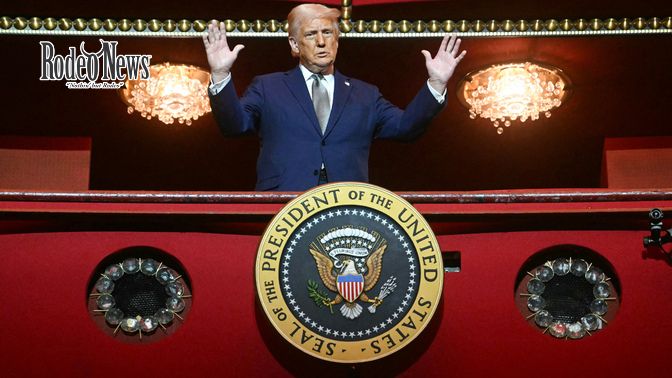
President Donald Trump announced Sunday that the Trump Kennedy Center will close later this year for a two-year period to undergo extensive renovations, marking another high-profile effort by the administration to reshape some of Washington’s most prominent cultural and civic landmarks.
In a post on Truth Social, Trump said the performing arts complex will close on July 4, aligning the shutdown with celebrations marking the nation’s 250th anniversary. Construction will begin immediately afterward on what Trump described as a “new and spectacular entertainment complex,” aimed at elevating the venue’s stature and modernizing its facilities.
According to Trump, the decision followed a yearlong internal review involving contractors, arts experts, and outside advisers. He said officials concluded that a full closure would allow construction to proceed faster and deliver higher-quality results than attempting renovations while performances continued.
“This is the fastest way to do it right,” Trump wrote, adding that the planned reopening would surpass previous versions of the center in both scale and presentation.
The Trump Kennedy Center did not immediately respond to a request for comment. It remains unclear how the closure will affect the hundreds of performances typically hosted at the venue each year, or whether resident companies will relocate temporarily to other theaters in the Washington area.
Funding details remain unclear
Trump said the funds for the renovation project are already secured but did not disclose an estimated cost. He also did not specify whether the project would be financed through federal funding, private donations, or a combination of both.
The lack of detail mirrors previous announcements tied to large-scale projects under Trump’s leadership, where funding mechanisms were sometimes clarified only after construction plans were finalized.
Despite the unanswered questions, Trump framed the renovation as a necessary step to modernize the center and align it with what he called “world-class” standards for performance venues.
Part of a broader vision for Washington landmarks
The Kennedy Center renovation is the latest in a series of initiatives Trump has launched since returning to office, reflecting his long-standing preference for bold architectural statements and ornate design.
In recent months, Trump has overseen changes to the Oval Office, where gold accents now line ceiling moldings and doorway trim. The administration has also introduced a “Presidential Walk of Fame” along the West Wing colonnade, featuring portraits of past presidents.
Among the most ambitious projects currently underway is a 90,000-square-foot White House ballroom, designed to host approximately 650 seated guests. Trump has said the ballroom will be funded by himself and private donors, rather than taxpayers.
Monument plans tied to America’s 250th anniversary
In October, Trump unveiled plans for a new monument known as the “Arc de Trump,” intended to commemorate the country’s 250th anniversary next year. Modeled closely after Paris’s Arc de Triomphe, the large arch is planned for a prominent location welcoming visitors entering Washington from Arlington, Virginia.
Trump has said the structure will stand near the Arlington Memorial Bridge, creating what he described as a dramatic and symbolic gateway into the nation’s capital.
Together, the monument, the White House renovations, and the Kennedy Center overhaul form part of a broader effort by Trump to leave a lasting physical imprint on Washington’s civic and cultural landscape.
Uncertainty for performers and audiences
While Trump emphasized the long-term benefits of closing the Kennedy Center during construction, the announcement raises immediate questions for performers, staff, and audiences who rely on the venue year-round.
The center is home to several resident companies and typically stages hundreds of performances annually, ranging from classical music and theater to contemporary concerts and public events. As of Sunday, no official guidance had been issued on whether scheduled performances would be postponed, canceled, or moved to alternative venues during the two-year closure.
Trump did not address those logistical concerns directly, focusing instead on the scale of the renovation and the anticipated impact of the reopening.
“When it comes back, it will be better than ever,” he said, promising a grand reopening that would redefine the venue’s role in American cultural life.