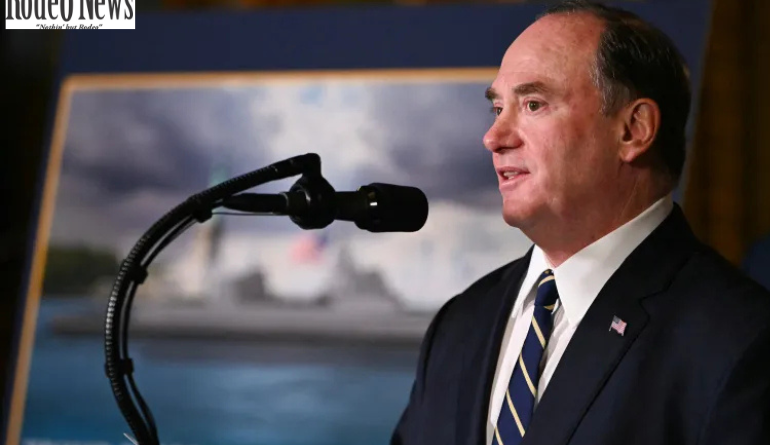
John Phelan Revealed: 7 Facts Behind His Shock Firing
The sudden removal of John Phelan as United States Navy Secretary has sent shockwaves through Washington and the global defense community. The decision, reportedly driven by Defense Secretary Pete Hegseth, marks yet another dramatic shake-up inside the Pentagon during a period of heightened geopolitical tension.
But who exactly is John Phelan—and why was he fired so abruptly?
This article breaks down the key facts, background, and political dynamics behind one of the most talked-about defense leadership changes in 2026.
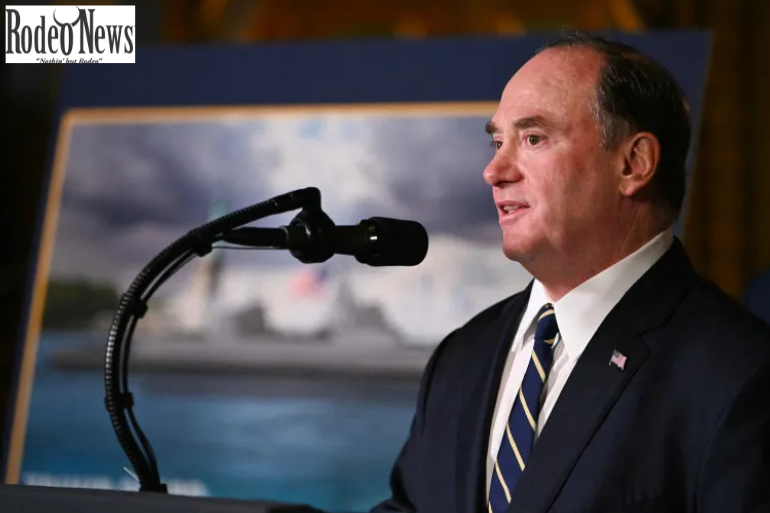
Who Is John Phelan?
John Phelan is a businessman-turned-government official who rose to one of the most powerful civilian roles in the U.S. military structure. Appointed as Secretary of the Navy after being nominated by President Donald Trump in late 2024, Phelan was responsible for overseeing both the U.S. Navy and Marine Corps.
Unlike many of his predecessors, Phelan did not come from a military background. Instead, he built his career in finance and investment, founding Rugger Management LLC.
His connection to the defense world came largely through advisory roles, including involvement with organizations supporting U.S. allies such as Ukraine and Taiwan.
This unconventional background made him a controversial choice from the beginning.
1. A Non-Traditional Pick for a Military Role
One of the most defining aspects of Phelan’s appointment was his lack of military experience.
Traditionally, the role of Navy Secretary is filled by individuals with deep ties to defense policy or military service. Phelan, however, came from the private sector.
Supporters argued that his business mindset could help modernize naval operations. Critics, however, questioned whether he had the expertise needed to manage one of the world’s most complex military institutions.
This tension would follow him throughout his tenure.
2. Close Ties to Donald Trump
Phelan was widely seen as a political ally of Donald Trump.
He was a major donor to Trump’s campaign and had strong connections within Republican political circles.
These ties helped secure his appointment but also placed him at the center of political expectations inside the administration.
As a result, his performance was often judged not just on policy outcomes, but also on political alignment.
3. Sudden Exit: “Effective Immediately”
The Pentagon announced that Phelan was leaving his position “effective immediately,” offering little explanation.
This lack of transparency raised immediate questions.
According to multiple reports, including Reuters, the decision was not voluntary. Sources indicated that Phelan was dismissed rather than resigning.
The abrupt nature of the announcement suggests internal tensions had reached a breaking point.
4. Tensions With Pete Hegseth
At the center of Phelan’s downfall appears to be his strained relationship with Defense Secretary Pete Hegseth.
Reports indicate ongoing disagreements between the two over policy direction, leadership style, and strategic priorities.
In particular, Phelan was criticized for moving too slowly on critical naval reforms—especially those aimed at accelerating shipbuilding efforts.
This friction ultimately contributed to his removal.
5. Shipbuilding Delays and Strategic Pressure
One of the most significant issues facing the U.S. Navy today is the need to expand its fleet.
With China rapidly increasing its naval capabilities, the Pentagon has pushed for aggressive shipbuilding initiatives. However, Phelan reportedly failed to meet expectations in this area.
Sources say his pace of reform was seen as inadequate during a time of urgent strategic competition.
This became a key factor in the decision to remove him.
6. Internal Conflicts and Leadership Breakdown
Beyond policy disagreements, Phelan’s tenure was marked by internal conflicts within the Pentagon.
He reportedly had strained relationships not only with Hegseth but also with other senior officials, including Deputy Defense Secretary Steve Feinberg and Navy Undersecretary Hung Cao.
Such tensions made it difficult to maintain unified leadership within the Department of Defense.
In high-stakes environments like the Pentagon, internal cohesion is critical—and its absence can be decisive.
7. Ethics Investigation and Controversy
Adding to his challenges, Phelan was reportedly under an ethics investigation at the time of his dismissal.
While details remain unclear, the existence of such an investigation likely weakened his position.
Even unproven allegations can have serious consequences for senior officials, especially in roles tied to national security.
A Broader Pentagon Shake-Up
Phelan’s firing is not an isolated incident.
His removal comes amid a broader pattern of leadership changes within the Pentagon under Pete Hegseth. Recent months have seen multiple high-ranking officials replaced or forced out, including top military leaders.
Critics argue that this reflects instability within the Department of Defense, while supporters say it is part of a necessary restructuring effort.
Either way, the scale of the changes is significant.
Timing: A Critical Moment for the US Navy
The timing of Phelan’s dismissal adds another layer of complexity.
His departure comes during a fragile ceasefire involving Iran, with the U.S. Navy playing a central role in enforcing maritime operations and blockades.
This makes leadership continuity especially important.
Replacing the Navy’s top civilian leader during such a sensitive period could have operational and strategic implications.
Who Replaces John Phelan?
Following his departure, Navy Undersecretary Hung Cao has stepped in as acting Secretary of the Navy.
Cao brings a very different profile to the role. A military veteran with decades of service, he contrasts sharply with Phelan’s business-oriented background.
This shift may signal a move toward more traditional leadership within the Navy.
What This Means for US Military Policy
Phelan’s firing highlights several key trends in U.S. defense policy:
1. Increased Pressure for Rapid Reform
The Pentagon is prioritizing speed and efficiency, especially in shipbuilding and modernization.
2. Political Alignment Matters
Leadership roles are increasingly influenced by internal political dynamics.
3. Rising Global Tensions
With ongoing conflicts and strategic competition, the stakes for defense leadership are higher than ever.
Conclusion
John Phelan’s rise and fall as U.S. Navy Secretary is a story of ambition, controversy, and political complexity.
From his unconventional background to his sudden dismissal, his tenure reflects the challenges of leading in one of the most demanding roles in government.
Ultimately, his firing underscores a broader reality: in today’s high-pressure geopolitical environment, even top officials can be quickly replaced if they fail to meet expectations.
As the Pentagon continues to reshape its leadership, the impact of these decisions will be felt far