EU and UNICEF Deliver Emergency Aid to Families Displaced by Cambodia-Thailand Border Crisis
More than 30 tonnes of emergency relief supplies have been delivered to families displaced by the ongoing Cambodia–Thailand border crisis, as the European Union and UNICEF scale up humanitarian support across four northern provinces.
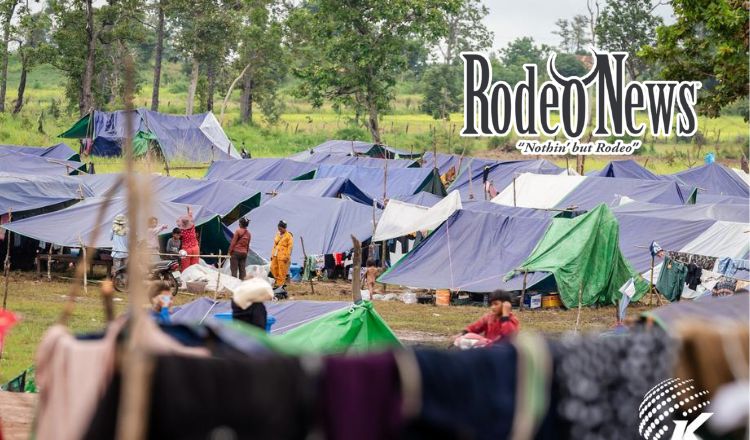
The latest shipment — distributed at the Wat Kandoal displacement site on February 8 — forms part of a broader initiative aimed at assisting approximately 15,000 people uprooted by recent tensions. The effort primarily targets women and children in Oddar Meanchey, Banteay Meanchey, Siem Reap and Preah Vihear, where temporary shelters have sprung up amid continued uncertainty along the border.
Joining the distribution programme was Minister of Agriculture, Forestry and Fisheries Dith Tina, underscoring the government’s coordination with international partners in addressing the humanitarian fallout.
Essential Supplies for Displaced Families
The delivery included large tents and tarpaulins designed to serve as temporary learning centres and child-friendly spaces — a critical intervention as many displaced children face interruptions to their education.
Hygiene kits, solar lamps, and essential water, sanitation and hygiene (WASH) supplies were also distributed to help families maintain basic health standards while living in overcrowded displacement sites.
According to the EU and UNICEF, the aid package is structured not only to meet immediate survival needs but also to protect dignity and reduce the risk of disease outbreaks in temporary settlements.
Children remain at the heart of the response.
Temporary learning spaces are intended to ensure continuity of education, while child-friendly areas provide structured activities and psychosocial support to help young people cope with trauma stemming from the conflict.
Addressing the Hidden Toll: Mental Health Support
Beyond physical supplies, humanitarian actors are confronting the psychological consequences of displacement.
EU Ambassador to Cambodia Igor Driesmans confirmed that the Transcultural Psychosocial Organisation Cambodia (TPO) is providing mental health services to affected communities. The programme focuses on counselling and psychosocial assistance for families grappling with the stress and uncertainty brought on by armed clashes.
For many displaced residents, the disruption has extended beyond the loss of homes or farmland. Prolonged instability has strained livelihoods, schooling and community networks, compounding emotional distress — particularly among children.
A Focus on Recovery and Preparedness
Dr. Anirban Chatterjee, UNICEF Deputy Representative to Cambodia, said the EU’s financial support has enabled sustained access to critical services during a volatile period.
“This support will help ensure that young children keep learning, that families have safe water and hygiene, and that communities can maintain essential health and dignity as they navigate this challenging period,” he said.
Humanitarian officials stressed that the response is not limited to emergency relief. Preparedness measures are being integrated into assistance efforts to strengthen resilience should displacement persist or intensify.
The coordinated intervention reflects a dual strategy: immediate life-saving assistance coupled with recovery planning to prevent prolonged dependency.
Provinces Under Pressure
The provinces most affected — Oddar Meanchey, Banteay Meanchey, Siem Reap and Preah Vihear — sit near contested border zones that have witnessed intermittent flare-ups in recent months.
Communities in these areas have experienced repeated disruptions to agriculture, trade and schooling. Many displaced families have sought refuge in pagodas, community centres and temporary camps where infrastructure remains limited.
Humanitarian agencies warn that prolonged displacement can strain host communities and local resources, particularly water and sanitation systems.
The EU and UNICEF intervention seeks to alleviate that pressure by reinforcing essential services and safeguarding vulnerable populations, especially women and children who often face heightened risks in crisis settings.
International Solidarity Amid Regional Tensions
The aid delivery comes at a time of heightened diplomatic tension between Cambodia and Thailand, following renewed disputes along their shared border. While political negotiations continue at the national level, the humanitarian response has focused squarely on civilian needs.
For the EU, the operation underscores its broader commitment to stability and human security in Southeast Asia. For UNICEF, it represents part of its mandate to protect children in emergencies — ensuring education, health and psychosocial care remain accessible even amid conflict.
As families at Wat Kandoal and other displacement sites receive tents, hygiene kits and learning materials, the immediate priority remains clear: protecting lives and preserving dignity.
But beyond the distribution of supplies lies a deeper objective — helping communities regain stability and rebuild once conditions allow them to return home.
For now, humanitarian actors remain on the ground, working to ensure that those forced to flee are not left without support in the shadow of a protracted border crisis.