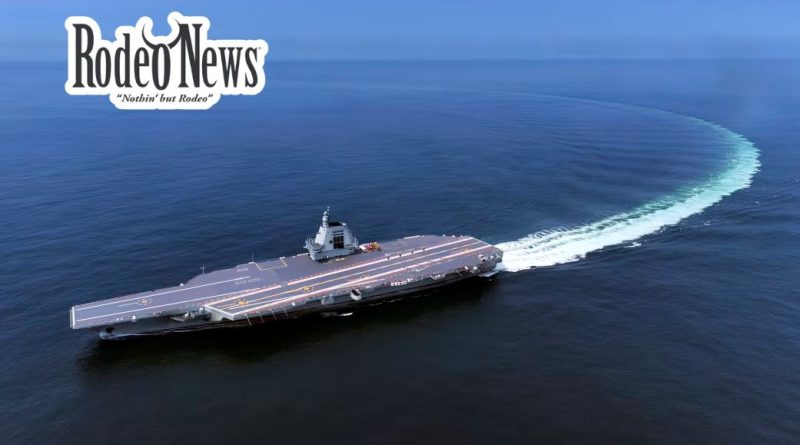
China’s Latest Aircraft Carrier Joins Fleet Amid Growing Naval Rivalry with the U.S.
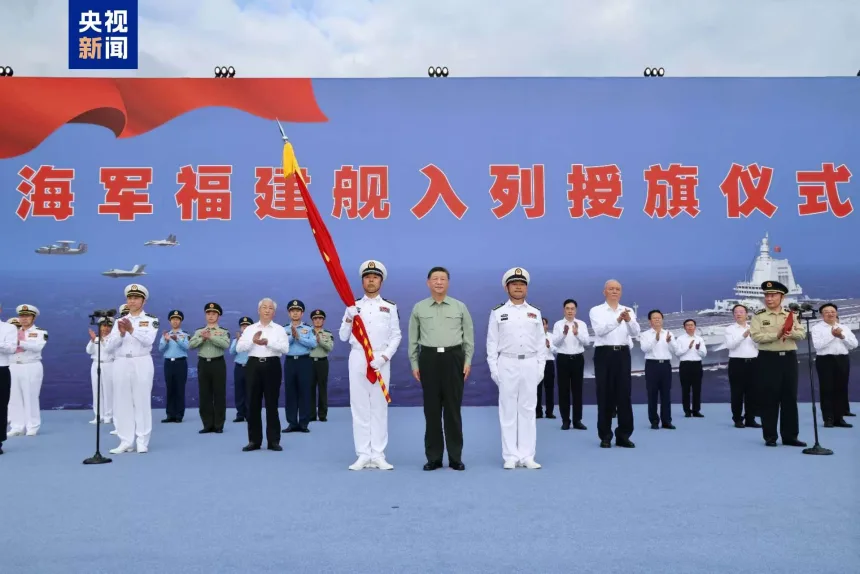
Sanya, China — In a powerful display of China’s growing naval might, the country’s latest and most advanced aircraft carrier, the Fujian, has officially entered service. The commissioning ceremony, attended by President Xi Jinping earlier this week, marks a significant milestone in Beijing’s long-term push to rival U.S. naval supremacy.
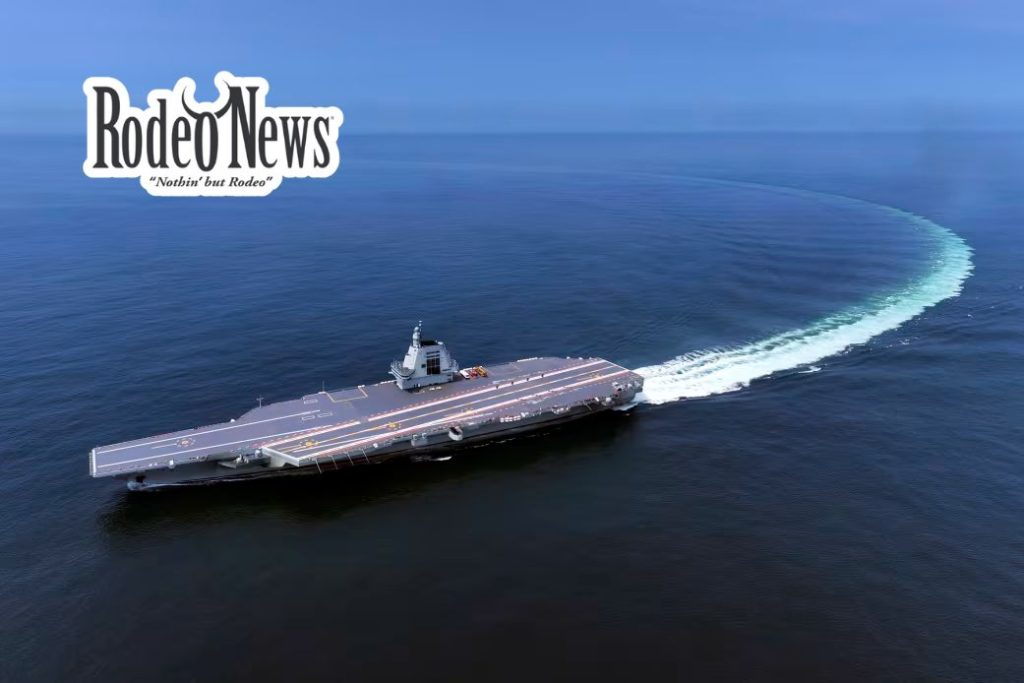
The Fujian, China’s third aircraft carrier, brings with it cutting-edge technology aimed at enhancing China’s air and naval power. This new warship is equipped with an electromagnetic aircraft launch system (EMALS), a technology that has been integrated into only one other carrier globally: the U.S. Navy’s USS Gerald R. Ford. The commissioning of the Fujian underscores China’s ambitions to assert itself as a dominant maritime force, especially in the face of rising tensions in the Pacific and broader regional security concerns.
A New Era for the Chinese Navy
The Fujian, which was launched in 2022 and completed sea trials earlier this year, has now joined the fleet as the centerpiece of China’s naval modernization program. Unlike previous Chinese carriers, the Fujian’s launch deck is equipped with electromagnetic catapults, which enable it to launch heavier aircraft with larger payloads, including more weapons and fuel. This improvement in capabilities allows China’s military to extend its reach, enabling more efficient long-range strikes.
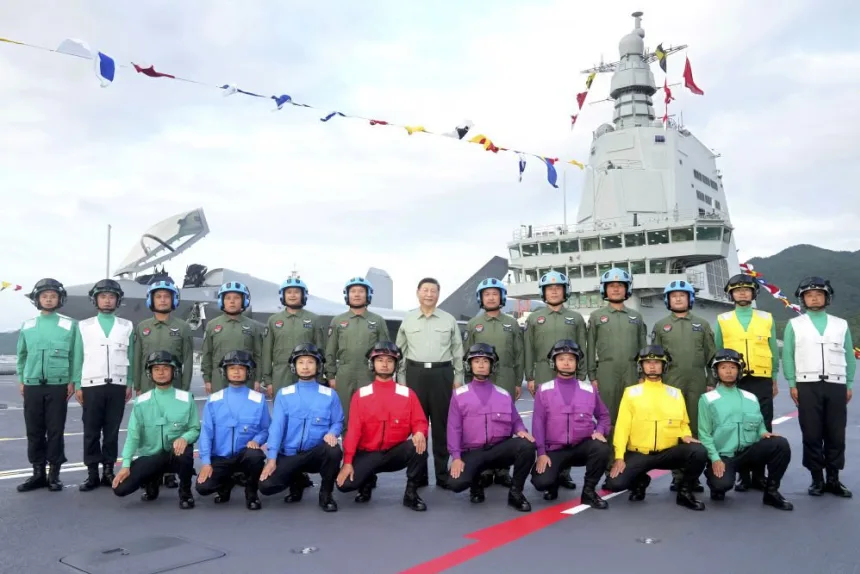
These advancements are critical for China as it looks to expand its influence in the contested South China Sea and beyond. With the Fujian’s commissioning, the Chinese navy can now deploy aircraft with greater precision and power, matching, and in some cases exceeding, the capabilities of Western naval powers.
“The Fujian represents a leap forward in our national defense technology,” said President Xi Jinping during the ceremony, which was broadcast across China’s state-run media. Xi’s personal endorsement of the project signals just how integral the success of the Fujian is to China’s broader geopolitical and military objectives.
An Aircraft Carrier for the Modern Age
The Fujian is equipped with several key technological innovations that set it apart from its predecessors. One of the most notable features is the electromagnetic catapult system, a major step away from the ski-jump ramps that were used in China’s earlier carriers, the Liaoning and Shandong. The EMALS system, which enables smoother and more powerful launches, is considered by experts to be a game-changer in modern naval warfare.
In addition to this, the Fujian has been designed with operational efficiency in mind. With a displacement of 80,000 tons, it is China’s largest carrier to date and is often compared to the U.S. Navy’s Nimitz-class carriers, which displace around 97,000 tons. However, despite these advancements, some analysts have raised concerns about the carrier’s operational capacity. Two former U.S. Navy officers recently suggested that the Fujian may still fall short in terms of operational rate, noting that its flight deck configuration could limit its overall efficiency.
Nonetheless, the Fujian represents a bold step for the Chinese military, demonstrating both technological prowess and growing ambition.
Strategic Implications for the U.S. and the Pacific
The Fujian’s entry into service is not just a technological milestone—it is a clear indication of China’s growing naval ambitions and its desire to challenge U.S. dominance in the Pacific. The U.S. Navy, which currently operates a fleet of nuclear-powered carriers, has long enjoyed a technological edge in terms of aircraft carrier capabilities. U.S. carriers can remain at sea indefinitely thanks to their nuclear propulsion systems, while the Fujian is powered by conventional fuel, requiring regular refueling either from port or at sea.
Moreover, while the U.S. Navy can deploy a far larger fleet of carriers, including the new USS Gerald R. Ford, the sheer pace of Chinese naval construction is noteworthy. The Chinese navy now operates more ships than the U.S. Navy, and Beijing’s shipyards can produce new vessels at a rate far exceeding that of the United States.
The commissioning of the Fujian is seen as part of China’s broader strategy to project power and influence in the region, especially amid ongoing territorial disputes in the South China Sea. Beijing has been ramping up its military presence in the region, while also making increasingly bold claims over disputed territories. The presence of a technologically advanced aircraft carrier in China’s fleet will significantly bolster its ability to operate far from its shores and assert its claims more effectively.
Domestic and International Reactions
The Fujian’s commissioning has been met with mixed reactions both at home and abroad. In China, the event has sparked widespread pride, with the carrier’s debut becoming a trending topic on social media platforms. A hashtag celebrating the Fujian’s launch racked up millions of views within hours of the ceremony, underscoring the nationalistic pride that the country feels over its growing military capabilities.
However, internationally, the commissioning of the Fujian raises concerns. The U.S. and its allies have long viewed China’s military expansion as a strategic challenge. The new carrier is seen as a direct challenge to U.S. influence in the Pacific and a sign of China’s willingness to invest heavily in military technologies that could shift the balance of power in the region.
As China continues to modernize its navy, including the construction of the Type 004 carrier, which is expected to be both nuclear-powered and equipped with EMALS, the U.S. and its allies are likely to intensify their efforts to counter China’s naval rise. This could involve increased military presence in the Indo-Pacific, as well as efforts to strengthen regional alliances and partnerships.
Looking Ahead: China’s Naval Future
The commissioning of the Fujian is just one part of China’s broader strategy to enhance its military capabilities. With its growing fleet of high-tech warships and advanced aircraft carriers, China is positioning itself as a global naval power in its own right. The Fujian is expected to be followed by the Type 004, which promises to offer even more advanced capabilities, including nuclear propulsion.
As tensions between China and the U.S. continue to rise, the importance of naval power in the Pacific will only increase. While the U.S. Navy may still hold the technological edge, China’s rapidly expanding fleet is proving that it is a force to be reckoned with on the high seas.
The era of maritime competition between these two powers is just beginning, and it will likely define the strategic landscape of the 21st century.