U.S. Shelves Sanctions on Chinese Spy Agency to Preserve Trade Truce, FT Reports
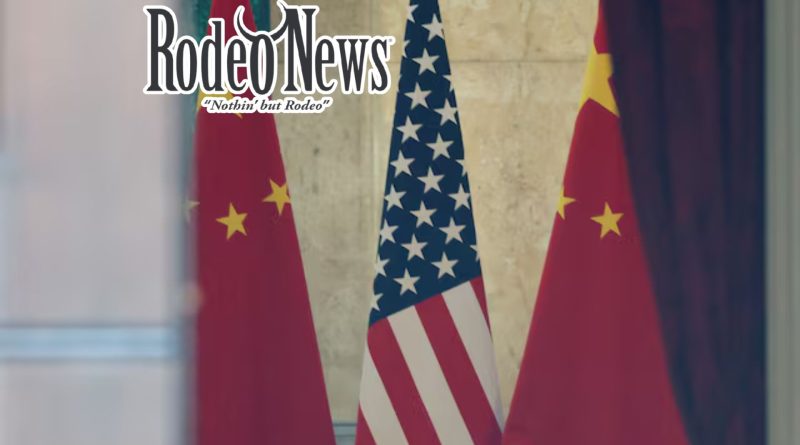
The United States has postponed planned sanctions against Ministry of State Security (MSS) — the primary Chinese intelligence agency — over an alleged large-scale cyber-espionage campaign, in order to preserve a fragile trade truce with People’s Republic of China, according to a report by Financial Times, cited by
Dubbed “Salt Typhoon,” the cyber-espionage effort reportedly targeted U.S. and international telecommunications firms — as well as the network of a U.S. state’s Army National Guard — over several years.
Despite the severity of those allegations, Washington decided against moving forward with the sanctions.
In addition, the U.S. administration has refrained from enacting major new export controls against China, according to officials familiar with the decision.
The move follows a framework agreement reached on October 30 between U.S. President Donald J. Trump and Chinese leader Xi Jinping, under which the U.S. agreed not to impose sweeping 100% tariffs on Chinese imports — and China, in turn, agreed to postpone an export licensing regime for critical rare-earth minerals and magnets.
Officials involved in the deliberations characterized the decision as a strategic effort to balance mounting cybersecurity and intelligence challenges against broader economic and diplomatic priorities.
Would you like a slightly longer version — including background on the “Salt Typhoon” campaign, reactions from U.S. lawmakers, and implications for Sino-U.S. tech and trade relations?