
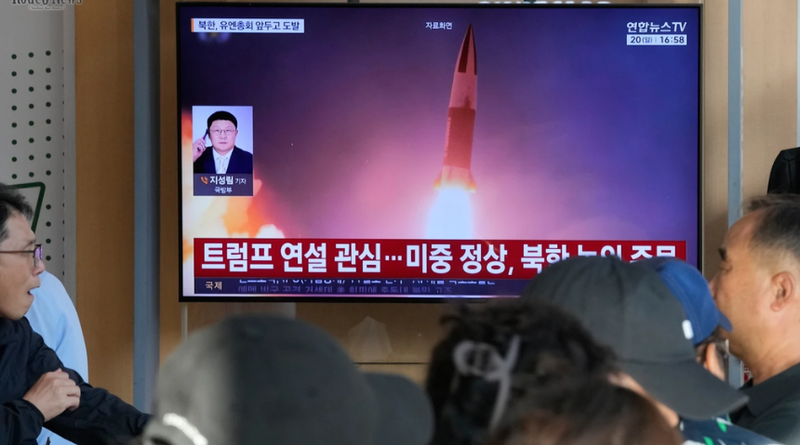
North Korea Missile Launch Sends New Warning
A new North Korea missile launch has raised tensions on the Korean Peninsula after Pyongyang fired two short-range ballistic missiles toward the sea on Sunday, South Korean officials said. The launches came only days after North Korea warned that it would strengthen its nuclear deterrent and respond to what it described as hostile military activity by the United States and its allies.
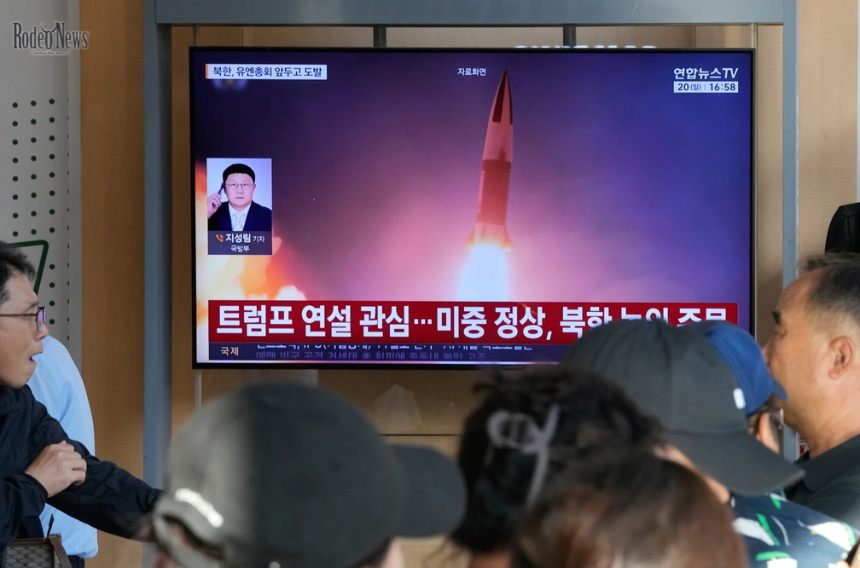
The missiles were fired from the Wonsan area on North Korea’s eastern coast, with roughly three hours separating the two launches. South Korea’s military said the first missile traveled about 450 kilometers, or 280 miles, while the second flew more than 600 kilometers, or about 370 miles.
Both projectiles landed in the sea.
The latest launches add to a growing series of weapons demonstrations by North Korea at a time when Washington and Pyongyang have yet to revive the high-level diplomacy that collapsed several years ago.
North Korea missile launch follows military tensions
South Korean authorities said the launches were detected and tracked while intelligence officials from South Korea and the United States worked together to analyze the weapons.
Japan also detected a suspected North Korean missile during the day. Japanese officials said the projectile did not fall within the country’s territorial waters. Reuters reported that Japan assessed the launches as taking place outside its exclusive economic zone.
South Korea’s presidential office called on North Korea to stop ballistic missile launches, noting that such activity is prohibited under United Nations Security Council resolutions.
The South Korean military also said it was maintaining a strong readiness posture alongside the United States.
The launches followed North Korean criticism of recent military exercises involving the United States and its regional partners. Pyongyang has repeatedly described such drills as preparations for an attack, while Washington and Seoul characterize their military cooperation as defensive.
Kim Yo Jong criticizes US-led exercises
Kim Yo Jong, the sister of North Korean leader Kim Jong Un and a senior government official, has been particularly outspoken about recent military activity.
She dismissed Washington’s decision to reduce the scale of a major U.S.-South Korean military exercise, arguing that the change did not alter what Pyongyang considers the exercise’s provocative character.
North Korea has also criticized the multinational Pacific Vanguard exercise, which included the United States, South Korea, Japan, Australia, New Zealand and Canada.
Kim Yo Jong has argued that repeated U.S.-led military exercises are contributing to worsening security conditions in the region. She also reiterated North Korea’s commitment to strengthening its nuclear capabilities.
North Korea conducted another major live-fire exercise earlier this month involving missiles, artillery and drones. Pyongyang said the drill demonstrated its ability to use multiple weapons systems simultaneously.
Those exercises came shortly after a trilateral military exercise involving the United States, South Korea and Japan.
Washington still faces a difficult diplomatic challenge
The latest North Korea missile launch also highlights the difficulty facing efforts to restart negotiations between Washington and Pyongyang.
President Donald Trump previously ordered a reduction in the annual Ulchi Freedom Shield exercise with South Korea, citing his relationship with Kim Jong Un and his interest in diplomacy.
However, North Korea has continued developing and testing weapons despite the reduction in the exercise.
The previous round of high-level U.S.-North Korea diplomacy broke down in 2019. Since then, Kim’s government has continued to expand its nuclear weapons and missile programs.
North Korea has indicated that it could consider renewed negotiations if Washington abandons what Pyongyang calls its hostile policy and recognizes the country’s nuclear status.
That position remains a major obstacle because the United States has historically opposed North Korea’s development and expansion of its nuclear arsenal.
South Korea calls for renewed dialogue
South Korean President Lee Jae Myung has continued to support diplomatic engagement with North Korea.
Lee recently said that renewed U.S.-North Korea discussions could provide an important starting point for improving prospects for peace on the Korean Peninsula. He has also encouraged Trump to pursue direct dialogue with Kim.
However, the latest missile launches demonstrate that diplomacy and military pressure remain closely intertwined.
North Korea appears determined to continue strengthening its military capabilities while criticizing U.S. and allied exercises. At the same time, Washington, Seoul and Tokyo continue to coordinate their responses to Pyongyang’s weapons activity.
For now, the two missiles fired from Wonsan have ended up in the sea, but the broader dispute remains unresolved.
The latest North Korea missile launch is therefore another reminder that tensions on the Korean Peninsula remain high, even as officials in Washington and Seoul continue to discuss the possibility of renewed diplomacy.