If you are looking for one simple food to add more fiber, healthy fats, and essential nutrients to your diet, chia seeds may deserve a place at the top of your list. Dietitians recently named chia seeds their top seed for supporting brain, heart, and gut health, thanks to their combination of fiber, plant-based omega-3 fats, protein, minerals, and antioxidants.
These tiny black or white seeds have become a popular addition to smoothies, oatmeal, yogurt, salads, and puddings. But their appeal goes beyond convenience. Their nutritional profile makes them an easy way to add several beneficial nutrients to everyday meals.
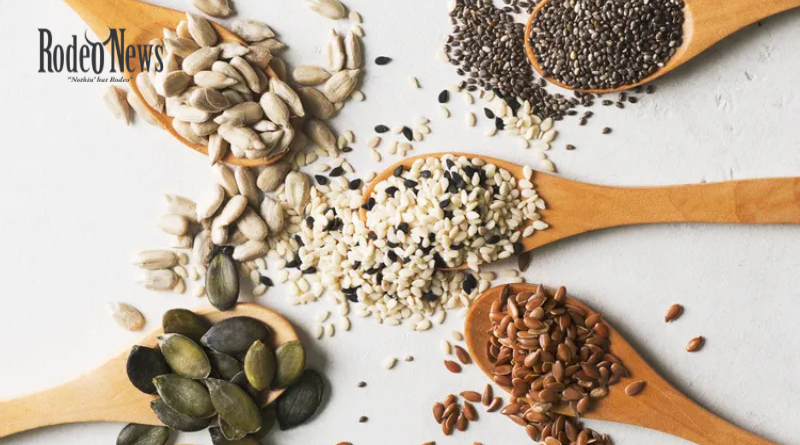
Real Simple recently spoke with registered dietitians Carrie Gabriel and Kat Garcia-Benson, who both selected chia seeds as their number one choice when considering overall brain, heart, and gut health. Flaxseed was named a close runner-up.
Chia Seeds Pack an Impressive Nutritional Profile
One of the biggest reasons chia seeds stand out is their nutritional density.
According to the Real Simple report, two tablespoons contain approximately 130 calories, 10 grams of fiber, 5 grams of protein, and 9 grams of fat. They also provide minerals including calcium and magnesium, along with antioxidants.
Harvard’s Nutrition Source gives a similar picture, noting that one ounce, or about 28 grams, of chia seeds contains roughly 140 calories, 4 grams of protein, 11 grams of fiber, and 7 grams of unsaturated fat. Chia seeds are also a notable plant source of alpha-linolenic acid, or ALA, an omega-3 fatty acid.
That combination is important because no single nutrient explains the potential value of chia seeds. Instead, it is the mix of fiber, unsaturated fats, protein, minerals, and plant compounds that makes them useful as part of a balanced eating pattern.
1. Chia Seeds May Support Heart Health
One of the most notable benefits of chia seeds is their potential contribution to cardiovascular health.
Chia seeds contain ALA, a plant-based omega-3 fatty acid. Omega-3 fats play important roles in the body, and diets containing omega-3-rich foods have been associated with cardiovascular benefits. Harvard Health identifies chia seeds, flaxseeds, and walnuts as important plant sources of ALA.
Chia seeds also contain substantial amounts of fiber. Soluble fiber can help reduce the absorption of cholesterol in the digestive tract, while overall dietary fiber intake is associated with better cardiovascular health.
However, it is important to keep expectations realistic.
Chia seeds are not a treatment for heart disease, and eating them does not guarantee lower cholesterol or blood pressure. Harvard’s Nutrition Source notes that human research has not consistently demonstrated that chia seeds alone improve specific cardiovascular risk factors. Their benefits are better understood as part of an overall healthy, plant-rich diet.
In other words, adding chia seeds to a diet that already includes vegetables, fruits, whole grains, legumes, nuts, and other nutritious foods is more meaningful than treating them as a standalone “superfood.”
2. Chia Seeds Can Be Excellent for Gut Health
For people trying to increase their fiber intake, chia seeds for gut health are particularly interesting.
Two tablespoons can provide around 10 grams of fiber, according to the Real Simple report.
Fiber plays several important roles in digestion. It helps add bulk to stool, supports regular bowel movements, and can help regulate how quickly food moves through the digestive system.
Chia seeds have another unusual characteristic: They absorb liquid and form a gel-like texture.
That happens because of the soluble fiber and mucilage contained in the seeds. When chia seeds are mixed with liquid, they swell and create a soft gel that can contribute to stool bulk and water retention in the digestive tract.
The fiber can also serve as food for beneficial microorganisms in the gut.
This matters because the gut microbiome interacts with digestion, metabolism, immune function, and many other aspects of human health. A diet rich in different types of fiber is generally considered more supportive of a diverse and healthy gut environment.
Still, more research is needed to understand exactly how chia seeds affect the human gut microbiome over the long term.
3. Chia Seeds Provide Plant-Based Omega-3s
When people hear “omega-3,” they often think about salmon or other fatty fish.
That’s because fish provides EPA and DHA, two forms of omega-3 fats that are especially important in human nutrition. Plant foods such as chia and flax seeds primarily provide ALA. The body can convert ALA into EPA and DHA, but that conversion is limited.
Even so, ALA remains an essential fatty acid.
The body cannot make ALA on its own, so it must come from food. Chia seeds therefore offer a convenient plant-based way to increase omega-3 intake.
This is especially useful for people who regularly eat plant-based foods or simply want to diversify their sources of healthy fats.
However, chia seeds should not necessarily be viewed as a direct nutritional replacement for fatty fish. A varied diet can include both plant sources of ALA and, when appropriate, seafood sources of EPA and DHA.
4. Chia Seeds May Help Support Brain Health
The connection between chia seeds and brain health comes largely from their omega-3 content, antioxidants, magnesium, and overall nutritional profile.
ALA is involved in important biological processes, including cell membrane function. Omega-3 fatty acids are also associated with brain and nervous-system function.
Chia seeds provide antioxidants as well. Antioxidants help protect cells from oxidative stress caused by unstable molecules known as free radicals.
The seeds also contain magnesium, a mineral involved in numerous processes throughout the body, including nerve and muscle function.
However, it would be misleading to say that eating chia seeds directly prevents dementia or dramatically improves memory.
The strongest evidence supports healthy dietary patterns rather than one individual ingredient as a magic solution. Chia seeds can contribute useful nutrients, but they work best as one small component of an overall nutritious lifestyle.
5. Chia Seeds Are Easy to Add to Everyday Meals
Perhaps one of the biggest advantages of chia seeds is how easy they are to use.
They have a relatively mild flavor, which means they can be incorporated into both sweet and savory meals.
Try adding them to:
- Oatmeal
- Greek yogurt
- Smoothies
- Chia pudding
- Overnight oats
- Grain bowls
- Salads
- Whole-grain toast
- Homemade energy bites
- Breakfast cereals
Real Simple’s dietitians also recommend mixing chia seeds into liquids or moist foods rather than consuming a spoonful of dry seeds by itself.
That recommendation is important because chia seeds can rapidly absorb liquid and expand. People who have difficulty swallowing should be particularly cautious about consuming dry chia seeds.
A simple chia pudding is one of the easiest options.
Mix chia seeds with milk or a suitable plant-based alternative, allow the mixture to sit until it thickens, and then add fruit, nuts, cinnamon, or another topping.
Chia Seeds vs. Flaxseed: Which Is Better?
Although chia seeds received the top recommendation, flaxseed is a strong competitor.
Real Simple’s dietitians selected flaxseed as their runner-up because it also provides fiber, ALA omega-3 fats, protein, magnesium, and other nutrients.
There is one important difference when it comes to preparation.
Ground flaxseed is generally preferred over whole flaxseed because grinding makes it easier for the body to access the nutrients inside. Mayo Clinic notes that whole flaxseed may pass through the digestive tract without being completely broken down.
Flaxseed can therefore be an excellent alternative for people who prefer its nutty flavor or want another way to increase dietary fiber.
The choice does not have to be either-or.
Including both chia seeds and ground flaxseed in a varied diet can provide different nutrients and textures.
How Much Chia Should You Eat?
There is no universal requirement that everyone eat a particular amount of chia seeds every day.
Because chia seeds are exceptionally high in fiber, people who are not accustomed to eating much fiber may want to increase their intake gradually. Drinking enough fluids and getting fiber from a variety of foods can also help support comfortable digestion.
A common practical serving is around one to two tablespoons, depending on the person’s overall diet and nutritional needs.
More is not necessarily better.
Adding a small amount to an already balanced meal can be more sustainable than trying to consume large quantities simply because chia seeds are considered healthy.
People with specific digestive conditions, swallowing difficulties, or medical dietary restrictions should discuss significant dietary changes with a qualified healthcare professional.
The Bigger Picture: No Single Seed Does Everything
The popularity of chia seeds reflects a broader interest in foods that can support healthy aging and everyday wellness.
But nutrition experts caution against viewing individual foods as miracle ingredients.
Harvard’s Nutrition Source specifically notes that the term “superfood” is largely a marketing term and that chia seeds should be considered within the context of an overall healthy dietary pattern.
That distinction matters.
Eating chia seeds while regularly consuming highly processed foods, getting little physical activity, or ignoring other important health habits is unlikely to produce dramatic results.
Instead, think of chia seeds as a nutritional building block.
Pair them with berries, oats, yogurt, vegetables, legumes, nuts, whole grains, and other minimally processed foods. Together, these foods provide a much broader range of fiber, vitamins, minerals, healthy fats, protein, and protective plant compounds.
The Bottom Line on Chia Seeds
The latest dietitian recommendation gives chia seeds a strong position among nutritious seeds because they combine several desirable qualities in one small package.
They provide significant amounts of fiber, plant-based ALA omega-3 fats, protein, minerals, and antioxidants. Those nutrients can contribute to a dietary pattern that supports digestive, cardiovascular, and overall health.
Chia seeds are particularly convenient because they require little preparation. A spoonful can be mixed into yogurt, oatmeal, smoothies, or overnight oats, while soaking them can create a filling pudding-style meal.
Flaxseed is also an excellent choice, particularly when consumed ground.
Ultimately, the most useful approach is not to search for one perfect food. Instead, build meals around a wide variety of nutrient-rich foods and use chia seeds as one easy addition.