
Sydney Sweeney’s “Christy” Review: A Punch That Misses the Mark
In Christy, Sydney Sweeney steps into the gloves of Christy Martin, the groundbreaking female boxer whose courage in the ring was matched only by her tumultuous personal life. However, while Sweeney delivers a commanding performance, the film itself fails to pack the knockout punch it aims for, ultimately falling victim to the familiar tropes that plague many sports biopics.
Directed by David Michôd and co-written with Mirrah Foulkes, Christy tells the true story of Martin’s rise in the world of boxing, a space traditionally dominated by men. But despite the compelling narrative potential, the film is caught in the ropes of predictability, stumbling over the same clichés that have weighed down countless other boxing films before it.

A Strong Performance by Sydney Sweeney
Sweeney, known for her roles in Euphoria and The White Lotus, shows tremendous grit as Christy Martin. Her portrayal of the West Virginian boxer is filled with determination, drive, and, at times, vulnerability. Martin didn’t seek boxing; rather, it found her. Through an opening voiceover, the audience learns that the young Christy had an instinct for fighting—fighting not just in the ring, but against the injustices and hardships she faced in her personal life.
The film chronicles Martin’s ascent through the male-dominated boxing world and her harrowing experiences, both in and out of the ring. The physicality of her performance is undeniably impressive, as Sweeney doesn’t shy away from the brutal demands of portraying a boxer. But no matter how strong her punches are, they can’t overcome the movie’s weaknesses.
A Story We’ve Seen Before
Unfortunately, Christy is plagued by the same formulaic structure that makes it feel like any other boxing biopic. The plot follows a familiar trajectory: the troubled protagonist discovers a passion for boxing, faces personal demons (in this case, an abusive husband and manager), and rises to prominence, only to face the pressures and dangers of success. The film even includes the obligatory appearance of Don King (played by Chad L. Coleman), which serves as the final stamp of validation for Martin’s achievements in the sport.
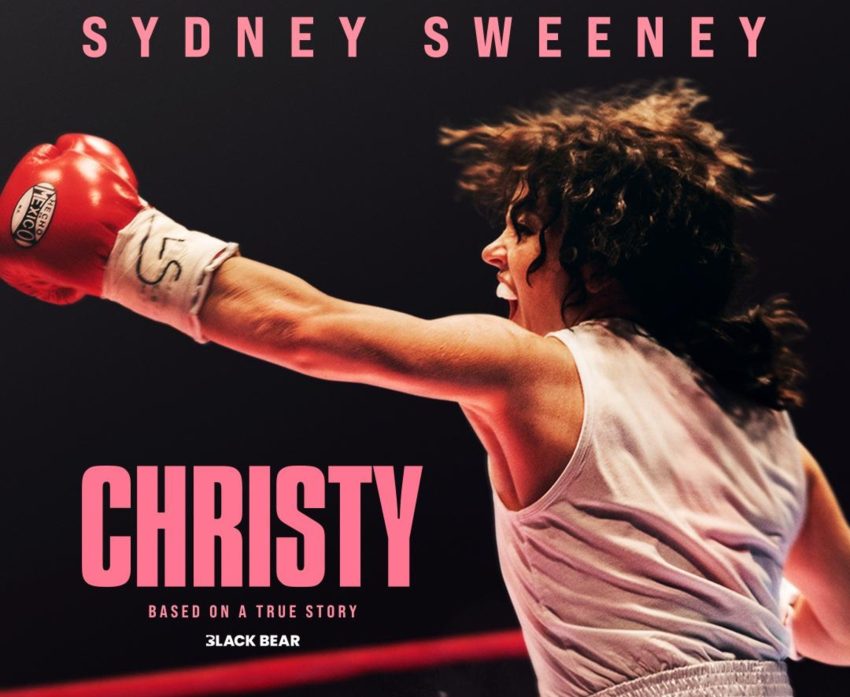
While these elements may be true to Martin’s real-life story, their treatment here is disappointingly rote. At times, it feels as though the filmmakers are checking off boxes on a list of boxing movie clichés—overbearing trainers, marital strife, backstabbing managers—and leaning heavily on these familiar themes without bringing anything new to the table. The film’s reliance on these tropes, particularly in the latter half, drags it into the territory of a Lifetime original movie, where the real emotional stakes are overshadowed by predictability.
Ben Foster’s Unconvincing Villain
A major component of the film’s dramatic tension lies in Christy’s tumultuous relationship with her husband and manager, James V. Martin, played by Ben Foster. However, Foster’s portrayal of the sleazy and manipulative trainer feels more like a caricature than a fully realized character. His oily charm and obvious villainy are so exaggerated that they strip the complexity away from what could have been a far more nuanced dynamic.
Foster’s performance is one of the film’s weakest links, as his character never feels like a genuine threat. His abuse of Martin—both emotionally and physically—becomes a repetitive beat that adds little to the plot beyond reaffirming Martin’s resilience. It’s a portrayal that’s more effective in setting up the victim versus villain dynamic than in developing the complexities of their toxic relationship.
Katy O’Brian’s Rival Boxer Steals the Show
While the film’s primary focus is on Christy’s rise to prominence, it’s the arrival of Katy O’Brian as a rival boxer that highlights just how one-dimensional Sweeney’s performance can feel at times. O’Brian, with her martial arts and bodybuilding background, brings a natural authenticity to the ring that makes Sweeney’s efforts seem almost amateurish in comparison. O’Brian’s calm, confident presence is a stark contrast to Sweeney’s over-the-top intensity, underscoring the film’s lack of depth in portraying the physical and mental complexities of a boxer’s career.
The Final Round
Christy starts with promise but ultimately fades into familiar territory, delivering a predictable narrative that fails to capture the full scope of Martin’s remarkable story. While Sweeney’s performance demonstrates her commitment to the role, and the film does touch on the larger social and personal struggles Martin faced, the overall execution leaves much to be desired. By the time the credits roll, Christy feels more like a missed opportunity than a victory.
In the end, the film doesn’t quite live up to the fierce spirit of its subject. Instead of a knockout, it’s a TKO—going down without a real fight.
Rating: C
Rated: R (for language, violence/bloody images, some drug use, and sexual material)
Running time: 135 minutes