Ta Prohm Temple: A Timeless Connection Between Nature and History
Nestled in the heart of Cambodia’s Angkor Archaeological Park, Ta Prohm Temple stands as a testament to the intricate relationship between nature and human heritage. Known for its awe-inspiring beauty, where colossal tree roots intertwine with ancient stone structures, this UNESCO World Heritage Site continues to captivate visitors from around the globe. Located just three kilometers east of the Victory Gate of Angkor Thom, Ta Prohm has been a symbol of Cambodia’s rich history and culture for nearly 850 years.
The History Behind Ta Prohm’s Construction
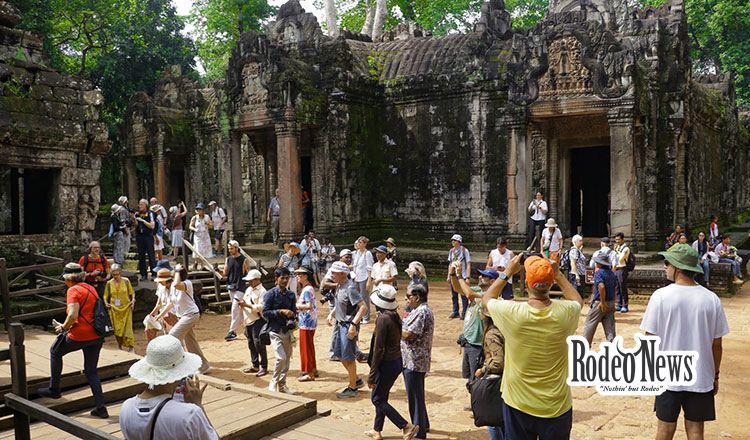
Constructed in 1186 AD, Ta Prohm was commissioned by King Jayavarman VII during the height of the Khmer Empire. The temple was dedicated to the king’s mother, who is revered in Mahayana Buddhism as Prajnaparamita, the embodiment of perfect wisdom. Inscriptions found throughout the temple emphasize her significance, with the central tower housing a statue of Prajnaparamita and 260 additional statues positioned around the sanctuary. These statues, along with the regular religious ceremonies and offerings, highlight the temple’s role in the spiritual and cultural life of the kingdom.
The construction of Ta Prohm was a remarkable feat, with the temple built using sandstone and laterite, materials that were abundant in the region. Spanning approximately 73 hectares, the temple complex was designed to honor not just the king’s mother but also the broader ideals of the Buddhist faith, making it one of the most significant sites within the Angkor complex.
A Symbol of Nature’s Endurance
Ta Prohm is often referred to as the “Temple of Trees,” a nod to the stunning natural scenery that surrounds it. Unlike many other temples in Angkor, which have been cleared of vegetation, Ta Prohm remains a living monument, where enormous fig trees and silk-cotton trees have grown over and around the temple’s walls and towers. These trees, with their massive roots winding through the ancient stone, create an enchanting fusion of human ingenuity and natural growth.
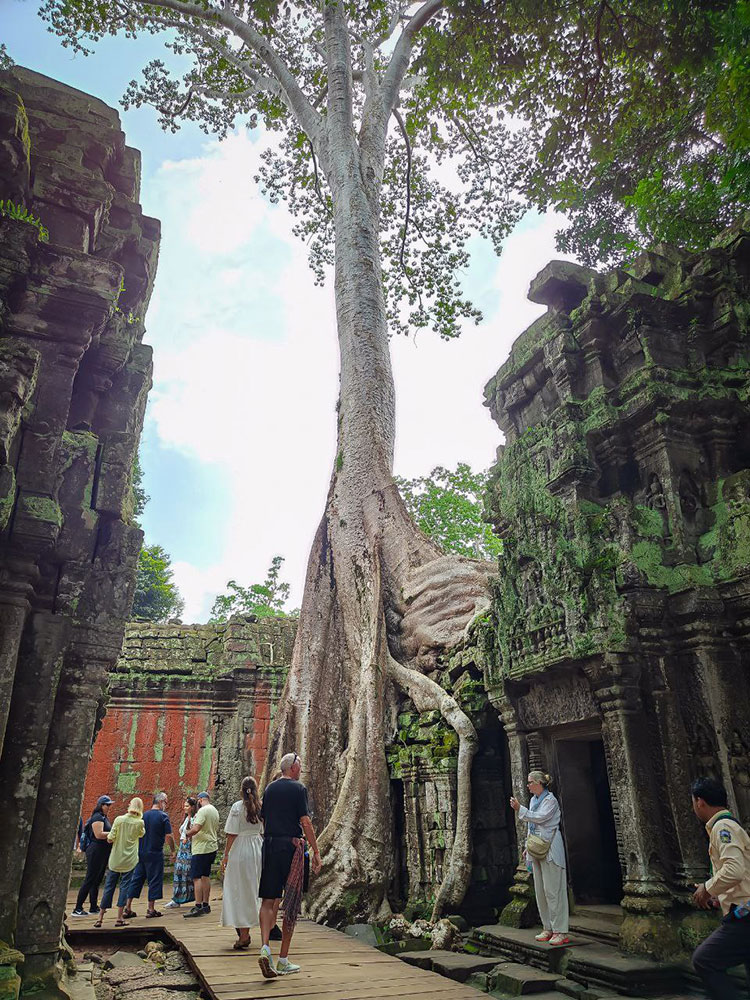
This natural feature has made Ta Prohm one of the most photographed temples in the Angkor complex, drawing visitors who are captivated by the sight of ancient architecture seemingly embraced by the forces of nature. The unique interplay between the temple’s decaying stone and the vibrant, thriving trees offers a powerful visual representation of the passage of time and the resilience of both nature and human history.
Preservation and Restoration Efforts
Despite its beauty, Ta Prohm faces significant challenges related to both natural decay and human interference. Over the centuries, the temple has experienced damage from the weather, earthquakes, and looting, as well as the natural encroachment of plant life. As a result, parts of the temple have deteriorated significantly, raising concerns about its long-term preservation.
To address these issues, the APSARA National Authority—the government body responsible for the preservation of Angkor—has partnered with the Archaeological Survey of India (ASI) in ongoing restoration projects. According to Neth Simon, an archaeologist and technical officer at the APSARA National Authority, these collaborative efforts focus on stabilizing the structure of Ta Prohm while maintaining its unique aesthetic. Preservation work is carefully conducted to prevent further degradation of the temple’s delicate balance between nature and stone.
“We must ensure that the temple’s roots and stones continue to coexist in harmony,” said Simon. “Our goal is not just to preserve the temple, but to honor the way nature has intertwined with it.”
These restoration initiatives are crucial for safeguarding the temple’s future, ensuring that both its historical and natural beauty can be enjoyed by generations to come.
A Living Monument of Cambodian Heritage
Today, Ta Prohm remains one of the most visited sites in Cambodia, attracting millions of tourists annually. Its serene yet striking appearance, paired with its historical and cultural significance, makes it a must-see destination for anyone exploring the Angkor Archaeological Park. But beyond its role as a tourist attraction, Ta Prohm continues to serve as a symbol of Cambodia’s enduring heritage—a place where the passage of time is written in both stone and roots.
As efforts to preserve and protect this monumental site continue, Ta Prohm stands as a reminder of the resilience of both nature and civilization. It is a place where history, culture, and the natural world converge, creating a timeless link between the past and the present.