Raygun Documentary Reveals Olympic Fame’s Dark Side
The Raygun documentary offers a revealing look at one of the strangest stories to emerge from the 2024 Paris Olympics. Netflix’s Untold Raygun: Breaking Badly follows Australian B-girl Rachael Gunn, whose unconventional Olympic performance transformed her from an academic and competitive dancer into a global internet sensation almost overnight.
The documentary is warm, personal and often funny. It gives Gunn space to explain the decisions behind her performance, the intense criticism that followed and the emotional consequences of becoming one of the most recognizable athletes of the Games.
Yet the film also leaves a significant question hanging.
While Untold Raygun: Breaking Badly spends considerable time examining Gunn’s experience, it does not fully confront what her sudden fame meant for breaking itself, an art form with deep roots in Black and Brown communities in the South Bronx. That omission becomes one of the documentary’s most interesting weaknesses.
Raygun Documentary Revisits the Olympic Performance
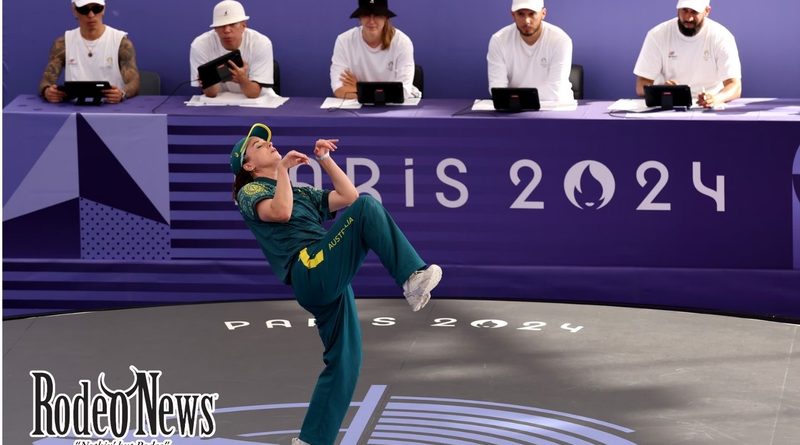
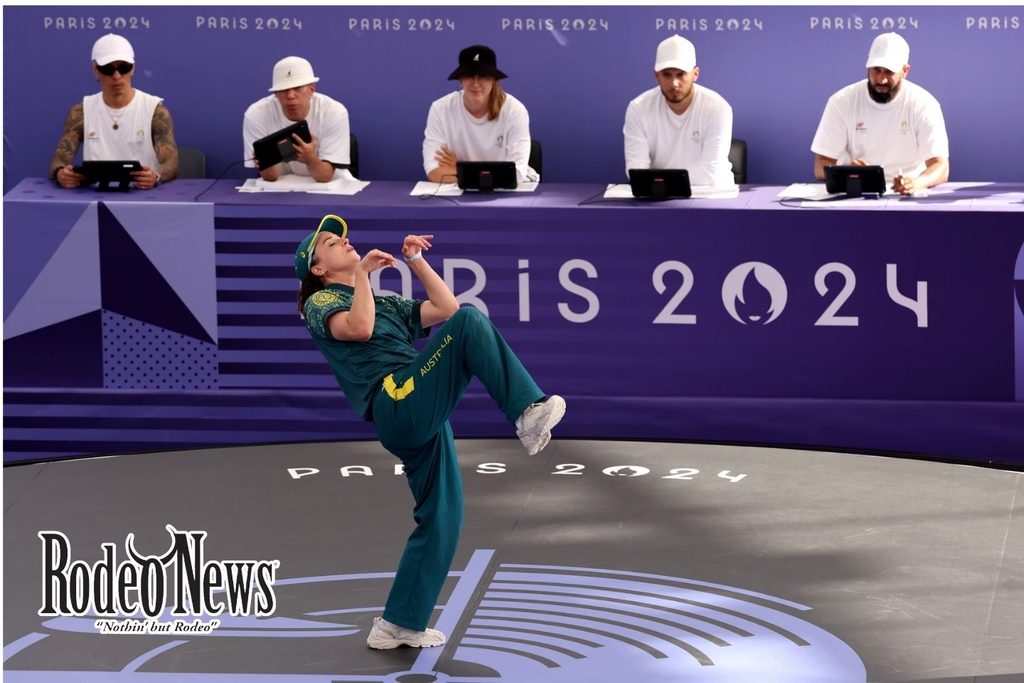
Gunn entered the women’s breaking competition at the Paris Olympics in August 2024. Breaking was making its Olympic debut, and the Australian quickly became the most recognizable participant in the event.
Her performance included unusual movements inspired by Australian culture, including kangaroo-like hops and a sprinkler-style routine. Rather than disappearing after a disappointing Olympic result, the performance exploded across social media.
Gunn received no votes from the nine judges across her six rounds, but her Olympic appearance generated memes, television coverage, conspiracy theories and widespread online discussion.
The irony is central to the Raygun documentary.
Gunn had feared that the world might laugh at her. In the documentary, she recalls discussing her Olympic anxiety with a sports psychologist before the Games. Her worst-case scenario was effectively becoming reality.
However, the scale of the attention was something nobody could have predicted.
Netflix describes Untold Raygun: Breaking Badly as the story of an Australian academic who became a global meme after reaching the Olympic stage.
Raygun’s Olympic Strategy Was More Complicated Than It Looked
One of the more important elements of the Raygun documentary is its explanation of how Gunn prepared for Paris.
Her Olympic routine was not simply an improvised attempt to make people laugh. Gunn and her husband and coach, Sammy Free, recognized that she was significantly behind many of the world’s strongest B-girls in technical ability.
Instead of attempting to compete directly with elite breakers through increasingly difficult power moves, they decided to emphasize originality.
That strategy had a logical basis.
At the Paris Games, breaking was judged across five broad categories: technique, vocabulary, execution, musicality and originality. Gunn and Free focused heavily on the last of those categories.
They drew inspiration from Australian imagery, including kangaroos and the country’s distinctive dance culture. The routine also included a reference to swimming, another sport strongly associated with Australia’s Olympic identity.
The strategy did not work competitively.
Gunn failed to receive a single judge’s vote.
But it worked spectacularly in another way.
She became famous.
The Raygun Documentary Shows a Different Rachael Gunn
Away from the Olympic floor, Gunn is presented as considerably more complicated than the internet meme that emerged in 2024.
The documentary portrays her as largely self-aware, humorous and capable of laughing at herself. Her parents also appear, offering a more intimate perspective on a daughter whose Olympic journey was far outside what they had expected.
Free is similarly presented as an important figure in Gunn’s story.
The relationship between the two provides the documentary with a softer narrative. Gunn originally entered the world of breaking after meeting Free, who introduced her to the culture and the dance form.
What follows is an unusual journey from academia into competitive breaking and eventually the Olympic Games.
That personal story is one of the film’s strongest elements.
Rather than treating Gunn solely as the woman behind an infamous viral clip, Breaking Badly attempts to show the person who existed before and after the Olympic moment.
Raygun Documentary Faces Questions About Breaking Culture
This is where the film becomes more complicated.
Breaking did not begin as an Olympic sport. It developed within Black and Brown communities in the Bronx and became an important part of hip-hop culture.
The Raygun documentary acknowledges some of this history but does not spend enough time examining the cultural implications of Gunn becoming the face most people associated with Olympic breaking.
That is a significant omission.
The Paris Olympics featured highly skilled breakers from around the world. Yet for many casual viewers, the event became synonymous with one Australian competitor who received no judges’ votes.
The contrast is striking.
The athletes who had spent years developing the technical and cultural foundations of breaking received relatively little of the enormous attention generated by Gunn’s performance.
Instead, a competitor who became famous through an unconventional routine became the public face of an art form that had existed for decades before entering the Olympic arena.
That tension deserved deeper exploration.
Australian B-Girls Provide the Documentary’s Sharpest Criticism
Some of the documentary’s most valuable perspectives come from Australian dancers who do not simply defend Gunn.
Tinylocks, one of Gunn’s contemporaries, discusses the idea of earning respect within breaking rather than receiving what the scene considers premature recognition.
Her comments provide important context because they challenge the idea that enthusiasm alone should automatically translate into competitive respect.
The documentary also makes clear that Gunn’s performance before the Olympics was not necessarily as extraordinary as the viral footage might suggest.
At the Oceania qualifying event, Gunn used more conventional breaking movements. Her performance was not technically dominant, but it also did not attract the kind of ridicule that followed her Paris routine.
That distinction matters.
The Olympic performance was the result of a deliberate change in strategy.
Gunn and Free had realized that they were unlikely to match the technical level of the strongest competitors. They therefore attempted to make originality the defining feature of the routine.
The result was memorable.
But memorable and competitive are not necessarily the same thing.
Why Raygun Became More Famous Than Olympic Winners
The Raygun documentary also raises a fascinating question about the nature of modern sports fame.
Gunn was not the only athlete at Paris 2024 to become an internet sensation.
Gymnast Stephen Nedoroscik became a viral figure after his pommel horse performance. Turkish shooter Yusuf Dikec also became an international meme because of his relaxed appearance and unusual shooting posture.
But there was an important difference.
Both were highly accomplished athletes.
Nedoroscik had previously won a world championship on pommel horse and earned an Olympic bronze medal. Dikec won silver in Paris.
Their memes reinforced their sporting credibility.
Gunn’s viral moment worked differently.
Her fame was largely connected to the gap between her performance and the expectations surrounding an Olympic competition.
That distinction helps explain why the online response became so intense.
People were not simply laughing at an unusual Olympic moment. They were debating whether Gunn belonged on the Olympic stage at all.
The Backlash Went Far Beyond Sports Criticism
The reaction to Gunn became much larger than criticism of an athlete’s technique.
The documentary examines the misinformation and conspiracy theories that followed her performance. Some claims suggested that Gunn had somehow manipulated her qualification, accusations that the film attempts to counter.
Gunn also argues that women often face disproportionate criticism over how they behave and perform in public.
There is truth in that broader argument.
The online reaction sometimes crossed the line from sporting criticism into personal humiliation.
However, the documentary’s central challenge is that two ideas can exist simultaneously.
Gunn did not deserve harassment or misinformation.
At the same time, legitimate criticism of her Olympic performance should not automatically be dismissed as misogyny or cruelty.
The strongest version of the story lies somewhere between those extremes.
The issue was not simply that Gunn danced differently.
It was that she entered an elite international competition where athletes were expected to demonstrate exceptional skill, while her performance appeared dramatically different from those expectations.
What the Raygun Documentary Gets Right
The greatest achievement of the Raygun documentary is its humanization of Gunn.
The internet reduced her to a handful of movements.
Netflix tries to restore the person behind the meme.
That is important because viral fame can erase context. A person can become a symbol before audiences understand who they actually are.
Gunn’s story demonstrates how quickly that can happen.
One day she was an academic and dancer competing in a relatively small community. The next, millions of people knew her as Raygun.
The documentary also succeeds by allowing criticism from within Australia’s breaking community rather than presenting an entirely defensive portrait.
Those voices make the film more credible.
They acknowledge that Gunn can be sympathetic while also questioning the quality and impact of her Olympic performance.
That balance is valuable.
Where Raygun: Breaking Badly Falls Short
The central weakness is the documentary’s limited discussion of breaking itself.
The Raygun documentary is primarily a story about Rachael Gunn’s personal ordeal. That makes it accessible, but it also narrows the scope of what could have been a much larger examination of sport, culture and Olympic representation.
The film could have spent more time exploring what happens when an underground cultural movement becomes an Olympic discipline.
It could also have examined how the Olympics changed public perceptions of breaking and whether the event’s first Olympic appearance helped or harmed the dance form’s long-term prospects.
Instead, those questions remain largely unanswered.
That is particularly unfortunate because breaking will not be part of the Los Angeles 2028 Olympic program. The decision was made before Gunn’s Paris performance and therefore should not be attributed to her.
Still, the documentary could have used her story to explore the uncertain future of breaking within the Olympic movement.
Raygun and the Future of Olympic Breaking
There may yet be another Olympic chapter for breaking.
The World DanceSport Federation recently submitted breaking for consideration for the 2032 Brisbane Olympics, according to the Guardian’s review.
That possibility gives the story an intriguing Australian dimension.
Brisbane will host the 2032 Games, and a return of breaking would create an opportunity for the sport to redefine how it is presented to a mainstream Olympic audience.
Whether Gunn should be part of that future is a different question.
Her Olympic performance made her famous, but fame is not the same as competitive excellence.
The lesson from Paris may therefore be less about Raygun herself and more about how quickly sports culture can change when an unfamiliar discipline meets the enormous global audience of the Olympics.
A Complicated but Fascinating Olympic Story
Ultimately, the Raygun documentary succeeds most when it refuses to treat Rachael Gunn as either a hero or a joke.
She was a real person who entered an extraordinary environment, made a deliberate artistic choice and experienced consequences that went far beyond anything she could reasonably have anticipated.
Her performance was unsuccessful by the competitive standards of Olympic breaking.
But her story became enormously successful as a cultural phenomenon.
That contradiction is what makes the documentary worth watching.
Untold Raygun: Breaking Badly does not completely answer every question raised by the Raygun phenomenon. In particular, its limited examination of breaking’s cultural history and Olympic future leaves a noticeable gap.
Nevertheless, the film provides valuable insight into what happened after one of the most unexpected Olympic performances of the modern era.
Gunn feared the world might laugh at her.
It did.
But the laughter eventually became something more complicated: fame, controversy, criticism, sympathy and an enduring conversation about what the Olympics are supposed to represent.
For Gunn, the story is no longer simply about a strange dance routine in Paris.
It is about what happens when one Olympic performance becomes bigger than the sport itself.
And that may ultimately be the most revealing part of the Raygun story.